

CleanMax Enviro Energy Solutions Limited (CleanMax) has reported strong financial and operational performance for the first half of FY2026-27, with adjusted EBITDA increasing 56% year-on-year to ₹1,047 crore and profit after tax (PAT) rising more than sixfold to ₹120 crore from ₹19 crore in the corresponding period last year. The company has maintained its FY27 capacity commissioning target of at least 1.5 GW of renewable energy Power Sales capacity.
For Q2 FY27, CleanMax recorded revenue from operations of ₹728 crore, registering a 37% year-on-year increase from ₹531 crore in Q2 FY26. Quarterly PAT increased 82% to ₹65 crore. For H1 FY27, reported EBITDA rose 58% year-on-year to ₹1,011 crore.
The company’s financial performance was supported by capacity commissioning, improved margins in its renewable energy Power Sales business, operating leverage and an expanding operational asset portfolio.
During H1 FY27, CleanMax commissioned 550 MW of renewable energy Power Sales capacity across six states, taking its operational capacity to 3,638 MW, representing approximately 57% year-on-year growth.
The company reported that repeat customers accounted for approximately 85% of newly contracted capacity, reflecting continued demand from its commercial and industrial (C&I) customer base.
As of September 30, 2026, CleanMax had 606 C&I customers, while its weighted average power purchase agreement (PPA) tenor stood at approximately 23 years.
The company’s weighted average cost of debt was 8.33% as of September 2026, compared with 9.49% in March 2025.
CleanMax expects to execute approximately 450 MW of state transmission utility (STU)-connected and onsite projects during the second half of FY27.
The upcoming commissioning programme will also include its 534 MW Koppal central transmission utility (CTU) project in Karnataka, which is scheduled for phased commissioning between December 2026 and March 2027.
These projects are expected to support the company’s target of commissioning at least 1.5 GW of renewable energy Power Sales capacity during FY27. CleanMax has also reiterated its guidance of achieving reported EBITDA of more than ₹3,000 crore in FY28.
As of September 2026, the company’s operational and contracted renewable energy Power Sales capacity stood at 6.3 GW. Its renewable energy Services segment contributed an additional 0.8 GW, taking its total operational and contracted portfolio to 7.1 GW.
CleanMax’s total platform capacity, including available grid evacuation capacity and connectivity applications, stood at approximately 13 GW as of September 30, 2026, compared with 7.8 GW as of March 31, 2025.
The company’s operations span seven Indian states, while its onsite assets cover 22 states and four countries. Approximately 75% of its contracted capacity is connected through STUs, with the remaining 25% connected through CTUs, primarily serving large-scale hyperscaler requirements.
CleanMax reported transmission-related curtailment at its Bikaner-II project, which averaged 48% during Q2 FY27. The impact reduced H1 EBITDA growth from a potential 61% to 56%.
The company expects curtailment levels to ease as transmission infrastructure upgrades progress. It has also secured solar cell supplies for the next six to nine months ahead of the ALMM List-II requirements.
CleanMax’s remaining STU-connected and onsite projects for FY27 are fully contracted and at advanced stages of construction, supporting its commissioning outlook for the second half of the financial year.
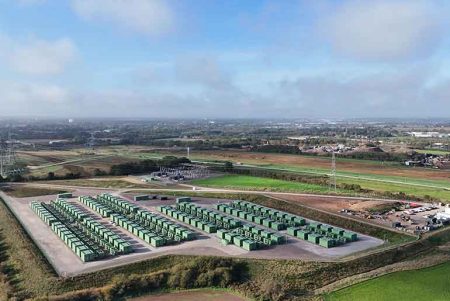
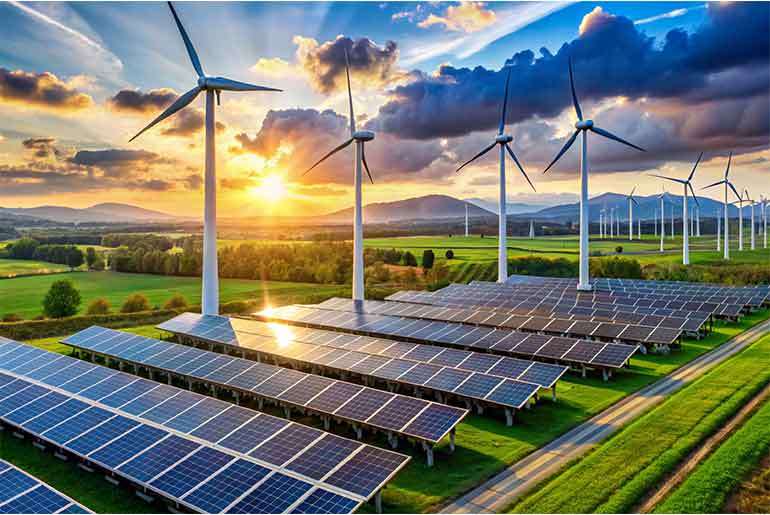
The company’s battery energy storage portfolio remains at an early pilot stage. Its first two storage-backed hybrid contracts include 4 MWh of battery storage alongside 56.4 MWp of solar and 40 MW of wind capacity.
CleanMax has also deferred approval for a standalone merchant BESS project at Bikaner, citing lower curtailment, increasing battery capital expenditure and merchant power tariffs capped at ₹10/kWh.
 Electrify your feed! Click here to join our Whatsapp group and to get the latest updates, expert insights, and innovations driving India’s energy storage revolution.