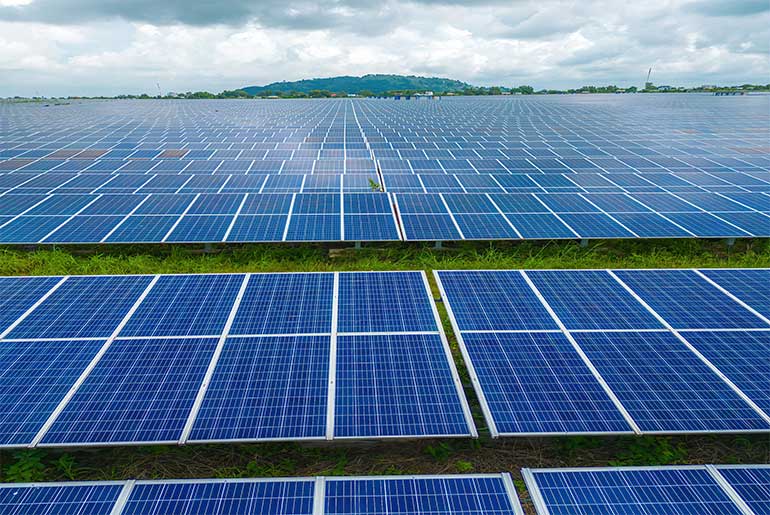
Coal India has installed 200 MW of solar power as part of its 300 MW Solar Power Project at Khavda, Gujarat. According to a regulatory filing, the firm received the commissioning certificate for the 200 MW capacity from the Gujarat Energy Development Agency (GEDA) on July 15, 2026.
A major turning point in Coal India’s renewable energy journey has been reached with the commissioning, especially after the business decided to remove its name from the Register of Companies and dissolve its wholly owned subsidiary, Coal India Limited (CIL) Solar PV Limited. The Comptroller and Auditor General of India’s (CAG) findings, which emphasised the company’s sluggish progress in fulfilling its renewable energy goals, also provide context for the development.
In 2015, Coal India committed to developing 1,000 MW of renewable energy capacity by March 2019, to reduce its annual energy charges by Rs. 55.50 crore. The government’s mandate was subsequently expanded in 2017, directing the company to develop 3,000 MW of solar capacity by 2024 and transition into a net-zero energy company.
However, Coal India had only constructed 122 MW of solar power by December 2024—just 4.08% of its 3 GW target—and the majority of its planned projects had been postponed until 2027–2028.
For a company with more than 200,000 employees, vast land holdings across 83 mining areas, and a significant captive power consumption base, the delay underscored the challenges in executing its renewable energy ambitions. Against this backdrop, the commissioning of the 200 MW Khavda solar capacity represents a notable step forward in reviving its clean energy expansion plans.
In another development, Coal India earlier secured a Letter of Award (LoA) for setting up a 600 MW (2×300 MW) solar power project at Jalaun Solar Park, Uttar Pradesh, for a tariff of Rs. 2.73/kWh. The project entails an estimated investment of Rs. 2,831.11 crore, and the company plans to complete the project within 18 months of signing the Power Purchase Agreement (PPA).
The Power Purchase Agreement (PPA), Implementation Support Agreement (ISA), and Land Rights Usage Agreement (LRUA) must be signed, according to Coal India, and the upfront solar park development fees must be paid before the ISA is executed.
Since its establishment, the 1,200 MW Bundelkhand Saur Urja Limited (BSUL) Jalaun Ultra Mega Renewable Energy Power Park has made steady growth. One of the biggest renewable energy projects in the state began in 2024 when the project’s foundation stone was placed at Jalaun, Uttar Pradesh.
 Electrify your feed! Click here to join our Whatsapp group and to get the latest updates, expert insights, and innovations driving India’s energy storage revolution.