
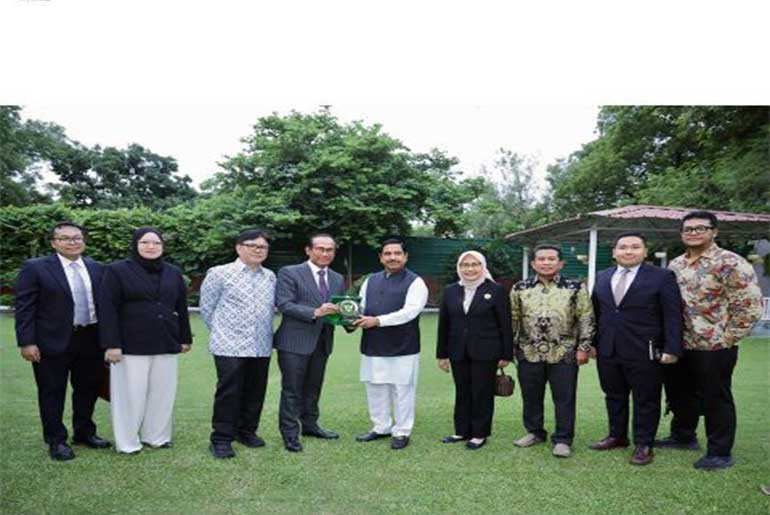
India-Indonesia Energy Partnership: Union Minister for New and Renewable Energy Pralhad Joshi chaired a high-level meeting with a delegation from Indonesia’s National Energy Council to discuss expanding bilateral cooperation in the renewable energy sector. The meeting focused on sharing policy experiences, strengthening clean energy partnerships, and identifying new opportunities for collaboration in solar and geothermal energy.
During the discussions, both sides reviewed India’s flagship renewable energy initiatives and explored ways to deepen cooperation in accelerating the clean energy transition. The meeting underscored the growing importance of India-Indonesia collaboration as both countries work toward enhancing energy security, reducing carbon emissions, and increasing the share of renewable energy in their respective energy mixes.
Joshi highlighted the progress achieved under the Pradhan Mantri Kisan Urja Suraksha evam Utthaan Mahabhiyan (PM-KUSUM) scheme, one of India’s key initiatives aimed at promoting solar energy in the agricultural sector. He noted that more than 2.7 million agricultural pumps have been solarised under the programme, enabling farmers to reduce dependence on conventional electricity and diesel while lowering irrigation costs and promoting sustainable farming practices.
The minister also shared the achievements of the PM Surya Ghar: Muft Bijli Yojana, which aims to accelerate rooftop solar adoption across the country. According to the ministry, the scheme has already benefited more than 4.7 million households, helping consumers generate clean electricity, lower electricity bills, and contribute to India’s renewable energy capacity expansion.
The Indonesian delegation expressed interest in understanding the implementation strategies, financing mechanisms, and policy frameworks behind these large-scale programmes. The exchange of experiences is expected to support Indonesia’s own renewable energy ambitions while opening avenues for future collaboration between the two nations.
Apart from solar energy, geothermal energy emerged as another key area of discussion. Recognising Indonesia’s vast geothermal resource potential and India’s increasing interest in diversifying its clean energy portfolio, both sides explored opportunities to expand cooperation in geothermal technologies, project development, and policy planning.
India Indonesia Energy Partnership emphasized strengthening institutional collaboration through knowledge sharing, technical exchanges, and capacity-building initiatives. Officials discussed facilitating greater cooperation between research institutions, industry stakeholders, and government agencies to promote innovation and accelerate the deployment of renewable energy technologies.
India and Indonesia have continued to strengthen their strategic partnership across multiple sectors in recent years, with clean energy becoming an increasingly important area of engagement. As emerging economies with ambitious climate commitments, both countries are seeking to scale up renewable energy deployment while ensuring reliable and affordable power access.
India has set an ambitious target of achieving 500 GW of non-fossil fuel-based electricity capacity by 2030 as part of its broader climate goals. The country has also launched several policy initiatives to promote solar energy, green hydrogen, battery energy storage, and other clean energy technologies.
The discussions between the two sides reflect a shared commitment to advancing sustainable energy solutions and fostering regional cooperation in the transition toward a low-carbon future. By leveraging each other’s strengths in renewable energy deployment, technology, and policy development, India Indonesia Energy Partnership aim to build a stronger clean energy partnership that supports economic growth, energy security, and climate resilience.
 Electrify your feed! Click here to join our Whatsapp group and to get the latest updates, expert insights, and innovations driving India’s energy storage revolution.