The Delhi government intends to plant the first solar tree in the capital at the Delhi Secretariat as part of a pilot initiative to boost sustainable energy generation in urban areas with limited space. The project’s objective is to evaluate the efficacy of vertical solar infrastructure before a more widespread installation throughout the city. It is being carried out by the power department in partnership with many municipal groups.
The Delhi Secretariat has been selected for the pilot as it houses the offices of Chief Minister Rekha Gupta, cabinet ministers, and senior government officials. Authorities believe the high-visibility installation will provide valuable operational insights while showcasing an alternative approach to renewable energy generation in dense urban environments.
If the pilot delivers the expected results, similar solar trees are planned for installation at key traffic intersections, public plazas and commercial areas across Delhi.
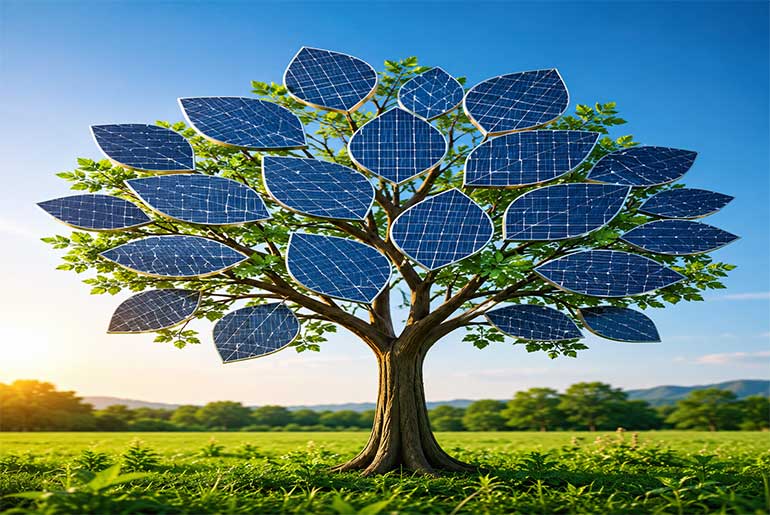
Unlike conventional rooftop or ground-mounted solar installations that require large horizontal areas, a solar tree is designed to maximize energy generation while occupying a relatively small footprint.
The structure consists of a vertical steel trunk with branch-like arms that support photovoltaic panels at different angles to improve sunlight exposure. This design enables multiple solar panels to be installed without consuming significant ground space, making the technology particularly suitable for densely populated cities where land availability is limited.
Officials are also evaluating advanced versions equipped with automated sun-tracking mechanisms that allow the panels to rotate throughout the day, helping improve electricity generation by maintaining optimal orientation towards the sun.
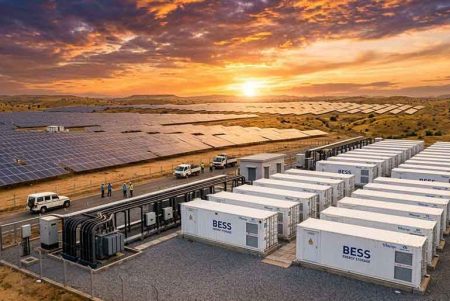
The electricity generated by the solar tree will be stored in battery energy storage systems integrated into the base of the structure. The decentralized power will then be used to operate nearby public infrastructure, reducing dependence on the conventional electricity grid.
According to the proposal, the stored energy will primarily supply power to street lighting, public electric vehicle charging stations and other civic utilities located close to the installation.
In addition to electricity generation, the proposed installation is intended to serve as a functional public space. The base of the solar tree will include seating, allowing it to provide shaded resting areas for pedestrians while integrating renewable energy infrastructure into the urban landscape.
The pilot is a component of Delhi’s larger initiatives to promote the use of renewable energy under its developing solar policy framework. The government wants to show how sustainable energy infrastructure can be incorporated into already-existing metropolitan areas without requiring new land by integrating compact solar generation, battery storage, and public utility features.
The solar tree model could be incorporated into Delhi’s public areas if the demonstration is successful, meeting the city’s long-term sustainability goals and local electricity needs.
 Electrify your feed! Click here to join our Whatsapp group and to get the latest updates, expert insights, and innovations driving India’s energy storage revolution.