Delhi is planning a broader push into renewable energy under its proposed Master Plan of Delhi 2047 (MPD-2047), focusing on leveraging underutilised public infrastructure and land to expand clean power generation across the capital.
The draft plan, recently approved by the Delhi Development Authority (DDA) and sent to the Centre for approval, proposes exploring renewable energy opportunities along existing canals and drains. Depending on technical feasibility, these locations could be used for solar and hydro power generation.
The plan also calls for greater use of greenfield areas under an agriculture-cum-solar farm scheme, while public infrastructure such as bus depots and metro stations would progressively shift towards meeting their electricity requirements through renewable energy sources.
Solar Potential Along Najafgarh Drain
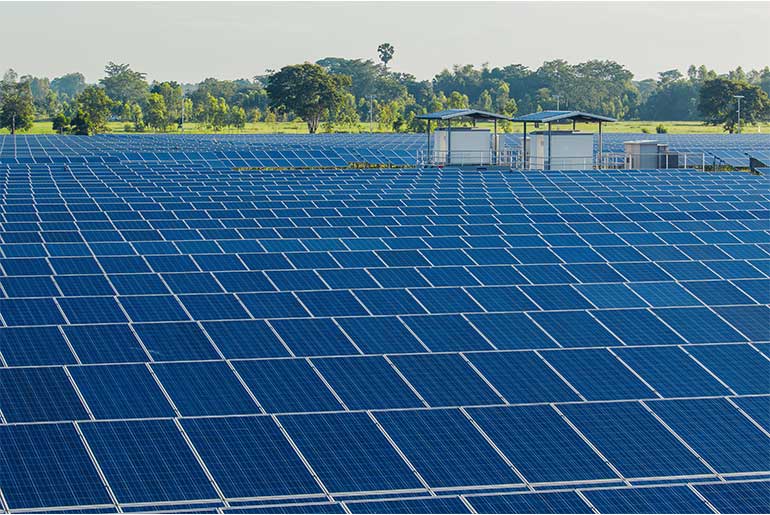
One of the initiatives being explored by the Delhi government involves installing solar panels along a six-kilometre stretch of the Najafgarh drain, from the Dhansa border to Ghummanhera.
The proposal builds on the government’s broader push to expand solar generation across the capital. Under the draft MPD-2047, government buildings and institutional campuses with rooftop areas exceeding 500 square metres would be required to install rooftop solar systems in accordance with the Delhi Solar Policy.
The plan also identifies other major public facilities—including airports, metro stations and railway stations—as potential sites for increased deployment of solar and other renewable energy technologies, subject to feasibility.
Delhi Looks to Boost Rooftop Solar
The renewable energy proposals are aligned with Delhi’s recent efforts to accelerate rooftop solar adoption.
Delhi Chief Minister Rekha Gupta had previously announced a green budget that included measures to increase solar power generation and develop supporting infrastructure in the capital.
The government is also examining ways to reduce the upfront cost of rooftop solar installations through subsidies and advance payments linked to generation-based incentives, according to Power Minister Ashish Sood.
Under the existing policy, consumers installing a 3-kW rooftop solar system can receive combined subsidies of up to INR 1.08 lakh. The installation cost of a 3-kW system is estimated at around INR 2.25 lakh.
Renewable Energy to Power Public Infrastructure
The MPD-2047 seeks to make renewable energy a larger part of Delhi’s future electricity mix by integrating solar generation into government facilities, transportation infrastructure and other public assets.
For a city facing increasing energy demand and limited land availability, the proposed use of rooftops, drains, canals, agricultural areas and transport infrastructure could provide additional avenues for expanding renewable generation without requiring large standalone solar parks.
If approved, the plan could provide a long-term framework for integrating renewable energy into Delhi’s urban infrastructure through 2047.
 Electrify your feed! Click here to join our Whatsapp group and to get the latest updates, expert insights, and innovations driving India’s energy storage revolution.