
Egypt has signed renewable energy agreements exceeding USD 1.8 billion with Norway’s Scatec and China’s Sungrow to advance two major green energy initiatives, strengthening the country’s renewable infrastructure. Prime Minister Mostafa Madbouly, along with senior officials, witnessed the signing, as announced by the Cabinet. These agreements mark a significant step in Egypt’s efforts to expand clean energy generation and storage capacity, supporting the country’s energy transition and long-term economic development.
Scatec’s Solar-BESS Project
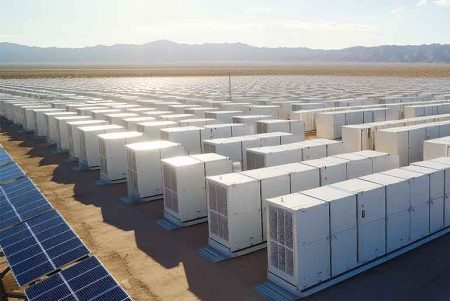
Norwegian developer Scatec will develop the 1.7 GW “Energy Valley” solar power plant in Minya Governorate, paired with 4 GWh of battery energy storage systems (BESS) distributed across Minya, Qena, and Alexandria. Scatec has signed a power purchase agreement (PPA) with the Egyptian Electricity Transmission Company covering a total capacity of 1.95 GW of solar power and 3.9 GWh of energy storage.
Terje Pilskog, Scatec CEO, stated, “By integrating advanced solar and battery technologies, we are providing Egypt with sustainable, round-the-clock power and grid-stabilising services, supporting both the country’s energy transition and the region’s long-term economic development.”
Sungrow BESS Manufacturing Plant
China’s Sungrow will establish the Middle East and Africa’s first BESS manufacturing facility in the TEDA Egypt zone at El-Sokhna, within the Suez Canal Economic Zone (SCZONE). The plant, covering 50,000 square meters, is expected to produce 10 GWh annually, with operations scheduled to begin in April 2027. The facility will support domestic production of energy storage systems, bolstering Egypt’s renewable capacity and technological capabilities.
Egypt’s Renewable Energy Landscape
Despite being a key Eastern Mediterranean gas producer, Egypt faces declining domestic gas output and relies on costly LNG imports to meet growing electricity demand. Currently, the country has 8,866 MW of installed renewable capacity from wind, solar, and hydro sources. Since July 2024, Egypt has added 1,150 MW of wind, 700 MW of solar, and 300 MWh of storage capacity. By 2027, total renewable capacity is projected to nearly double to 17,991 MW, with more than 9,000 MWh of energy storage.
Impact and Strategic Significance
These agreements with Scatec and Sungrow are expected to accelerate Egypt’s transition to clean energy, enhance grid stability, and contribute to long-term economic growth. The projects align with the government’s objectives to expand renewable generation, improve energy security, and strengthen the country’s position as a regional hub for sustainable power infrastructure.
 Electrify your feed! Click here to join our Whatsapp group and to get the latest updates, expert insights, and innovations driving India’s energy storage revolution.