
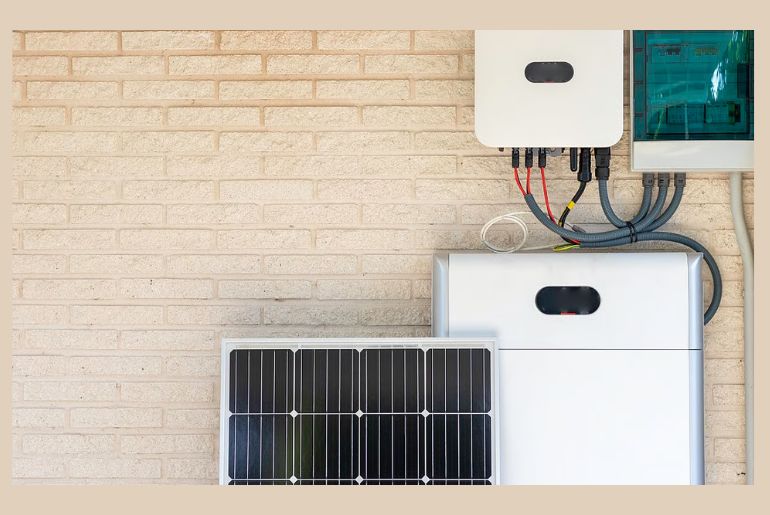
Ember, the energy think tank, reports that the cost of storing electricity from daytime solar to deliver reliable power anytime has fallen significantly. As of October 2025, the cost of utility-scale battery storage outside China and the US has dropped to just $65 per MWh, making it economically feasible to deliver solar electricity when it is needed.
Batteries have seen dramatic reductions in costs over the past two years. Ember’s research indicates that following a steep 40% decline in 2024, battery costs have fallen even further in 2025. The analysis draws on real-world evidence from recent auctions in Italy, Saudi Arabia, and India, alongside interviews with developers active in global markets.
Kostantsa Rangelova, Global Electricity Analyst at Ember, said:
“After a 40% fall in 2024 in battery equipment costs, it’s clear we’re on track for another major fall in 2025. The economics for batteries are unrecognizable, and the industry is only just getting to grips with this new paradigm.”
The research shows that the capital cost of a full grid-connected battery storage system is around $125/kWh for long-duration (four hours or more) utility-scale projects outside China and the US. Core battery equipment delivered from China costs approximately $75/kWh, while installation and grid connection add about $50/kWh.
These cost reductions have pushed down the Levelized Cost of Storage (LCOS) to $65/MWh. According to Ember, this decline is driven not only by cheaper batteries but also by longer lifetimes, higher efficiencies, lower financing costs, and clearer revenue models such as auctions. Ember has also released a live calculator allowing users to compute LCOS based on their own assumptions.
Rangelova emphasized the impact of these reductions on solar energy use:
“Solar is no longer just cheap daytime electricity; now it’s anytime dispatchable electricity. This is a game-changer for countries with fast-growing demand and strong solar resources.”
She added that if half of daytime solar generation is shifted to nighttime supply, the $65/MWh storage cost adds about $33/MWh to the total solar cost. With the global average price of solar at $43/MWh in 2024, dispatchable solar would cost around $76/MWh, demonstrating the economic viability of round-the-clock solar power.
Cheap batteries not only complement solar energy but also unlock its full potential, providing countries with scalable, secure, and affordable options for future power systems. Together, solar and battery storage offer a strong foundation for reliable clean electricity worldwide.
 Electrify your feed! Click here to join our Whatsapp group and to get the latest updates, expert insights, and innovations driving India’s energy storage revolution.