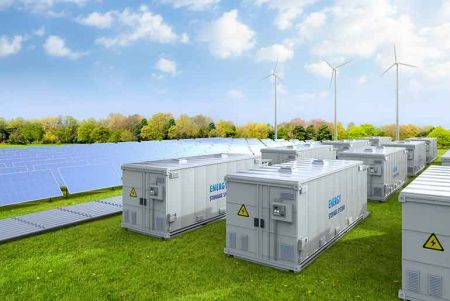
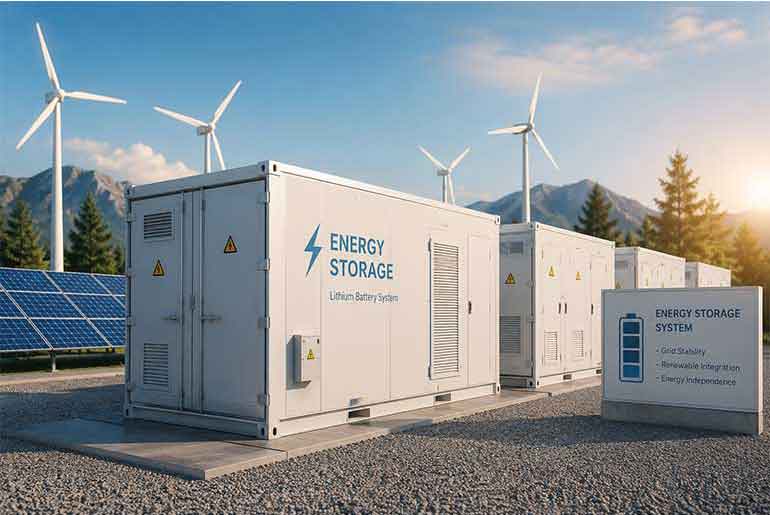
A row of battery containers may be the most visible part of an energy storage project, but it is far from the whole plant. Understanding the EPC Scope in Battery Storage Projects means looking beyond the batteries to everything required to make them stand safely on site, exchange power with the grid, communicate with operators and deliver the performance promised in the contract.
That responsibility is becoming much bigger as India’s BESS market moves into multi-GWh projects. In 2026 alone, NTPC and NTPC Green Energy Limited (NGEL) procurement activity has included large EPC packages running into several thousand MWh, alongside smaller utility-scale projects across different locations. For contractors, developers and utilities, this changing scale makes one question increasingly important: what exactly sits inside a BESS EPC contractor’s scope?
The answer is not as simple as engineering, procurement and construction.
A turnkey contractor may have to engineer the battery system, procure equipment, build foundations and electrical infrastructure, integrate PCS, transformers, BMS, EMS and SCADA, connect the facility to the grid, implement protection and safety systems, test the complete plant and prove that contractual performance requirements have been achieved. In some projects, the responsibility continues for years through comprehensive O&M, augmentation and battery replacement.
But here is the part every project owner and contractor needs to understand: EPC Scope in Battery Storage Projects is not universal.
One tender may require the contractor to supply virtually the complete battery-to-grid system. Another may provide the battery containers, PCS or EMS through a separate package and ask the contractor to build and integrate the remaining Balance of Plant. The physical project may look similar; the contractual responsibility can be completely different.
That is why choosing among the Top EPC Contractors for Energy Storage & Battery Storage Projects in India requires more than comparing company portfolios. And for contractors learning How to Bid for BESS EPC Projects, defining the scope boundary correctly is one of the first steps towards pricing the project correctly.
In this guide, we follow a BESS project from the first engineering drawing to final commissioning and handover. We will unpack engineering, procurement, Balance of Plant for Battery Storage, civil and electrical works, BMS, EMS and SCADA, fire protection, grid integration, performance testing and long-term O&M—and, most importantly, identify where one contractor’s responsibility ends and another party’s begins.
Because a battery manufacturer can supply the technology that stores electricity. The EPC contractor has to turn that technology into a functioning power plant.
Understanding EPC Scope in Battery Storage Projects
At its simplest, EPC stands for Engineering, Procurement and Construction. But in a BESS project, those three words cover a much wider chain of responsibilities.
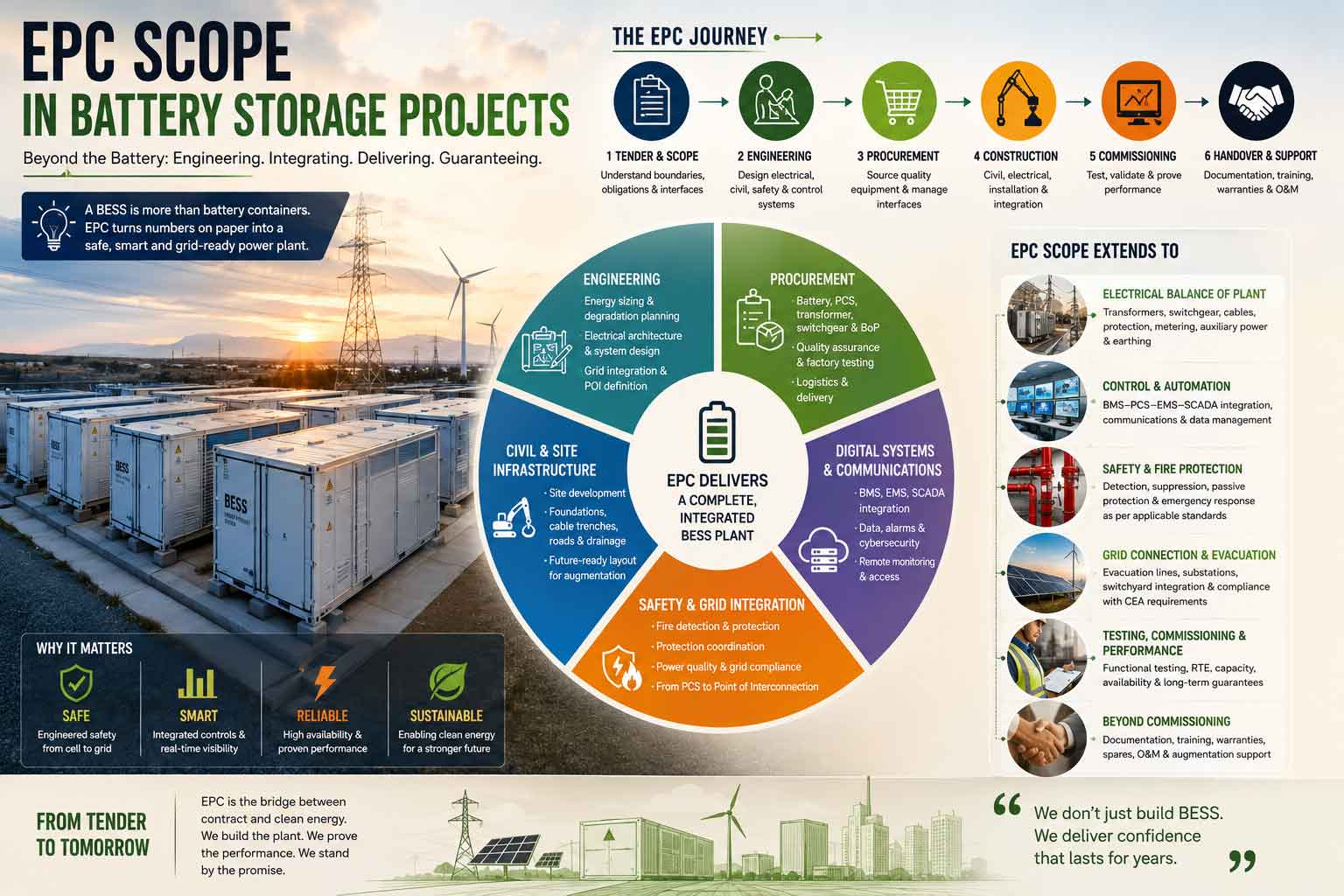
- Engineering determines how the storage plant will be designed—from MW/MWh sizing and system architecture to civil layouts, electrical systems, protection, controls and grid integration.
- Procurement converts that design into equipment and materials: batteries and PCS where included in contractor scope, transformers, switchgear, cables, control systems and the wider Balance of Plant. It can also extend to vendor engineering, inspections, factory testing, transportation, unloading and storage.
- Construction then turns those drawings and equipment packages into an operating facility through civil works, electrical erection, installation and system integration.
But the EPC Scope in Battery Storage Projects frequently continues beyond construction:
Engineering → Procurement → Construction → Integration → Testing → Commissioning → Performance Demonstration → Handover
And where the contract requires it:
→ O&M → Augmentation → Replacement
This is why EPC contractors should never define their responsibility from the project capacity or tender title alone.
Where Does Your EPC Battery Limit Begin and End?
Consider SECI’s 600 MW/1,200 MWh BESS project at Nandiyal, Andhra Pradesh.
Its Balance of System AC Package covers extensive design, engineering, procurement and supply within the allocated package, construction, erection, testing, commissioning, performance demonstration and five years of comprehensive O&M. Yet SECI’s package structure excludes specified core equipment—including BESS containers, PCS and EMS—from that contractor’s supply/work boundary.
The project is still a 1,200 MWh BESS.
But the contractor does not necessarily buy every component that makes it one.
This is where the concept of battery limits, or contractual interface boundaries, becomes critical. For every major package, the EPC team should be able to answer:
Who designs it? Who supplies it? Who receives and installs it? Who integrates it? Who tests it? Who warrants it? And who maintains it after commissioning?
Suppose the owner supplies the battery containers while the contractor develops the Balance of Plant for Battery Storage. The battery may arrive as owner-supplied equipment, but foundations, electrical interfaces, communications, installation responsibilities and system integration still have to be allocated somewhere.
The same question applies at the other end of the plant. Does the contractor’s electrical responsibility stop at the PCS? At the medium-voltage bus? At the substation? Or does it continue through the power-evacuation infrastructure to the Point of Interconnection?
Two projects with identical MW/MWh ratings can therefore carry completely different EPC responsibilities.
Before you price equipment, pour foundations or select a transformer, define the boundary first.
Because in EPC Scope in Battery Storage Projects, what sits between two packages can sometimes create more risk than what is clearly written inside either one.
Engineering the BESS: From MW/MWh on Paper to a Buildable Plant
A tender may describe a battery storage project in two numbers—MW and MWh. For an EPC contractor, those numbers are only the starting point. This is where the EPC Scope in Battery Storage Projects moves from contractual requirements to engineering decisions.
Suppose a tender asks for a four-hour BESS. Simply multiplying MW by four and moving to battery procurement can be an expensive mistake. Engineers need to establish usable or deliverable energy, the contractual measurement point, battery operating limits, conversion losses, auxiliary consumption and expected degradation.
If the contractor must maintain specified capacity years after commissioning, the design may require initial oversizing, future augmentation or both. And augmentation is not merely about adding batteries later—it can require space, cable routes, electrical headroom, controls and equipment access to be considered from Day One.
The next decision is the electrical architecture. Depending on the application and tender, the BESS may use an AC-coupled or DC-coupled configuration, influencing the PCS/inverter arrangement, cabling, protection, controls, losses and interfaces.
Engineers then follow the complete electrical journey:
Battery → PCS → Transformer → Switchgear → Power Evacuation → Point of Interconnection
The battery and PCS must work as one system. Battery voltage range, PCS operating window, efficiency, reactive-power capability, communications and project-specific grid requirements all need consideration. If separate OEMs supply them, someone must still integrate their electrical and control interfaces—one reason experienced Battery Storage EPC Companies in India do much more than aggregate equipment.
The wider Electrical Scope in Battery Storage may include transformers, switchgear, cables, protection, metering, auxiliary power, earthing, lightning protection and evacuation infrastructure.
And that leads to the critical question: Where does the contractor’s electrical responsibility end?
At the BESS MV bus, a new substation, an existing switchyard or the grid Point of Interconnection?
NTPC’s North Karanpura Solar+BESS package, for example, extends bidder responsibility into power evacuation and integration with the existing switchyard. The boundary can therefore materially change both EPC scope and price.
Engineering, ultimately, means following every promised MW and MWh from the battery to the contractual delivery point—and ensuring nothing is lost between the interfaces.
Procurement: Turning Engineering Into Equipment
Once the design is developed, drawings begin turning into purchase orders. But procurement within the EPC Scope in Battery Storage Projects is not simply about buying the lowest-priced battery, PCS or transformer.
Depending on the contractual boundary, the contractor may procure batteries, PCS, transformers, switchgear, cables, protection equipment, auxiliary systems, controls and the wider Balance of Plant for Battery Storage. In other projects, major equipment may be supplied separately by the owner.
SECI’s 600 MW/1,200 MWh Nandiyal BESS demonstrates this distinction. Its Balance of System package excludes specified core equipment—including BESS containers, PCS and EMS—from that contractor’s supply/work boundary while retaining a substantial wider project scope.
For an EPC contractor, therefore, owner-supplied equipment does not automatically mean not my responsibility. Receipt, installation, electrical interfaces, communications, integration or commissioning may still fall within the contractor’s package depending on the tender.
Procurement Is Also Interface Management
One OEM may supply the battery, another the PCS and another the transformer. Each can meet its individual specification while the complete plant still encounters problems if those packages do not interface correctly.
The EPC team therefore needs to check whether battery and PCS operating ranges align, communications are compatible, transformer parameters support the design and equipment dimensions and loading information reach the civil team before foundations are finalised.
Quality control matters too. Depending on the tender, equipment may undergo vendor-document review, manufacturing inspections, factory tests or FAT and other specified checks before dispatch. SECI’s Nandiyal package, for instance, includes manufacturer testing and multi-level inspections within its stated contractor responsibilities.
Procurement can also extend beyond the factory gate to packing, transportation, unloading, handling and site storage. Heavy equipment deliveries must be coordinated with site access, lifting arrangements and foundation readiness.
Finally, the OEM promise should support the EPC promise. If the contractor guarantees capacity, efficiency or availability, OEM warranties, technical support and spare-parts strategies need to support those obligations. A component may be under warranty, but a months-long replacement delay can still hurt project availability.
In EPC Scope in Battery Storage Projects, good procurement means buying equipment that can be delivered, integrated, supported and ultimately meet the performance the contractor has promised.
Building the Ground Beneath the Battery
Even a containerised BESS needs substantial physical infrastructure. Civil Works in BESS Projects can include site development, foundations for battery enclosures, PCS, transformers and switchgear, cable trenches, internal roads, drainage, control/electrical buildings and other infrastructure specified in the contract.
Before that work begins, the contractor may need to understand topography, soil conditions, drainage, underground utilities, equipment access and existing infrastructure. A greenfield BESS can therefore present a very different civil challenge from storage being added to an operating renewable plant or substation.
Civil and OEM engineering must also move together. Equipment dimensions, loads, anchoring and cable-entry information need to reach the civil team before foundations are frozen. Similarly, electrical engineers determine where cables must travel while civil engineers provide the trenches, ducts and crossings that make those routes possible.
Design for Today—and Tomorrow
Access is particularly important. Battery containers, transformers and other heavy equipment must reach their installation points during construction and may need to be accessed again for maintenance, replacement or augmentation.
If additional battery capacity is expected later, ask early: Where will it go?
Future space, foundations, cable routes, electrical interfaces and access may need consideration during today’s design. Otherwise, a layout optimised only for Day-One capacity can make tomorrow’s augmentation significantly harder.
Brownfield BESS projects add another challenge. NTPC’s Port Blair project, for example, required integration with an existing solar plant and 33 kV switchyard. Contractors working in such environments may need to navigate existing roads, trenches, earthing systems, operating equipment and limited space.
Civil design also interacts with safety. Equipment arrangement and access can be influenced by fire and emergency requirements, although exact layouts and separation criteria must come from the applicable project specifications and standards rather than a generic template.
A battery container may arrive largely assembled. The plant around it does not.
The electrical single-line diagram tells you how the BESS should work; civil engineering determines whether that system can actually be built.
Making the BESS Think: BMS, EMS, SCADA and Communications
You can install every battery container, PCS and transformer correctly and still not have an operational BESS. The equipment must also monitor conditions, exchange information and respond to commands. This digital layer is therefore an important part of the EPC Scope in Battery Storage Projects.
Three systems sit at its centre:
- BMS watches and protects the battery.
- EMS manages how stored energy is operated.
- SCADA allows the wider plant to be supervised and controlled.
The Battery Management System monitors parameters such as voltage, temperature, current and State of Charge according to the battery technology and system design. The Energy Management System operates at a higher level, coordinating charging and discharging according to the required operating strategy. SCADA brings plant data, equipment status, alarms and controls together for operators.
For the EPC contractor, however, the bigger challenge is making them communicate:
Battery/BMS ↔ PCS ↔ EMS ↔ SCADA ↔ Plant/Grid Interface
Different systems may come from different OEMs, making communication protocols, commands, alarms and control interfaces critical. This is why SCADA Requirements in BESS should be addressed during engineering rather than left until commissioning.
Brownfield projects make integration even more important. NTPC’s Port Blair BESS, for example, required integration with the existing SCADA of the solar PV project. Remote monitoring can introduce further considerations around cybersecurity, system access and post-handover support, subject to applicable requirements and owner specifications.
The battery OEM may understand the battery and the SCADA provider the control system. The EPC contractor still has to make the complete plant work together.
Making the BESS Safe and Grid-Ready
The EPC Scope in Battery Storage Projects must also answer a critical question: what happens when something goes wrong?
Depending on the technology and project requirements, the safety strategy can involve battery monitoring, thermal management, fault detection, alarms, electrical isolation, emergency shutdown and fire detection and protection.
A battery-level fault may require coordinated action across the BMS, PCS, switchgear, EMS/SCADA and protection systems. Safety therefore needs an integrated philosophy rather than independent equipment packages.
The exact Fire Protection Requirements in BESS should come from applicable regulations, standards and project specifications. Indian tenders already include fire protection within EPC responsibilities, while India’s BESS-specific safety framework continues to evolve. Contractors should therefore avoid copying one project’s fire design or separation criteria into another.
The responsibility may also continue all the way to the grid:
PCS → Transformer → Switchgear → Protection & Metering → Power Evacuation → Substation → Point of Interconnection
Depending on the contract, this can include protection coordination, metering, communications, power-quality requirements and grid-compliance studies.
NTPC’s North Karanpura Solar+BESS package illustrates this wider boundary, extending bidder responsibility into power evacuation and integration with the existing switchyard.
The Point of Interconnection (POI) can therefore define both a technical and commercial boundary. Applicable CEA connectivity, safety and metering requirements must be considered alongside project-specific tender requirements; a specification from one tender should never automatically be treated as an India-wide BESS standard.
A compliant battery alone does not create a compliant power plant. The complete battery, electrical, control, protection and grid infrastructure must operate as one system—and making that happen sits at the heart of BESS EPC.
Proving the Plant: Testing, Commissioning and Performance Guarantees
The containers are installed. The cables are terminated. The transformer is energised. SCADA screens are live.
Is the BESS complete?
Not yet.
Within the EPC Scope in Battery Storage Projects, construction completion and successful commissioning are two different milestones. Before handover, the contractor may have to demonstrate that individual equipment works, that the complete system operates together and, ultimately, that the plant delivers the performance promised in the contract.
The journey can move through:
Pre-commissioning → Energisation → Functional Testing → System Integration → Grid Synchronisation → Performance Testing → Acceptance
During Commissioning of Battery Storage Systems, battery systems, PCS, transformers, switchgear, protection, BMS, EMS, SCADA, communications, auxiliaries and safety systems must work as an integrated plant rather than as separate equipment packages.
The Number on the Container Is Not Necessarily the Number You Guarantee
This is particularly important for battery capacity.
A tender can distinguish between installed nameplate capacity and the energy the BESS must actually deliver at a specified measurement point. Degradation, operating limits, conversion losses and auxiliary consumption can all influence that relationship.
Performance requirements also vary substantially between projects.
For example, one 2026 NTPC BESS EPC specification we examined requires 200 MWh of deliverable capacity against at least 220 MWh of installed nameplate capacity per specified block, alongside a minimum 80% monthly round-trip efficiency including auxiliary consumption, measured at the defined 33 kV BESS termination point. The same procurement specifies 98% monthly availability.
These are requirements of that particular NTPC project—not universal Indian BESS benchmarks.
Another Indian storage procurement we examined specifies 85% AC-to-AC monthly RTE, demonstrating precisely why contractors cannot carry one performance number from one tender into another.
Read the Measurement Point, Not Just the Percentage
If a tender states an RTE guarantee, do not stop at the percentage.
Ask:
- Where is it measured?
- Are auxiliary loads included?
- What losses sit inside that boundary?
- Over what period is it calculated?
The answer determines whether losses from PCS, transformers, cables, HVAC and other auxiliary equipment can affect the contractual result.
The same discipline applies to capacity and availability.
This is where several parts of the EPC Scope in Battery Storage Projects suddenly converge. Equipment selection affects efficiency. Redundancy can affect availability. HVAC can influence both auxiliary consumption and battery operating conditions. Degradation modelling affects future capacity. SCADA and metering provide the information used to demonstrate performance.
Commissioning Today May Not End the Guarantee Tomorrow
Some BESS contracts extend performance responsibility years beyond initial acceptance.
Where degradation causes deliverable capacity to fall, the contractor may be required to augment the system if augmentation sits within its contractual scope. That can mean adding batteries and integrating them with the existing electrical, civil and digital infrastructure.
Long-term performance therefore has to be considered during Day-One engineering.
A BESS can pass its first commissioning test and still carry years of contractual responsibility ahead.
That is why EPC Scope in Battery Storage Projects cannot end with the words “testing and commissioning” whenever the contract promises something more.
Installation proves that you built the plant. Commissioning proves that it works. Performance guarantees prove whether it works as you promised.
Where Does the EPC Scope End?
The EPC Scope in Battery Storage Projects does not always end at commissioning. Depending on the contract, the contractor may also provide as-built drawings, manuals, training, warranties, spares and long-term O&M Contracts for BESS. Some projects extend responsibility further into capacity augmentation, battery replacement and disposal.
This makes the final scope boundary as important as the starting one. Before learning How to Bid for BESS EPC Projects, contractors should know exactly what they remain responsible for after handover—and for how long.
A well-defined EPC scope ultimately answers three questions: What do you build? What do you guarantee? And when does your responsibility end?
 Electrify your feed! Click here to join our Whatsapp group and to get the latest updates, expert insights, and innovations driving India’s energy storage revolution.