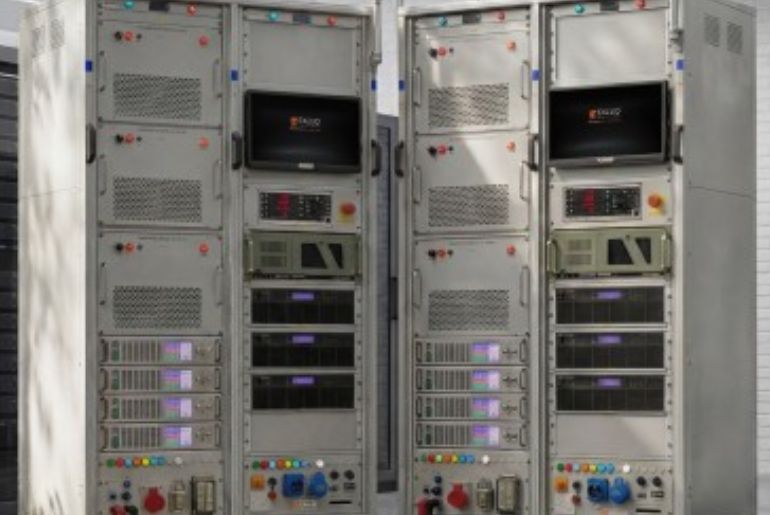
Exeliq has launched a 120 kW grid-tied inverter test system to enhance domestic solar testing capabilities. The company said the new system is designed to support accurate performance evaluation and compliance verification of solar inverters within India.
According to Exeliq, the launch is intended to strengthen local testing infrastructure and reduce reliance on overseas facilities. The development comes at a time when India’s solar manufacturing sector is expanding and demand for certified, high-quality equipment continues to grow.
Built for Real-World Grid Simulation
The 120 kW grid-tied inverter test system is engineered to replicate real grid conditions, allowing manufacturers and laboratories to conduct detailed and reliable testing. The platform enables validation of inverter efficiency, safety features, grid synchronisation, and power quality performance.
Company officials stated that the system provides “precise and repeatable testing under controlled conditions,” helping manufacturers ensure their products meet required national and international standards.
By offering advanced testing features within the country, Exeliq said it aims to support faster product development cycles and improved compliance processes for solar inverter manufacturers.
Supporting Indigenous Manufacturing
Exeliq noted that as India continues to expand its renewable energy capacity, the need for strong domestic testing facilities has become increasingly important. The company described the system as a step toward building a more self-reliant solar ecosystem.
A company representative said, “The introduction of the 120 kW grid-tied inverter test system reflects our commitment to strengthening India’s solar testing infrastructure and supporting domestic manufacturing growth.”
The system is expected to help improve product reliability, enhance safety standards, and build greater confidence in locally manufactured grid-connected solar equipment.
With India accelerating its clean energy transition, Exeliq emphasised that robust testing infrastructure will remain essential to ensure long-term stability and performance across the solar sector.
 Electrify your feed! Click here to join our Whatsapp group and to get the latest updates, expert insights, and innovations driving India’s energy storage revolution.