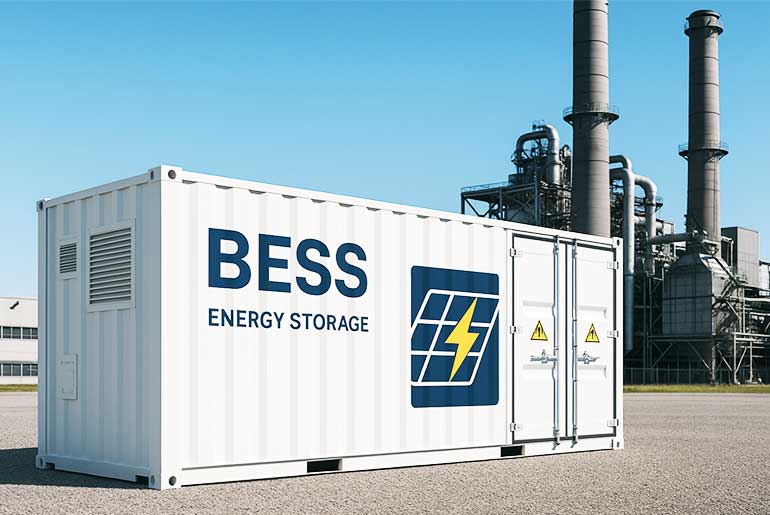
The Gujarat Electricity Regulatory Commission (GERC) has given the green light to Gujarat Urja Vikas Nigam Limited (GUVNL) to move forward with a major new energy storage project. The plan involves securing 335 MW / 670 MWh of standalone battery storage capacity to help the state better manage its growing supply of solar and wind energy.
This approval is a big win for the state’s grid stability. Because renewable energy can be unpredictable, these massive batteries will act like a giant power bank—soaking up extra electricity generated during sunny or windy hours and saving it for the evening when demand peaks.
By using the competitive rates settled on earlier this year, GUVNL is aiming to make the grid more reliable while cutting down on the need for traditional fossil fuels. It’s a practical step toward making Gujarat’s clean energy transition smoother and more efficient for everyone.
The Auction Breakdown: Record Low Tariffs
The Phase VIII tender witnessed intense competition among domestic and international players, leading to highly competitive price discovery. The auction yielded an L1 tariff of ₹2.10 lakh per MW per month.
- Advait Energy Transitions Limited emerged as the primary winner, securing 150 MW of the capacity at the L1 rate.
- Sundrops Energia (KP Group) was allocated 120 MW at a tariff of ₹2.12 lakh per MW per month.
- Equentia Natural Resources secured the remaining 65 MW at the same rate of ₹2.12 lakh per MW per month.
Technical Mandates & Grid Stability
The projects will be developed on a Build-Own-Operate (BOO) basis and connected to Gujarat’s Intra-State Transmission System (InSTS). To ensure high performance, GERC has mandated strict operational requirements:
- Dual-Cycle Requirement: Developers must ensure the system is available for two full charge-discharge cycles per day.
- Availability Guarantee: A minimum annual system availability of 95% is mandatory.
- C-Rate Performance: The batteries must support a 0.5 C-rate, meaning they can fully charge or discharge their rated energy over a two-hour window.
Viability Gap Funding (VGF) & Indigenisation
A unique highlight of this phase is the inclusion of Viability Gap Funding (VGF) support, estimated at ₹18 lakh per MWh. This financial cushion, supported through the Power System Development Fund (PSDF), is intended to make large-scale storage economically viable for state DISCOMs while keeping consumer tariffs stable.
Furthermore, in line with “Atmanirbhar Bharat” goals, the project carries a 20% local content requirement. Notably, the Energy Management System (EMS) software—the “brain” of the battery—must be indigenously developed within India, ensuring data security and domestic technological growth in the storage sector.
Why It Matters for Gujarat
As Gujarat targets 100 GW of renewable energy capacity by 2030, the “Sun Held Captive” strategy—represented by these BESS projects—is no longer optional. These 670 MWh of storage will act as a massive “shock absorber” for the grid, preventing the wastage of solar energy during sunny afternoons and ensuring that Gujarat’s industrial and residential hubs have access to clean power even after the sun sets.
 Electrify your feed! Click here to join our Whatsapp group and to get the latest updates, expert insights, and innovations driving India’s energy storage revolution.