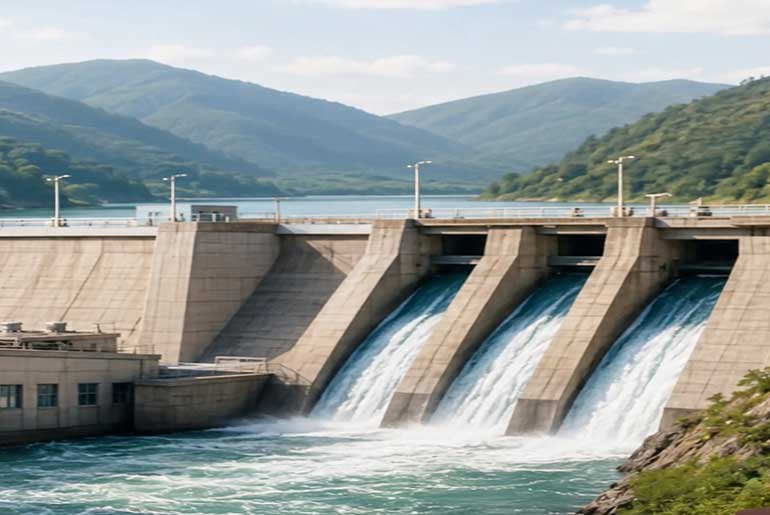
In a significant move aimed at enhancing the state’s control over its hydropower resources, Himachal Pradesh Chief Minister Sukhvinder Singh Sukhu has directed officials to initiate the process of taking over three hydro electric projects currently allotted to SJVN Limited. The decision was taken during a high-level review meeting of the state’s power department, underscoring the government’s continued push to secure greater benefits from the state’s natural resources.
The three projects identified for takeover include the 382 MW Sunni Dam Hydroelectric Project, the 210 MW Luhri Stage-I Hydroelectric Project, and the 66 MW Dhaulasidh Hydroelectric Project. All three projects are being developed by SJVN in Himachal Pradesh and collectively represent a generation capacity of 658 MW.
According to an official release issued by the Himachal Pradesh government, Chief Minister Sukhu emphasized that hydropower remains the backbone of the state’s economy and asserted that the benefits arising from Himachal’s vast hydropower potential must primarily accrue to its people. He stated that the present government is committed to safeguarding the interests of the state and ensuring optimal utilization of its natural resources for public welfare.
The decision is expected to heighten the existing debate on ownership, revenue sharing and operational control of hydroelectric assets in Himachal Pradesh. The state government has been demanding a higher share of revenues and greater participation in projects being developed by central public sector undertakings operating in the state for the last few years.
Among the projects under consideration, the 210 MW Luhri Stage-I project is a run-of-river scheme located on the Sutlej River across Shimla and Kullu districts. The project is designed to generate approximately 758 million units (MU) of electricity annually in a 90 percent dependable year. Meanwhile, the 382 MW Sunni Dam project forms part of the larger Luhri hydroelectric cascade on the Sutlej basin. The 66 MW Dhaulasidh project, situated in Hamirpur district, is another strategically important hydropower asset currently under development by SJVN.
During the same meeting, the Chief Minister also directed officials to renegotiate the terms and conditions of the 500 MW Duggar Hydroelectric Project being developed by NHPC. The instruction follows NHPC’s proposal to increase the height of the dam, with the state government seeking additional benefits commensurate with the revised project parameters.
Sukhu further highlighted the government’s success in resolving the long-pending impasse surrounding the 422 MW Kishau Dam Project. Under the revised arrangement, Himachal Pradesh will not be required to make any capital investment while securing 211 MW of free power from the project. The state estimates that this entitlement could generate nearly ₹600 crore in annual revenue.
The latest directive signals the Himachal Pradesh government’s intent to assert greater ownership over its hydropower assets and maximize economic returns from the state’s abundant hydro resources, a sector that continues to play a pivotal role in the region’s economy and India’s clean energy ambitions.
 Electrify your feed! Click here to join our Whatsapp group and to get the latest updates, expert insights, and innovations driving India’s energy storage revolution.