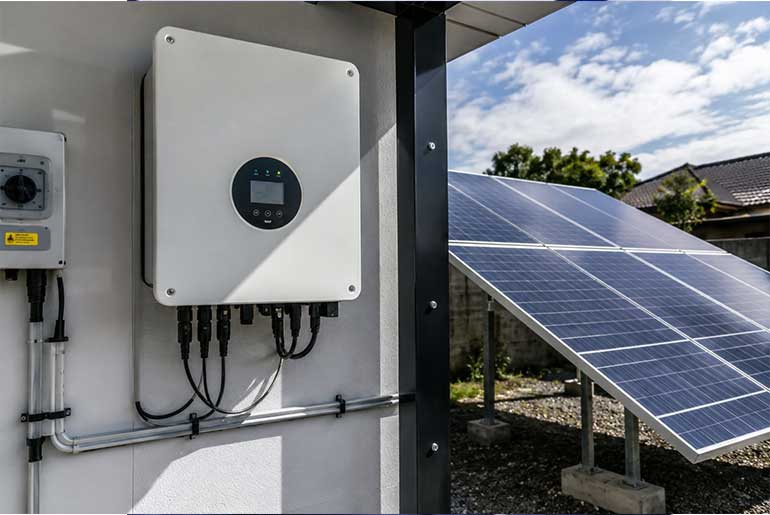
The KSEB has made it mandatory for all future grid-connected solar projects with capacities up to 100 kW to use solar inverters certified under the Bureau of Energy Efficiency’s (BEE) Standards and Labelling Programme. The move is aimed at improving energy efficiency, ensuring higher system performance, and enhancing the long-term reliability of rooftop solar installations across the state.
As per the new directive, all new projects seeking Kerala State Electricity Board’s approval for grid connectivity will have to comply with BEE labelling norms. During the project inspection and commissioning processes, the utility has said it would accept only BEE-certified inverters that meet the prescribed minimum efficiency standards. The requirement will also be reflected in future tender specifications and rooftop solar programme guidelines.
This mandate is in line with the notification issued by the Ministry of Power on 28.03.2023 under the Energy Conservation Act, 2001, which made mandatory minimum efficiency standards and labelling requirements for grid connected solar inverters up to 100 kW effective from January 1, 2026. These standards are applicable for manufacture or import of single phase and three phase, non-storage, grid connected solar inverters in India.
Inverters, under the national framework, need to comply with performance standards based on IS 17980:2022 and IEC 62891:2020 testing protocols. The regulations lay down minimum overall efficiency levels according to the inverter capacity, with larger capacity inverters required to achieve efficiencies of up to 98 per cent. Also, the BEE energy labels of all eligible products should be displayed prominently to help consumers make an informed choice when purchasing products.
KSEB believes that adopting high-efficiency, BEE-labelled inverters will improve the quality and reliability of distributed solar installations while reducing energy losses in the system. The measure is also expected to encourage the deployment of high-performance equipment in Kerala’s rapidly expanding rooftop solar market and support the state’s broader renewable energy transition goals.
 Electrify your feed! Click here to join our Whatsapp group and to get the latest updates, expert insights, and innovations driving India’s energy storage revolution.