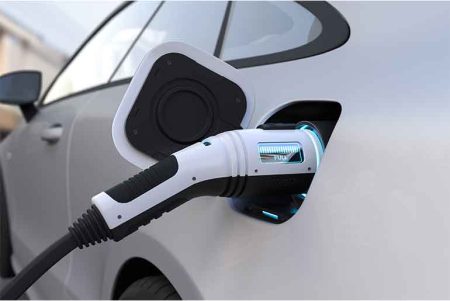
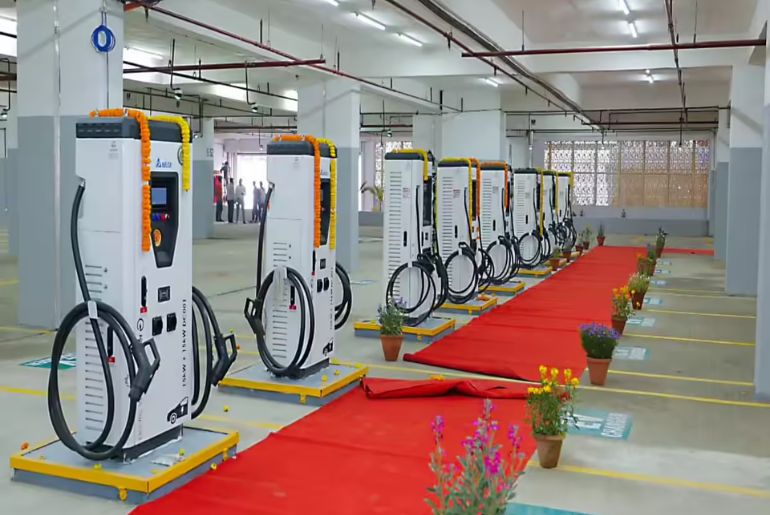
The Government of Himachal Pradesh has taken a big step toward encouraging clean transportation and long-lasting infrastructure by making it mandatory for all commercial, public, semi-public, and real estate projects in the state to have electric vehicle (EV) charging stations.
The announcement was made by Rajesh Dharmani, Minister for Town and Country Planning, who stated that the move is part of the government’s broader vision to transform Himachal Pradesh into a green energy state.
Speaking on Tuesday, Dharmani said the policy has been aligned with the Model Building Bye-Laws to ensure that the state’s infrastructure keeps pace with the increasing adoption of electric vehicles.
Rajesh Dharmani, Minister for Town and Country said, “the state government was committed to become a green energy state and to realize this decisive legislative update has been integrated for sustainable infrastructure into urban development.”
EV Charging Mandatory Under New Amendment
According to the minister, the mandate has been introduced under the Himachal Pradesh Town and Country Planning (17th Amendment) Rules, 2026. The amendment requires developers to install EV charging infrastructure in new commercial and public-use buildings as well as real estate developments.
Dharmani explained that the decision is aimed at preparing the state’s urban infrastructure for the growing demand for electric mobility while supporting the transition toward cleaner transportation systems.
He said, “under the Himachal Pradesh Town and Country Planning (17th Amendment) Rules, 2026, the government has mandated the installation of Electric Vehicle (EV) charging stations in all commercial, public, semi-public buildings and real estate projects.”
Incentives for Energy-Efficient Buildings
In addition to promoting EV infrastructure, the state government is also strengthening measures to improve energy efficiency in buildings.
The minister said that the government has strictly implemented the Himachal Pradesh Energy Conservation Building Code (HPECBC) and Rules, 2018. Under these regulations, certain types of buildings can receive additional development benefits if they meet energy efficiency standards.
Specialized buildings such as hotels, hospitals, educational institutions, and shopping complexes with a built-up area of 750 square meters or more will be eligible for an additional 0.25 Floor Area Ratio (FAR) over the base FAR of 1.75, provided they comply with the Energy Conservation Building Code (ECBC) standards.
Ensuring Compliance Through Energy Audits
To ensure that these standards are properly implemented, developers will be required to appoint energy auditors approved by the Bureau of Energy Efficiency (BEE).
These authorized auditors will review project designs and monitor construction stages to confirm compliance with energy efficiency norms before municipal authorities issue occupancy certificates.
The initiative is expected to encourage sustainable construction practices while preparing the state’s infrastructure for the future of electric mobility and energy-efficient urban development.
 Electrify your feed! Click here to join our Whatsapp group and to get the latest updates, expert insights, and innovations driving India’s energy storage revolution.