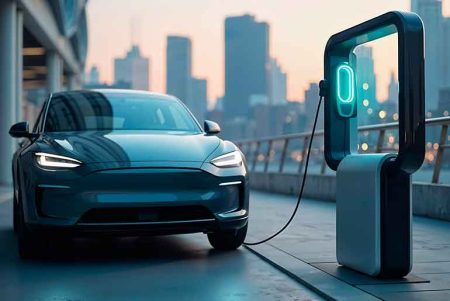

“How long does it take to charge an EV?” is one of the most common questions posed by both potential and current EV owners as EVs gain popularity. Giving a set number of hours isn’t the only way to answer the question. The time required to charge an EV is actually something that can fluctuate based on several different factors, battery capacity being perhaps one of the most essential of these.
Both daily users and fleet operators must understand the relation between the charging time of an EV and the size of its battery. Planning, efficiency, and user experience will all be affected regarding how the battery capacity of your EV relates to its charging time, whether at home, on the way to your destination, or while managing a commercial EV fleet. In the next section, we take a detailed look into the strength of this relationship and also share some recommendations to improve your charging practice.
Understanding Battery Capacity
Battery capacity is the total measure of energy a battery can hold. Generally measured in kilowatt-hours ( kWh ), battery capacity is similar to gas tank size in gasoline or diesel vehicles in that it indicates the fuel capacity of an EV. A bigger battery can hold more energy, which generally means a longer range, but it also means longer charging times for an EV. For example, the Hyundai IONIQ 5 has a large 72.6 kWh battery, the MG ZS EV has a 50.3 kWh battery and the Tata Nexon EV has a 30.2 kWh battery. With all else equal, the larger battery would take longer to charge from empty to fully charged.
Just keep in mind that battery size is only one part of the equation when it comes to charging time of an EV, as the maximum acceptance rate of the vehicle and the output power of the charger also influence performance, but battery capacity is a bigger influence when discussing how an EV will compare to another EV when charging.
EV Charger Types and Power Output
The type of charger has a major role in how long the charging time is for an EV. The four main charger types and what they can do about charging time for EVs are as follows:
Level 1 AC (2.5 kW Standard Home Socket)
- Very slow
- Gains about 8–10 km per hour
- Only suitable for small battery EV overnight charging at home
- Charges a 40 kWh battery in around 16 hours
Level 2 AC (7.2 kW, wall box or pole-mounted)
- Moderately slow
- Gains about 25–30 km per hour
- Good for charging at home or work
- Charges a 60 kWh battery in around 8 to 9 hours
Type 3 DC Fast Charging (50kW)
- Offer public charging at a good speed
- Charges a 50 kWh battery from 20–80% in about 50 minutes.
- Good for on-the-road or highway top ups
- DC Fast Charging (150 kW and over)
- Likely higher-end EVs and fancier chargers.
- Charge battery from 0-80 (around 70 kWh battery) in about 20–25 minutes.
- Needs thermal battery management to counterheat.
When buying or selling, or optimizing charging time to prevent waiting in line, it’s helpful to know which charger is best based on battery capacity.
How to Determine Charging Time
The following is the fundamental formula for calculating EV charging time:
- Battery Capacity (kWh) ÷ Charger Output (kW) = Charging Time (in hours)
This calculation is theoretical, though.Let’s explore it in a number of real-world scenarios: - A Tata Nexon EV charged via a 7.2 kW AC charger with a 30.2 kWh battery:
→ EV charging time = 30.2 ÷ 7.2 ≈ 4.2 hours - An MG ZS EV charged via a 50 kW DC fast charger with a 50.3 kWh battery:
→ EV charging time = 50.3 ÷ 50 ≈ 1 hour - A Hyundai IONIQ 5 charged via a 150 kW ultra-fast charger with a 72.6 kWh battery:
→EV charging time = 72.6 ÷ 150 ≈ 29 minutes
The important thing to remember is that most EVs do not charge at a constant rate. For example, fast charging is generally limited to 80% state of charge (SoC) as a way to maintain battery health so that charging rate will drop off before its 100% capacity has been reached. Charging time will increase sharply above 80% SoC due to this tapering behavior.
Further, drivers will seldomly charge at a 0%-100% range. In practice, charging time is much less in duration because the ‘real world’ charging behavior is also done in ‘steps’. For example, a typical charging session would be from 20%-80% SoC.
Factors Affecting Charging Speed in the Real World
Even with conventional charging equipment and a provided battery capacity, the charging time is impacted by many factors in the real world:
1. Health of the Battery
Batteries that are older or subjected to harsh environments may charge more slowly. Degradation of batteries can impact energy absorption efficiency, extending the time needed for EV charging.
2. The temperature of the surroundings
The ideal temperature range for batteries is between 20 and 25°C. Because lithium-ion cells have internal resistance, EV charging times may lengthen in colder climates.
3. Limitations of the Onboard Charger
There is a maximum charging acceptance rate for every EV. EV charging will take longer than anticipated if the EV’s onboard system only supports 11 kW, even if the charger has a 22 kW capacity.
4. The Charging Curve
The rate of charging is not constant. The majority of EVs charge quickly from 0 to 80% and more slowly in the final 20% to preserve the battery. This makes figuring out how long it takes to charge an EV more difficult.
Managing expectations and effectively organizing charging sessions require an understanding of these factors.
Top Techniques for Improving Charging Time
Use these wise tips to get the most out of your EV and cut down on charging time:
• Charge at Home Overnight: Make sure your EV is prepared every morning by using Level 2 AC chargers. Overnight charging provides consistent EV charging time and coincides with grid-friendly hours.
• Plan Long Trips Around Fast Chargers: To prevent last-minute stops and EV charging time delays, use navigation apps that display charger types and locations.
• Steer clear of frequent 100% charges as this can harm batteries and lengthen the time needed for long-term EV charging. Performance is maintained by adhering to 20–80% cycles.
• Precondition Battery: Preconditioning, or warming the battery before charging, helps cut down on the amount of time needed to charge an EV in the winter in colder climates.
These practices extend battery life in addition to saving time.
Prospects for the Future
It appears that EV charging times will become more intelligent and efficient in the future. A number of innovations are imminent:
- AI-Based Charging Optimization: To provide the quickest and least expensive charging possible, intelligent systems will evaluate your schedule, battery condition, and grid load.
- Solid-State Batteries: By enabling higher energy densities and quicker thermal management, these next-generation batteries promise a significant reduction in EV charging time.
- Bidirectional Charging (V2G): As Vehicle-to-Grid (V2G) becomes more popular, EVs will quickly charge as well as release energy back into the grid, changing our perception of EV charging duration and consumption.
Everyone will find EV charging faster, more intelligent, and more convenient as a result of the convergence of technological innovation, infrastructure advancements, and user awareness.
In conclusion
To maximize the effectiveness and usefulness of electric vehicles, it is crucial to comprehend how battery capacity and EV charging time interact. The battery size has a direct impact on how and when you charge, regardless of whether you drive a luxury SUV or a small city EV. EV users can significantly enhance their EV charging experience by selecting the appropriate charger, understanding practical considerations, and implementing best practices. Expect even faster EV charging times and more intelligent solutions as technology develops, making the EV lifestyle more affordable and environmentally friendly than it has ever been.
 Electrify your feed! Click here to join our Whatsapp group and to get the latest updates, expert insights, and innovations driving India’s energy storage revolution.