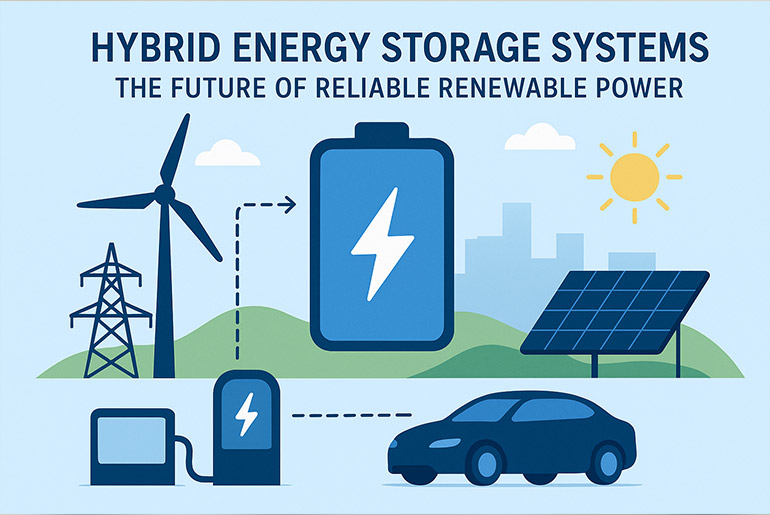
In the race toward a net-zero future, the greatest hurdle is not generating renewable energy—it’s delivering it on demand. Imagine a world where solar and wind power no longer fade with the weather. Enter Hybrid Energy Storage Systems (HESS) the next-generation solution combining the strengths of two or more storage technologies to deliver clean, reliable energy exactly when it’s needed.
From balancing grid loads to powering EV charging stations, Hybrid Energy Storage Systems are turning intermittency into opportunity. Across India and the globe, they are stepping into the spotlight—as economic levers and technical enablers alike. This article explores what HESS really are, why they matter now, their evolving market footprint, real-world deployments (from California to Chhattisgarh), and India’s critical role in harnessing this game-changing technology.
What is a hybrid energy storage system?
At its core, a Hybrid Energy Storage System (HESS) combines multiple energy storage technologies, which have their own inherent strengths, including lithium-ion batteries, supercapacitors, flywheels, or flow batteries, into a single integrated system. In this hybrid energy storage system, the energy storage components work best when supplementing each other. For example, supercapacitors can deliver rapid bursts of power, while lithium-ion batteries offer sustained energy throughput.
Eventually, we can assemble more components into a system that is more efficient, more reliable, and more responsive than single-technology equivalents. As well, with the advancements of intelligent energy management systems, a hybrid energy storage system will be able to optimize the energy flow by using supercapacitors or flywheels for high-power loads and then using a secondary battery system for prolonged discharge. Thus, providing an overall better performance, and ultimately greater lifetimes of a hybrid energy storage system’s components.
This makes hybrid energy storage systems like HESS ideal for applications including grid stability, EV charging infrastructure, and microgrid solutions.
Why HESS Matters Now
As renewable energy scales globally, storage is the weak link. Solar and wind may be the low-cost generation sources of the future, but if reliable storage is not widely available, those costs will become as irrelevant as fossil fuel costs are today. The International Energy Agency (IEA) is forecasting battery storage costs to fall by around 40% by 2030, which will make storage options more competitive and economically viable, especially in large markets such as India and China.
As hybrid energy storage systems (HESS) surmount that volatility in demand and intermittency in supply, those same attributes can also mitigate two of the most significant pain points in the new electric grid: volatility in peak demand, and intermittent generation. By responding optimally to a load—even a quickly changing load— HESS will be essential for modern grids, for rooftop solar systems, and for EV fast-charging hubs.
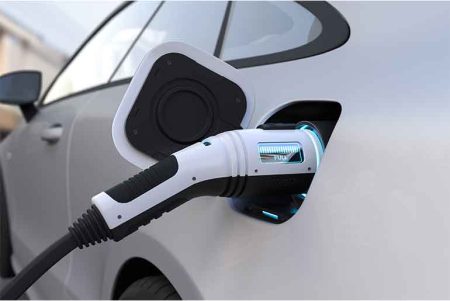
Take the domain of EVs: as charging infrastructure expands, resilience of the grid will become critically important. HESS can allow for a quick stabilizing response while still supplying energy for sustained periods of time. With their ability to stabilize generation and demand, HESS are set to alter the definition of “reliable” as it pertains to renewable power systems.
Global Market Landscape & Forecast
The global HESS market is riding a strong upward trajectory. Market Research Future estimated that the market was valued at USD 15.22 billion in 2023 and projected a growth to USD 26.55 billion by 2032—indicating a CAGR of 6.27%. Stratistics MRC is expecting slightly higher growth—USD 16.47 billion in 2024 to USD 26.54 billion by 2030 with a CAGR of 8.27%.
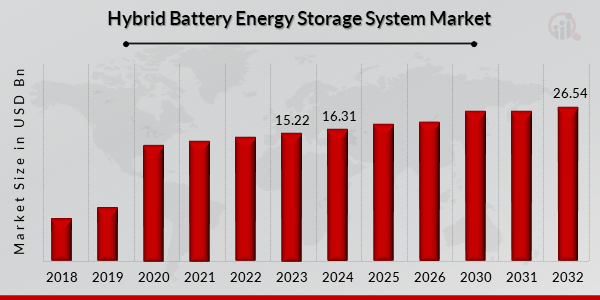
The adoption of HESS in the market is growing across sectors: utility scale where most of the deployments exist but also in automotive (i.e., EV charging), residential, and industry. Pertaining to the application of energy storage in utilities, North America continues to lead given policies supporting HESS and the modernization of the grid, while the Asia-pacific region, including India, is the fastest growing due to investments in renewable energy and electrification.
Key players—like Tesla, Panasonic, Samsung SDI, Lockheed Martin, and GE—are scaling up hybrid system deployments, especially for frequency regulation, peak shaving, and grid resilience applications.
The India Context
India’s renewable plans are ambitious to say the least—500 GW of capacity from non-fossil sources by 2030 and net-zero by 2070. Storage technology continues to be the weak link however. Experts estimate India will need to deploy 336 GWh of storage by 2030 but will likely reach only 82 GWh by 2026-2027—this need for innovation could not be more apparent.
Hybrid systems provide a very real path ahead. In Chhattishgarh, for example, the 40 MW/120 MWh solar + battery project from the World Bank demonstrates how complementary storage can enable and enhance renewables. Tamil Nadu has also tendered 1,000 MWh of utility-scale battery storage to help support the grid reliability that comes with 19 GW of renewables – it will provide a solid foundation towards hybridisation at scale.
On a larger scale, the Gujarat Hybrid Renewable Energy Park (30 GW of solar + wind), which also includes plans for a 14 GWh battery storage system. The GHR’s plans to lead on HESS is well represented as a unique opportunity to explore hybridisation with and alongside the completed projects mentioned earlier. The readiness in India, to make hybrid deployments within solar farms, microgrids, and EV charging networks, could not have been more evident.
Real World Case Studies
- Calistoga Resiliency Center, California (US): This hybrid facility incorporates lithium-ion batteries and hydrogen fuel cells to provide 8.5 MW with 293 MWh storage for even longer durations of continuous power in outages (up to 48 hours). A best practice example of long-duration hybrid microgrid applications.
- Solar-Powered Village, Modhera (India): India’s first 24X7 solar-powered village, powered by rooftop PV and a 15 MWh battery – although not a hybrid yet – clearly makes the case for HESS needed to scale this kind of model elsewhere with this type of application/service designation, especially considering the projected storage shortage.
- Hybrid Benchmark Projects: HESS combining vanadium redox flow batteries and lithium-ion systems demonstrate technical viability in complex energy management scenarios. A 15-year economic and energy analysis highlighted how hybrid control strategies outperform single-technology performance.
Advantages of Hybrid Energy Storage Systems
- Operational Viability & Longevity: When components have a defined specialty (i.e., fly wheel uses for peak discharge and batteries for prolonged discharge), the design decreases wear on the components and, as a result, improves the longevity of the system decreasing lifecycle cost.
- Duration of Response: In short, a HESS can deliver in terms of high power transient management and prolonged duration support. HESS’s flexibility makes HESS an ideal technology to manage grid stability, frequency regulation, and EV fast-charging hubs.
- Cost Over Time: As storage costs fall (battery storage costs are projected to decrease by 40% by 2030) and the hybrid technology presents value and develops maturity, total cost of ownership decreases and is particularly important for developing economies.
- Flexible Grid Resilience and Renewable Integration: As a grid resilience technology, a HESS can provide improved integration of solar and wind – thus curtailment is curtailed, and there is reliable provision of energy – especially during weather gaps and/or outages.
Challenges
- Capital intensity: Hybrid systems are inherently more expensive upfront than singular technology systems and will require strong policy and incentives.
- Technology maturity and standardisation: To integrate a diverse array of technologies seamlessly, a effective energy management system and standard protocols is required; these still needs to evolve.
- Policies and market structures: India must clarify the policy and regulatory framework, capacity markets, pilot and demonstration projects, and create incentive schemes for hybrid generation.
The decline in battery prices (85-90% lower than 2010 prices) and enhanced global R&D is feeding innovation in this area. It’s possible HESS could become common across microgrid, EV charging, and renewable generation and integration use cases, through better financing, pilot facilities and government procurement.
As renewable generation expands, storage complexities cannot be ignored. Hybrid Energy Storage Systems are more than complementary technologies—they are the linchpins of a resilient, efficient clean-energy future. As India expands its green grid and electric mobility, HESS offers a way to ensure power reliability, cost savings, and easier adoption of renewables.
Public and private partnerships, pilot deployments, and the right policies can spur their growth. In this way, HESS is not just to simply be considered another trend – it is the pathway towards a world where electrification and sustainability means clean, continuous and uncompromised power for all.
 Electrify your feed! Click here to join our Whatsapp group and to get the latest updates, expert insights, and innovations driving India’s energy storage revolution.