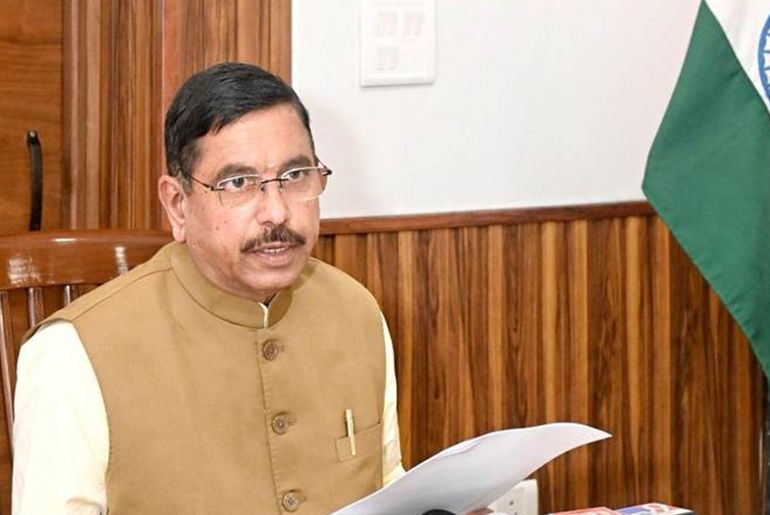
India has emerged as the world’s third-largest country in terms of installed renewable energy capacity, overtaking Brazil, Union Minister for New and Renewable Energy Pralhad Joshi announced. The achievement reflects the country’s rapid progress in expanding clean energy infrastructure and strengthening its position in the global energy transition.
India’s Rising Global Position
India has greatly increased its non-fossil fuel capacity, which has moved it ahead of Brazil in global rankings, according to the most recent statistics on renewable energy.
- Total non-fossil fuel capacity: 283.46 GW
- Renewable energy contribution: 274.68 GW
- Global rank: 3rd (after China and the U.S.)
This milestone highlights India’s growing leadership in clean energy deployment and its commitment to sustainable development.
Strong Growth in Renewable Energy Capacity
India recorded a historic addition of 55.3 GW of non-fossil capacity in FY 2025–26, marking the highest annual increase to date.
- Solar capacity: 150+ GW
- Wind capacity: 56+ GW
- Record renewable additions driven by solar and wind expansion
The country has also seen rapid growth in electricity generation, with total power generation reaching 1,845.921 billion units during 2025–26.
Key Milestones in Clean Energy Transition
India has achieved several important milestones in its clean energy journey:
- Achieved 50% installed capacity from non-fossil sources in June 2025
- Reached this target five years ahead of its 2030 commitment
- Renewable energy met 51.5% of electricity demand in July 2025
These developments underline the country’s accelerated transition towards a low-carbon energy system.
Policy Push and Future Targets
The government continues to focus on expanding renewable capacity in line with long-term climate goals. India aims to achieve:
- 500 GW of non-fossil fuel capacity by 2030
- Large-scale investments in solar, wind, and green hydrogen
The National Green Hydrogen Mission is also expected to make a big difference by adding new renewable energy sources, bringing in money, and creating jobs.
India’s rise to the third position globally marks a significant milestone in its clean energy journey. With continued policy support, large-scale investments, and technological advancements, the country is well-positioned to further strengthen its renewable energy capacity and play a leading role in the global transition to sustainable energy.
 Electrify your feed! Click here to join our Whatsapp group and to get the latest updates, expert insights, and innovations driving India’s energy storage revolution.