The Government of India is leading the charge toward a greener, cleaner, and more sustainable maritime sector with new Green Maritime initiatives. These efforts focus on enhancing port operations to ensure greater safety, efficiency, and environmental responsibility. By adopting global Health, Safety, and Environment (HSE) standards, Indian ports are successfully balancing trade growth with environmental protection and the welfare of workers. This marks a significant step in India’s commitment to a sustainable maritime future.
India’s extensive coastline, home to mangroves, lagoons, coral reefs, and beaches, supports rich biodiversity and coastal communities but faces pressures from increasing trade and development. To address these challenges, Indian ports, as obligated entities under Renewable Purchase Obligations (RPOs), are emphasizing renewable energy adoption and aligning with the International Maritime Organization’s 9 UN Sustainable Development Goals for safe and sustainable ports. This includes improving air and water quality, enhancing waste management, and expanding green cover.
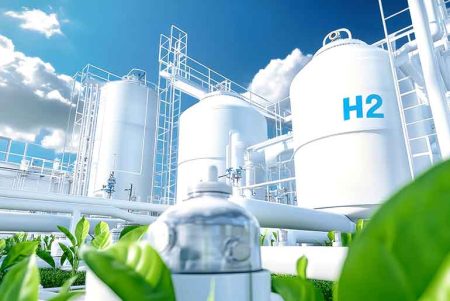
The Ministry of Ports, Shipping and Waterways (MoPSW) has outlined the Maritime India Vision 2030 (MIV 2030), a blueprint to empower India’s maritime sector and advance its sustainability goals. The future of maritime transport is expected to pivot toward clean fuels like green hydrogen, ammonia, biofuels, and LNG. In this context, India’s National Green Hydrogen Mission is laying the groundwork for zero-emission fuels, ensuring ports contribute to both trade and a sustainable future.
National Green Hydrogen Mission
Launched to reduce carbon emissions and position India as a global leader in green hydrogen, the mission targets producing 5 million tonnes of green hydrogen annually by 2030, attracting ₹8 lakh crore in investment, generating 6 lakh jobs, and saving ₹1 lakh crore in fossil fuel imports. The initiative focuses on production, pilot projects, electrolyzer manufacturing, skill training, infrastructure, and research, aiming to replace fossil fuels in steel, transport, and fertilizer sectors. Three major ports—Kandla, Paradip, and Tuticorin—have been designated as green hydrogen hubs.
Maritime India Vision 2030 & Amrit Kaal 2047: India’s Green Maritime Roadmap
MIV 2030 envisions investments of ₹3–3.5 lakh crore in ports, shipping, and inland waterways. Backed by a recent ₹69,725 crore package to boost shipbuilding and revitalize the maritime ecosystem, India aims to leverage its vast coastline for global maritime prominence. Building on this, Maritime Amrit Kaal Vision 2047 outlines long-term plans with ₹80 lakh crore earmarked for ports, coastal shipping, inland waterways, shipbuilding, and green shipping initiatives. Plans include green corridors, green hydrogen bunkering, and methanol-fueled vessels, with over 300 actionable initiatives aiming to establish India as a top maritime and shipbuilding power by the country’s centenary of independence.
Green Port Initiatives
The Central Government has proposed multiple steps to green Indian ports:
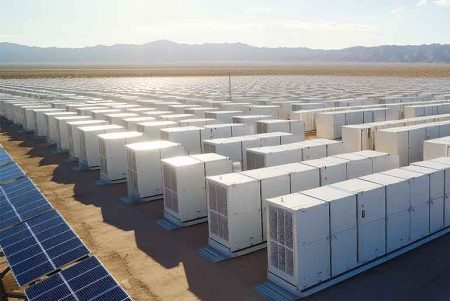
- Solar Energy: Installation of rooftop solar panels and floating PV assets on shallow port waters.
- Wind Energy: Development of onshore and offshore wind farms, tidal energy pilot projects in Gujarat, solar thermal applications, and wave energy testing using Oscillating Water Column Converters.
Flagship Programs
Key initiatives driving India’s green maritime economy include:
- Harit Sagar Green Port Guidelines (2023):
“These Guidelines act as a guiding tool for decision-making in ensuring sustainability in the development and operation of the Port and establishing frameworks towards attaining carbon neutrality with zero disturbance to the ecosystem dynamics of the surrounding aquatic and atmospheric environment,” said a MoPSW spokesperson.
- Green Tug Transition Programme (GTTP, 2024):
“The Green Tug Transition Program is set to drive the transition from conventional fuel-based harbor tugs to greener, more sustainable alternatives,” said a spokesperson.
- Harit Nauka (Green Vessel) Initiative: Promotes adoption of greener technologies in inland waterway vessels.
- Coastal Green Shipping Corridor: First corridor planned between Kandla and Tuticorin.
- Sagarmala Programme: Aims to transform India into a global maritime hub through 840 projects worth ₹5.8 lakh crore by 2035.
Cleaner Ports and Emissions Reduction
Indian ports are adopting clean fuels, shore power, and electrified equipment to cut emissions:
- 50% of port vehicles to switch to CNG, LNG, or electricity by 2030.
- Shore-to-ship power to reduce ship emissions while berthed.
- Electrification of material handling equipment, including cranes, RTGCs, reach stackers, and forklifts.
- LNG bunkering and dust emissions management.
- Expansion of green belts to capture emissions, reduce noise, and support biodiversity, targeting 33% green area around ports.
Ports Bill 2025
The Indian Ports Bill, 2025, modernizes port legislation, replacing the outdated 1908 framework. It mandates global green norms and disaster readiness, reflecting the sector’s growth: cargo handling at major ports reached 855 million tonnes in FY 2024–25, up from 581 million tonnes in FY 2014–15. Turnaround time has halved to 48 hours, while coastal shipping and inland waterway cargo volumes have increased significantly. Nine Indian ports now feature in the World Bank’s Container Port Performance Index.
Global Partnerships and Dialogues
India is actively engaging in international cooperation:
- Sagarmanthan: A platform for global maritime leaders to discuss sustainable growth.
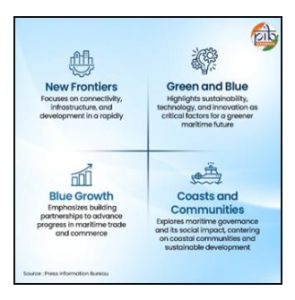
- Green & Digital Maritime Corridors Dialogue, JNPA, Mumbai: Focused on greener, smarter, and more connected corridors.
- India–Singapore Green & Digital Shipping Corridor: Enhances adoption of low-emission technologies and digital tools.
- Green Shipping Conclave, Mumbai: Highlighted initiatives like GTTP, Harit Nauka, and sustainable ship recycling at Alang.
Strategic Framework for Green Shipping and Marine Pollution Control
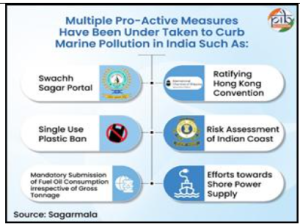
Indian ports are strengthening oil-spill response planning and satellite monitoring and creating oil-sensitivity maps to protect ecologically sensitive areas.
India is entering a transformative era in maritime operations, blending trade growth with environmental stewardship. Through visionary programs, legislative reforms, and green shipping initiatives, the country is building cleaner ports, low-emission fleets, smart infrastructure, and inclusive opportunities, positioning itself as a responsible global maritime power as it charts a course toward 2047.
 Electrify your feed! Click here to join our Whatsapp group and to get the latest updates, expert insights, and innovations driving India’s energy storage revolution.