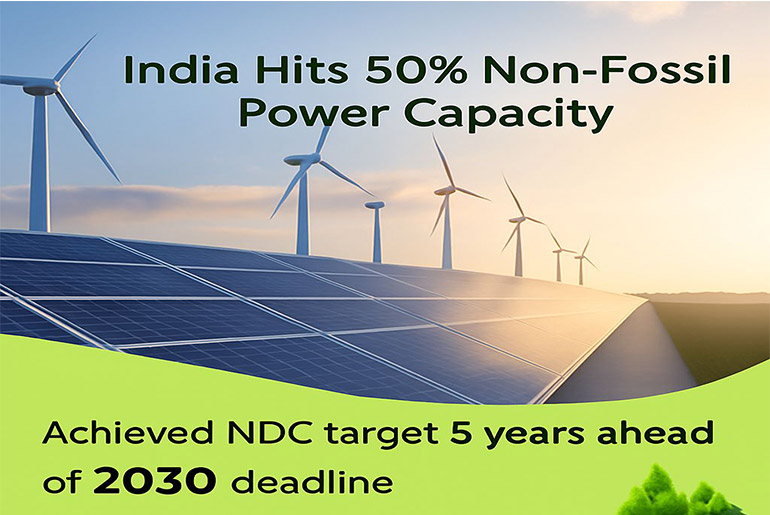
In a major announcement by the Ministry of New and Renewable Energy (MNRE), India has officially achieved a historic clean energy milestone: over 50% of the nation’s total installed power capacity—242.8 GW out of 484.8 GW—now comes from non-fossil fuel sources. This achievement comes five years ahead of India’s 2030 target under its Nationally Determined Contributions (NDCs) as part of the Paris Agreement, signaling a bold step forward in the country’s transition to sustainable energy.
A Clean-Energy Surge: Numbers Tell the Story
- Non-fossil capacity: 242.78 GW, representing 50.08% of total installed power.
- Breakup of non-fossil sources as of June 30, 2025:
- Renewables (solar, wind, bio, small hydro): 184.62 GW (38.08%)
- Large hydro: 49.38 GW (10.19%)
- Nuclear: 8.78 GW (1.81%)
- Solar capacity alone stands at 116.3 GW, with 5.4 GW added in June 2025—dramatic growth from 1.4 GW added in June last year.
Driving Forces Behind the Leap
Government Policy & Schemes
Flagship initiatives have turbo‑charged India’s clean energy drive:
- PM‑KUSUM: Boosting solarisation among farmers and promoting agro‑voltaics
- PM Surya Ghar: Muft Bijli Yojana: Accelerating rooftop solar installations to reach 10 million households
- National Wind‑Solar Hybrid Policy, large-scale solar parks, and bio‑energy investments.
Scaling up Infrastructure & Manufacturing
Subsidies, tax breaks, and Atmanirbhar Bharat incentives have expanded domestic manufacturing of solar modules and wind turbines. Major solar parks like Bhadla in Rajasthan (2,245 MW capacity) and the Gujarat Hybrid Renewable Energy Park (planned 30 GW) exemplify this upswing.
Challenges: Generation vs Capacity
Despite capacity milestones, actual power generation tells a different story. In 2024:
- Coal-fired plants produced 1,517.9 TWh, while renewables generated only 240.5 TW.
- In the first half of 2025, coal generation fell slightly (~3%), but fossil fuels still accounted for two-thirds of incremental generation.
Why the disparity? Renewables are intermittent and grid integration is lagging. State utilities, often under financial stress, continue relying on coal for assured output.
The Road Ahead: Storage, Flexibility & Scale
India isn’t resting on its laurels. Strategies underway include:
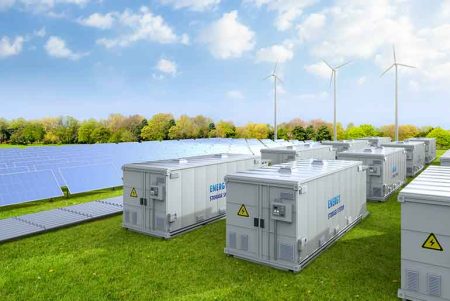
- Energy storage deployment: Co-locating battery systems with solar projects; pumped hydro is being eyed.
- Green hydrogen and circularity: Recycling solar and wind components, and green hydrogen for long-term decarbonisation.
- Grid modernization with AI: Advanced forecasting, digital grid markets, and demand-management platforms using smart meters .
Global & Domestic Implications
- Climate leadership: India now ranks among a few G20 nations on track—or ahead—on their NDCs.
- Economic gains: Job creation in domestic clean-energy manufacturing, rural income diversification, and reduced dependence on imported fossil fuels.
- Coal conundrum: Despite expansion plans for thermal capacity (80 GW by 2032), coal’s socio-economic role is being reassessed.
Outlook: From Installed Capacity to Delivered Clean Power
With its sights set on 500 GW non-fossil capacity by 2030 and net-zero emissions by 2070, India’s clean-energy trajectory is clear. However, scaling storage, strengthening the grid, and ensuring procurement reforms will be crucial to transform capacity into consistent clean electricity.
Far from symbolic, this early crossing of a major milestone signals India’s commitment: blending economic development with environmental stewardship, and offering a scalable model for emerging economies.
 Electrify your feed! Click here to join our Whatsapp group and to get the latest updates, expert insights, and innovations driving India’s energy storage revolution.