India’s demand for advanced chemistry cells (ACC) is expected to grow rapidly over the coming years, creating significant opportunities across battery manufacturing, materials and energy storage, according to a research report by brokerage firm Nuvama. The report said the country is gradually transitioning from dependence on imported battery materials towards building a domestic battery value chain, supported by government initiatives, rising manufacturing investments and growing demand from electric vehicles (EVs) and battery energy storage systems (BESS).
Nuvama estimates India’s ACC demand will increase from around 40 GWh in 2025 to nearly 700 GWh by 2030, translating into a compound annual growth rate (CAGR) of 39%. The growth trajectory is expected to continue beyond 2030, with demand projected to expand at a CAGR of 27% between 2030 and 2035. The brokerage attributed the expected increase to accelerated vehicle electrification, the expansion of renewable energy capacity and the development of India’s domestic battery manufacturing ecosystem.
Globally, ACC demand is projected to grow at a CAGR of approximately 20% between 2025 and 2030, before moderating to around 8% during 2030–2035. Nuvama expects global battery demand to eventually grow faster than supply as excess manufacturing capacity is absorbed, potentially resulting in improved utilisation rates across the industry.
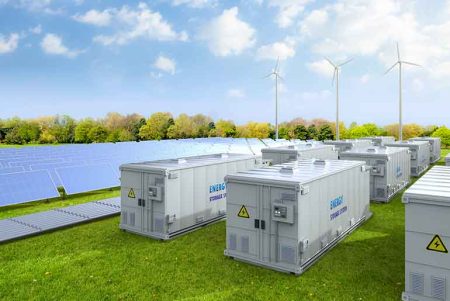
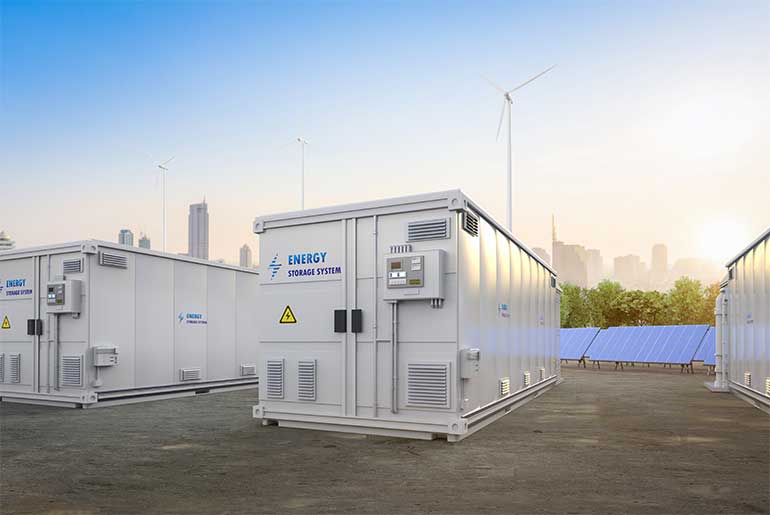
While EVs are expected to remain an important source of battery demand, BESS is projected to be the fastest-growing segment in India’s battery market. According to the report, EV battery demand is expected to rise at an annual rate of around 35% between 2025 and 2030. In comparison, demand from BESS is forecast to grow at a much faster CAGR of 78% over the same period. The growth is expected to be supported by the increasing deployment of renewable energy and the need for energy storage solutions to improve grid flexibility and stability.
India’s battery manufacturing ecosystem is also gaining momentum, driven by policy support and investments from private companies. The government’s ₹18,100 crore Production Linked Incentive (PLI) scheme for ACC batteries aims to establish 50 GWh of domestic cell manufacturing capacity. However, according to a recent parliamentary report, no beneficiary company has yet claimed incentives under the scheme, despite investments of ₹5,180 crore and ongoing manufacturing projects.
Meanwhile, more than 10 manufacturers have announced plans to establish approximately 178 GWh of battery manufacturing capacity in India. The expansion of cell production is expected to generate greater demand for battery chemicals and raw materials while supporting the development of domestic supply chains.
The National Critical Mineral Mission is also expected to play a role in strengthening India’s battery ecosystem by supporting domestic exploration, processing and recycling of key minerals, including lithium, nickel, cobalt and graphite. Increased domestic capabilities in these areas could help reduce the country’s long-term dependence on imported critical minerals.
On battery chemistry, Nuvama expects lithium iron phosphate (LFP) technology to maintain its global market leadership, supported by its relatively lower cost, enhanced safety characteristics and longer operating life. The continued adoption of LFP batteries is likely to drive demand for materials such as iron phosphate, graphite, conductive carbon black, carbon nanotubes and electrolytes, while potentially limiting the pace of long-term cobalt demand growth.
The report also highlighted that India’s battery materials ecosystem is developing at different rates across various segments. While the country remains heavily dependent on imports for critical minerals, domestic manufacturing capabilities are gradually emerging in cathode and anode materials, electrolytes and conductive additives.
At the same time, battery cell manufacturing capacity is scaling up, while emerging technologies such as silicon-carbon anodes, lithium manganese iron phosphate (LMFP), sodium-ion and solid-state batteries are gaining attention as potential future growth areas. The combination of rising battery demand, manufacturing investments, policy support and localisation efforts is expected to accelerate the development of India’s domestic battery value chain through the end of the decade.
 Electrify your feed! Click here to join our Whatsapp group and to get the latest updates, expert insights, and innovations driving India’s energy storage revolution.