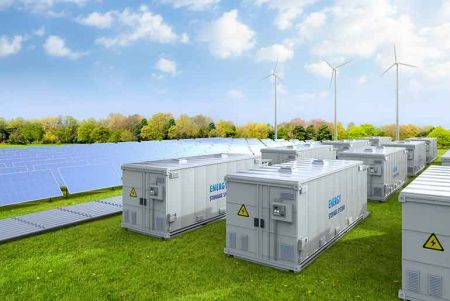
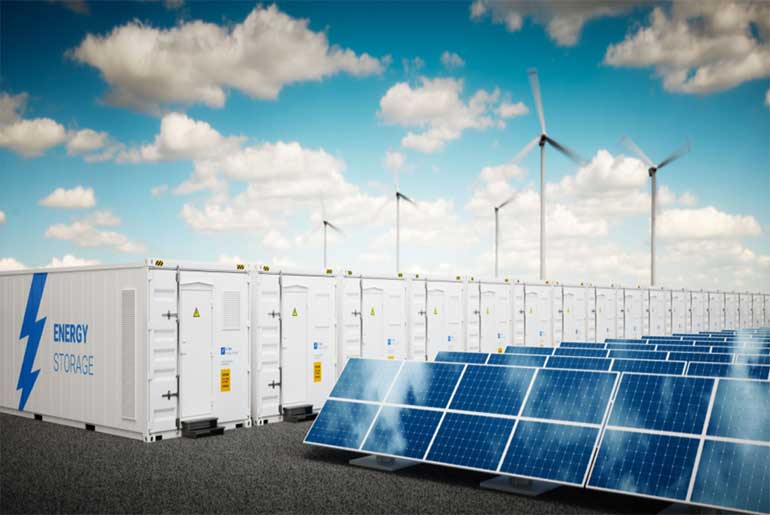
Karnataka Energy Minister K. J. George has said that it is compulsory to put battery storage systems in all solar power plants in the state in the future. This was during an inauguration of a fully automated 5 GWh battery energy storage constructed by Pace Digitek Lineage Power in Bidadi.
Key Points
- In Karnataka, 2-hour battery storage will be required of solar plants
- The state aims at 2000 MW solar storage at Sharavathi
- Sixty-five percent of the energy supply in Karnataka comes by way of renewable energy.
- Federation provides stabilization projects on grid storage
“The solar power generated during the day must be stored for use at night. To achieve this, battery storage systems capable of storing at least two hours of solar power must be integrated into all solar power plants.”
“The solar power generated during the day must be stored for use at night.”
– K. J. George, Karnataka Energy Minister.
He emphasized the importance of storage in strengthening renewable energy infrastructure.
“Renewable energy now contributes to 65 percent of Karnataka’s total power generation. Although solar and wind energy production has grown significantly, effective storage systems are essential to capture this energy and supply it as needed. Storage ensures grid stability and enables better energy management, especially during periods of demand. The central government is also promoting storage projects to support this effort, and it is encouraging to see private companies actively participating.”
– K. J. George, Karnataka Energy Minister.
Highlighting Karnataka’s legacy in the power sector
“Karnataka has always been a leader in power generation. The first hydroelectric power project in Asia was established during the reign of Nalvadi Krishnaraja Wodeyar. We must continue to build on this rich legacy. A new pumped storage project is now being launched at Sharavathi with the approval of the central government. I thank Pralhad Joshi, Union Minister for New and Renewable Energy, for his support and cooperation.”
“Although Karnataka generates more power than its demand, we currently lack adequate storage. To address this, we plan to implement major storage projects, including 2000 MW through the Sharavathi Pumped Storage, 1500 MW at Varahi, 1000 MW at Pavagada, and a 2000 MW battery storage facility at Rapte. The Detailed Project Report (DPR) for the Sharavathi project has already been approved by the Central Electricity Authority. The project will be developed between Talakalale in Shivamogga and the Gerusoppa reservoirs in Uttara Kannada, downstream of Linganamakki.”
– K. J. George, Karnataka Energy Minister.
Union Minister for New and Renewable Energy Pralhad Joshi, who inaugurated the battery storage unit, stated, BESS is very important when it comes to attaining Atmanirbhar Bharat (self-reliant India).
“The central government is placing high priority on developing storage infrastructure to ensure that solar and wind power can be effectively utilized even during non-generation hours. It is encouraging that Karnataka is leading with projects like Sharavathi and Varahi pumped storage. Battery storage also offers immense investment potential, and I urge entrepreneurs to explore opportunities in this growing sector.”
– Pralhad Joshi, Union Minister for New and Renewable Energy.
“The first revolution in India was electricity, followed by television, and then the Internet and smartphones, which transformed our lives. Now, the next big change will come through battery storage systems, which will redefine how we consume and manage power. We are all set to witness this transformation.”
– Pralhad Joshi, Union Minister for New and Renewable Energy.
The event was addressed by T. D. Rajegowda, MLA and Chairman, KREDL; S. R. Mahesh, MLA; K. P. Rudrappaiah, Managing Director, KREDL; Prakashnath Swamiji; Avadhoota Vinay Guruji; Venugopal Rao, Chairman & Managing Director, Pace Digitek-Lineage Power; and other dignitaries.
The Ministry of New and Renewable Energy (MNRE) is the nodal ministry of the Government of India for all matters relating to new and renewable energy. The broad aim of the ministry is to develop and deploy new and renewable energy to supplement the energy requirements of the country.
The role of new and renewable energy has been assuming increasing significance in recent times with the growing concern for the country’s energy security. The two oil shocks of the 1970s prompted the country to identify energy self-sufficiency as the major driver for new and renewable energy. The sudden increase in the price of oil, uncertainties associated with its supply, and the adverse impact on the balance of payments position led to the establishment of the Commission for Additional Sources of Energy in the Department of Science & Technology in March 1981. The government charged the commission with formulating policies, implementing programs for developing new and renewable energy, and coordinating and intensifying R\&D in the sector. In September 1982, the government created a new department—the Department of Non-conventional Energy Sources (DNES)—under the then Ministry of Energy, incorporating CASE. In 1992, DNES became the Ministry of Non-conventional Energy Sources.
 Electrify your feed! Click here to join our Whatsapp group and to get the latest updates, expert insights, and innovations driving India’s energy storage revolution.