As India’s energy landscape evolves toward solar-plus-storage ecosystems, power electronics and battery technologies are becoming central to the transition. With increasing rooftop solar adoption and the growing need for reliable backup power, manufacturers are focusing on integrated solutions that combine inverters, batteries, solar modules, and digital energy management platforms.
At The smarter E India 2026 exhibition in Gandhinagar, one of the busiest booths belonged to Luminous Power Technologies, a company that has built a strong presence in India’s consumer energy and solar solutions market. The company showcased its latest portfolio of hybrid solar inverters, on-grid inverter systems, lift backup inverters, and lithium energy storage solutions designed for residential and commercial applications.
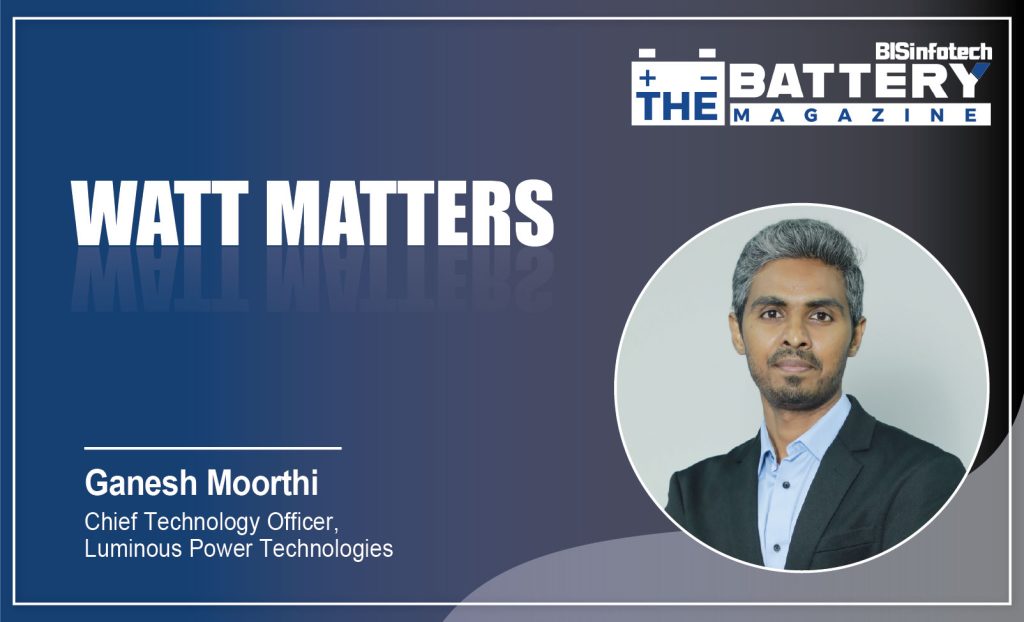
During the exhibition, The Battery Magazine, interacted with Ganesh Moorthi, Chief Technology Officer at Luminous Power Technologies, who shared insights on the company’s latest technologies, battery chemistries under evaluation, and how artificial intelligence is shaping the future of solar and storage systems.
What products and technologies are you showcasing at the exhibition this year?
Luminous has been present in the power solutions industry for over three decades, and our presence in the renewable energy sector has also grown significantly in recent years. At this exhibition, we are showcasing a comprehensive portfolio of solutions across the solar and energy storage ecosystem.
Our latest lineup includes single-phase and three-phase hybrid solar inverters, which are designed with high-frequency architecture and high conversion efficiency. These inverters are equipped with advanced MPPT technology and built-in smart energy management systems, enabling optimized solar generation and battery utilization.
We are also displaying our on-grid inverter range, particularly products designed for India’s rooftop solar market. Since most residential installations in India fall within the 3–5 kW range, our 3 kW, 5 kW, and 10 kW inverters are among our key products an
In addition, we are showcasing lift inverters, which are designed to provide backup power for elevator systems in buildings. These systems ensure smooth operation during grid power interruptions by minimizing the jerk that often occurs during the transition from grid power to backup power.
Could you explain the battery technologies that Luminous currently offers?
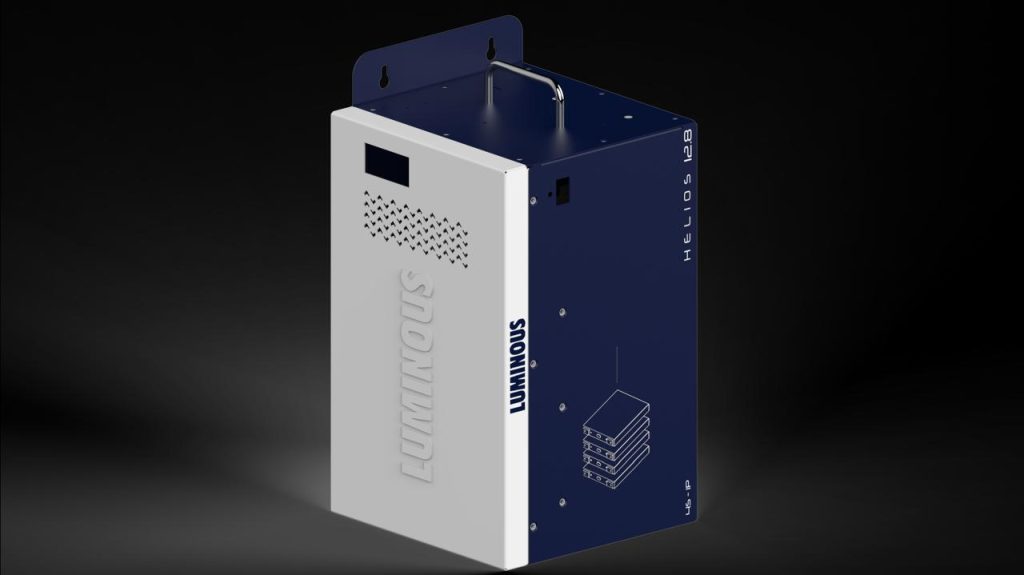
When it comes to energy storage, we offer solutions across two major battery chemistries — lead-acid and lithium-ion.
Lead-acid batteries have traditionally been the backbone of residential backup power systems in India, and we continue to provide a strong range of solar-compatible lead-acid battery solutions.
At the same time, we are rapidly expanding our lithium-based energy storage portfolio, particularly using Lithium Iron Phosphate (LFP) chemistry, which has become the preferred technology for stationary energy storage applications due to its safety, thermal stability, and long cycle life.
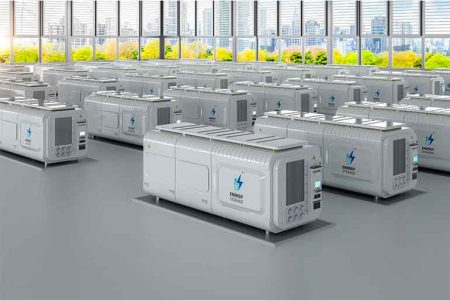
Our lithium storage solutions currently range from 1.2 kWh to approximately 250 kWh, and these systems can be modularly stacked to build storage capacities of up to 1 MWh for larger applications.
We use high-quality Tier-1 cells, and both our cells and modules are certified under industry standards to ensure reliability and safety in stationary storage deployments.
How is the company contributing to India’s Atmanirbhar Bharat initiative?
Localization has been a core part of our strategy for many years. Today, we operate multiple manufacturing facilities across India, supporting large-scale production of batteries, inverters, and solar solutions.
In the lead-acid battery segment, we have one of the largest manufacturing capacities for residential power backup solutions. Additionally, our solar module manufacturing capacity stands at approximately 1.6 GW.
We are also strengthening our inverter manufacturing capabilities and have recently expanded into lithium-ion battery manufacturing in India. By focusing on local manufacturing, strong R&D capabilities, and supply chain development, we believe we are contributing meaningfully to the Make in India and Atmanirbhar Bharat initiatives.
As the head of R&D, how do you approach the development of new battery chemistries and technologies?
Battery technology is evolving rapidly, and companies operating in this sector must constantly explore new chemistries and innovations. At any given time, our R&D team evaluates more than 25 different battery chemistries.
These include technologies such as advanced lead-acid batteries, metal-air batteries, zinc-based batteries, nickel-based systems, and various lithium-ion chemistries.
Our approach is to continuously study these technologies and assess their suitability for real-world applications. While lead-acid and lithium-ion currently dominate the market, we actively track emerging chemistries that could potentially offer improved performance, safety, or cost advantages in the future.
Hybrid solar inverters are becoming increasingly intelligent. How do you see artificial intelligence influencing solar and energy storage systems?
Artificial intelligence is already beginning to play a significant role in renewable energy systems. One of the most immediate applications is accurate weather forecasting, which helps predict solar generation and optimize system sizing and energy management strategies.
Beyond forecasting, AI and machine learning models are increasingly being embedded directly into devices such as inverters and batteries at the edge. These intelligent systems analyze usage patterns and operational data to continuously improve system efficiency and performance.
At the cloud level, AI can also be used to monitor large networks of connected energy systems, enabling better diagnostics, predictive maintenance, and energy optimization.
For example, our connected inverter ecosystem collects operational data that can be analyzed to help customers better understand their energy generation and consumption patterns.
The commercial and industrial sector is rapidly adopting solar-plus-storage solutions for peak shaving and energy arbitrage. What is your perspective on this trend?
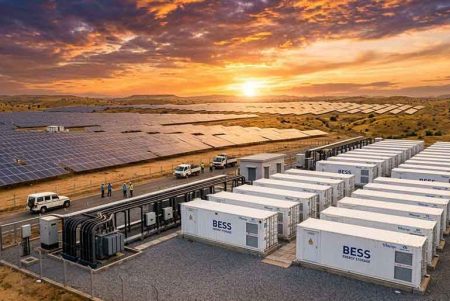
If we look at more mature markets such as Australia and California, solar-plus-storage systems have already become a mainstream solution for managing electricity costs and grid stability.
These markets widely use mechanisms such as time-of-use tariffs, virtual power plants, and energy price arbitrage, which make storage systems economically attractive.
India is gradually moving in that direction. While the market is still evolving, discussions are already underway among policymakers, utilities, and industry stakeholders on how to implement similar mechanisms.
As manufacturers, our responsibility is to design products that can support these future energy models. Many of our solutions are already being developed with capabilities that can enable such advanced energy management strategies.
What message would you like to share with customers looking to adopt solar and energy storage solutions?
When customers consider installing solar or energy backup systems, it is important to look beyond individual components and focus on complete system solutions.
Solar panels, inverters, batteries, connectivity platforms, and digital monitoring systems must work together as an integrated ecosystem.
Choosing solutions that provide system-level integration, warranties, and protection mechanisms ensures better performance, reliability, and long-term value.
Customers who adopt such integrated energy systems will be able to maximize the benefits of both solar generation and energy storage.
 Electrify your feed! Click here to join our Whatsapp group and to get the latest updates, expert insights, and innovations driving India’s energy storage revolution.