As India’s renewable energy sector rapidly evolves toward hybrid solar and storage systems, inverter technology is becoming the critical intelligence layer that connects solar generation, batteries, and the power grid. Modern inverters are no longer simple power conversion devices — they are increasingly sophisticated energy management systems capable of enabling time-of-use optimization, peak shaving, and grid interaction.
At Intersolar 2026, global inverter manufacturer Ningbo Deye Inverter Technology Co., Ltd. showcased a broad portfolio of on-grid, hybrid, and energy storage solutions designed for residential, commercial & industrial (C&I), and utility-scale applications.
In an exclusive conversation with The Battery Magazine, Shivani Borthakur – Head of Products & Solutions, discussed how hybrid inverters, integrated battery systems, and advanced energy management technologies are shaping India’s solar and storage landscape.
How has your experience been at Intersolar 2026, and what key trends are you observing in the solar market this year?
The response at Intersolar this year has been extremely encouraging. Compared to last year, we are seeing a noticeably higher level of engagement from customers and industry stakeholders.
One of the most significant trends we are observing is the growing interest in hybrid solar systems, particularly systems that integrate solar generation with battery storage. Earlier, many markets in India — especially in the western region — were primarily focused on conventional on-grid solar installations.
Now, customers are increasingly exploring hybrid solutions, as they provide greater flexibility, energy independence, and better utilization of solar power.
Another interesting development is the diversity of visitors. We are seeing customers and partners from all regions of India, which reflects the expanding adoption of solar and storage technologies across the country.
What key solutions and technologies is Deye showcasing at the event?
At this year’s exhibition, we are showcasing a comprehensive portfolio of inverter and energy storage solutions across multiple segments.
Our product lineup includes:
• On-grid solar inverters
• Micro-inverters
• Hybrid inverters
• Residential battery storage systems
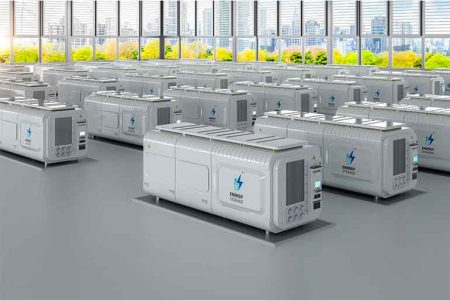
• Energy Storage System (ESS) solutions for megawatt-scale projects
For residential users, we offer hybrid inverter systems integrated with battery storage, enabling households to store excess solar energy and use it during outages or peak demand periods.
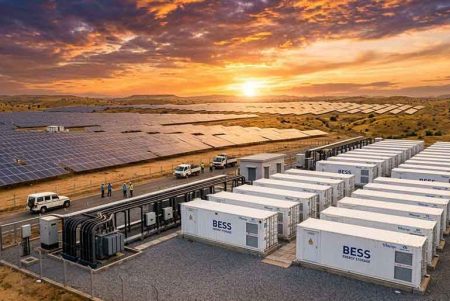
For commercial and industrial (C&I) customers, we provide hybrid inverter systems that can be paired with battery energy storage systems (BESS) to improve energy management and reduce grid dependency.
We are also showcasing cabinet-based storage solutions for megawatt-scale projects, which are designed for large commercial or utility applications.
We can see the SUN-12K-SGO4LP3-EU system displayed here. Could you explain how this system works and the storage solutions associated with it?
The SUN-12K-SGO4LP3-EU is one of our hybrid inverter models, designed to integrate seamlessly with battery storage systems.
For residential applications, we offer battery modules in multiple capacities such as:
• 5.12 kWh
• 11.8 kWh
• 16 kWh
These battery modules can be connected in parallel, allowing users to scale their storage capacity depending on their backup requirements.
This modular design makes the system highly flexible. Customers can start with a smaller battery capacity and later expand their storage system as their energy needs grow.
You mentioned both low-voltage and high-voltage systems. Could you explain the difference between the two configurations?
Yes, we provide two types of battery configurations — low-voltage and high-voltage systems.
Low-voltage batteries typically operate at around 51.2 volts, and these modules are usually connected in parallel to increase the overall storage capacity.
High-voltage battery systems, on the other hand, are configured differently. In this case, battery modules are first connected in series to increase the voltage, and then multiple racks can be connected in parallel to scale the overall storage system.
Each rack generally includes:
• Battery modules
• A cluster box for battery management
• Integrated connection to the hybrid inverter
This architecture enables the system to support larger energy storage capacities and higher power applications.
Deye offers a wide range of solutions. What differentiates your products from other inverter providers in the market?
One of the key strengths of Deye is that we provide a complete energy ecosystem, rather than standalone products.
Our portfolio includes:
• Solar inverters
• Micro-inverters
• Hybrid inverters
• Battery energy storage systems
• Integrated ESS solutions
Another major advantage is compatibility with different solar module technologies. Our inverters do not impose strict limitations on module current levels or module types, which gives installers and system designers greater flexibility.
We also provide built-in zero-export functionality, which is particularly useful in markets where exporting electricity to the grid is restricted.
In addition, our hybrid inverters support advanced energy management features such as:
- Peak shaving
- Time-of-Use (ToU) scheduling
- Smart charge-discharge management
These capabilities allow customers to optimize how and when their batteries are charged or discharged, improving energy efficiency and reducing electricity costs.
How is Deye supporting customers across India in terms of service and technical support?
India is a very important market for us, and we have established a service infrastructure to support customers across the country.
Our primary service office is located in Pune, and we have service engineers positioned across multiple regions of India.
Our team provides support in several areas, including:
- Installation assistance
- Technical troubleshooting
- System commissioning
- After-sales service
This ensures that customers and installation partners can access timely technical support whenever required.
Finally, what message would you like to share with customers and developers in India’s solar market?
India’s renewable energy sector is expanding rapidly, and with this growth comes a rising demand for reliable and intelligent energy systems.
In this context, hybrid solar systems represent a future-ready solution. Even if customers initially install only solar panels, they can integrate battery storage later without redesigning the entire system.
Hybrid inverters therefore provide a flexible pathway toward energy independence, allowing users to gradually transition toward solar-plus-storage systems as the market evolves.
 Electrify your feed!