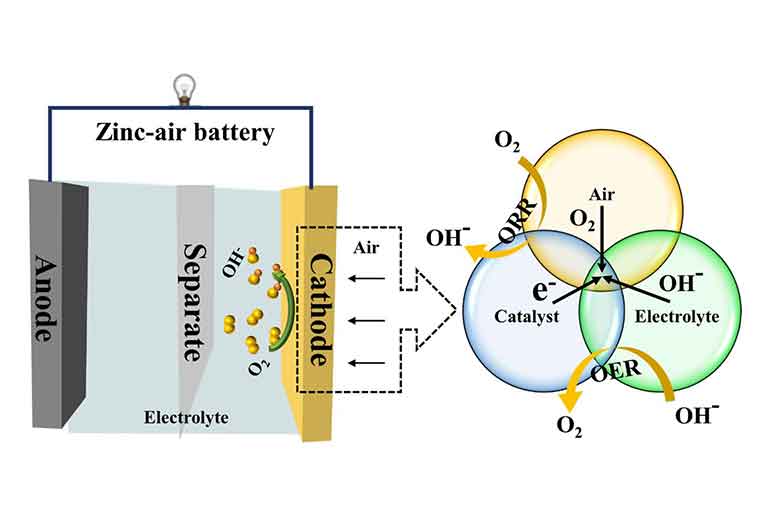
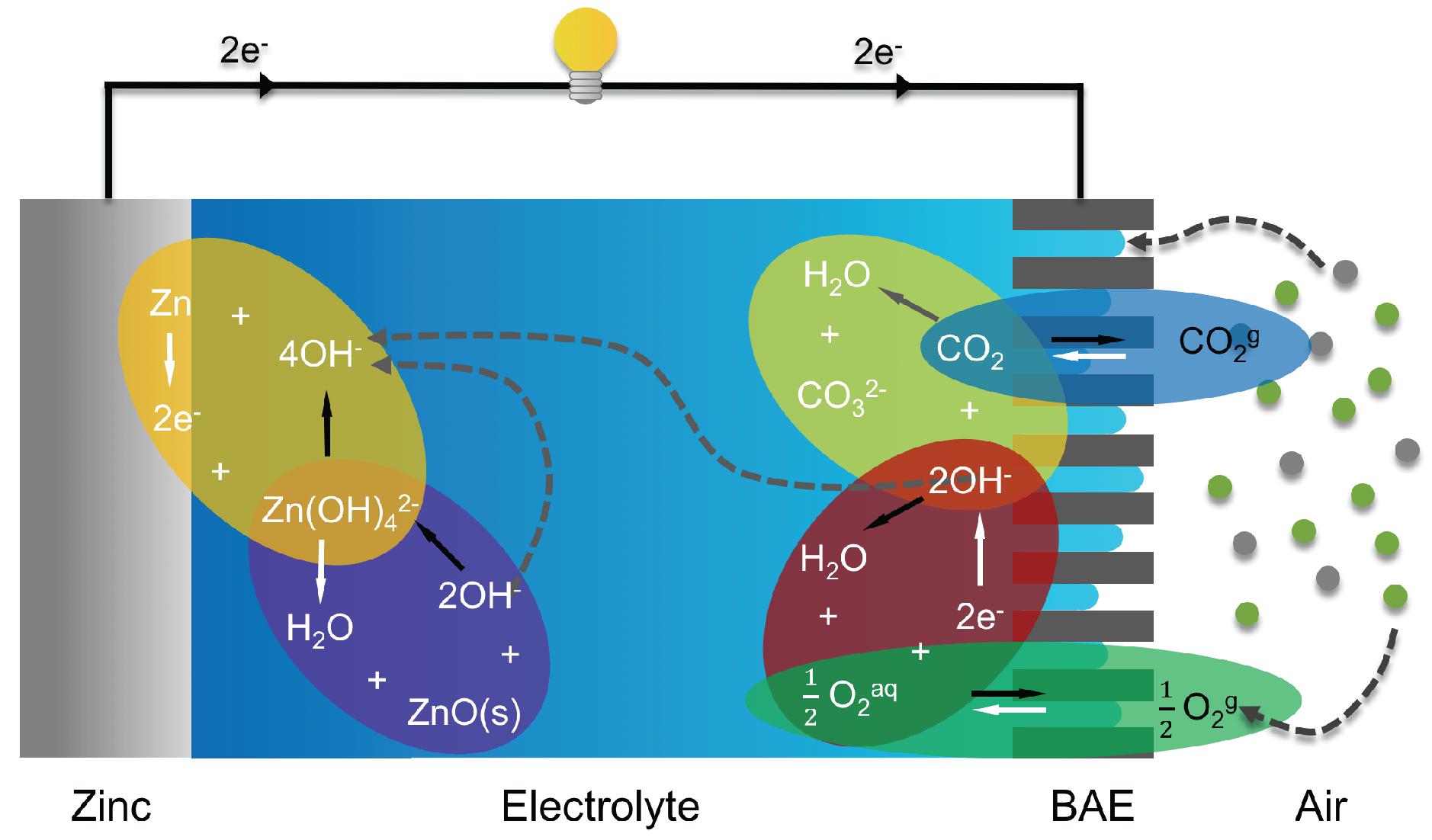
Zinc-air batteries are simple in theory, but difficult in practice. They utilize a simple metallic zinc on one electrode while the other draws oxygen from the air. However, a simple chemical reaction is not always an easy one to control. For example, reactions at the air electrode often involve a precious metal catalyst, platinum.
A team of Indian scientists have engineered a novel metal-free porous material capable of performing the oxygen reduction reaction (ORR) with almost the same efficiency as commercial platinum catalysts. The material, named TTT-DHTD, could potentially lead to the fabrication of affordable zinc-air batteries with higher energy densities as well as contribute to other electrochemical processes.
Researchers are optimistic about the potential of zinc-air batteries to provide affordable and safe energy storage however have struggled with the high cost of platinum. This research was conducted by scientists from the S. N. Bose National Centre for Basic Sciences (SNBNCBS), Kolkata; Institute of Nano Science and Technology (INST), Mohali; and SRM University, Amaravati. Their findings have appeared in the journal Science Advances .
Why Are Zinc-Air Batteries So Interesting?
There are several potential advantages to the use of zinc-air chemistry in energy storage applications. Unlike conventional batteries that utilise active cathodes, zinc-air batteries obtain the oxygen for the electrochemical reaction from the ambient air. This means that the battery does not need to store the active cathodic material within the limited confines of the device itself.
Zinc is a relatively abundant and cheap element, and while conventional batteries utilising alkaline electrolytes suffer from dendritic growths on the anode that cause short circuits, zinc-air variants are generally safer and more stable. The appeal of zinc-air batteries has led to their use in some consumer electronics, vehicles and renewable energy storage.
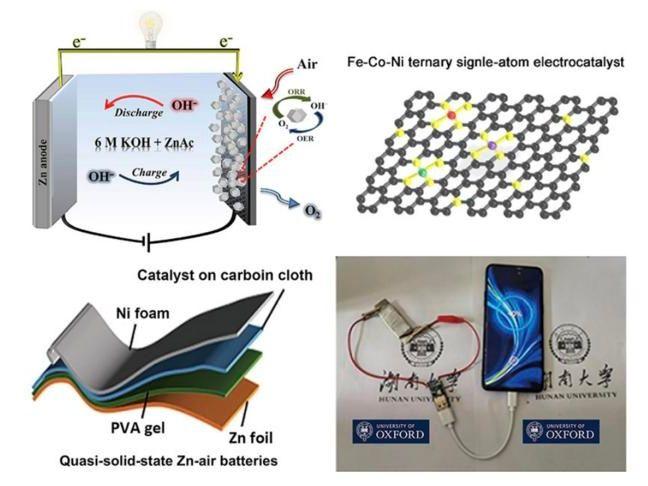
The advantages of zinc-air chemistry also extend to the potential for higher theoretical energy densities and reduced material costs compared to conventional lithium-ion batteries. Despite this promise, zinc-air batteries have yet to truly break into mainstream markets. The main reason for this is the reliance of the oxygen reduction reaction (ORR) at the air electrode on platinum as a catalyst.
While platinum has long been used in fuel cells and some battery chemistries, it is also extremely expensive and rare. In fact, the use of platinum in any form of chemical reaction would add greatly to the material cost, defeating the purpose of using cheaper battery materials such as zinc. This is why platinum is a huge liability to the commercialization of zinc-air batteries.
Indian Scientists Develop Metal-Free Organic Material with Excellent Catalytic Properties The researchers behind this study were able to demonstrate a possible alternative to platinum-catalyzed oxygen reduction. The metal-free organic catalyst they engineered, called TTT-DHTD has a honeycomb-like structure made of carbon, sulfur and nitrogen and exhibits excellent catalytic properties.
According to the study, TTT-DHTD is made from two molecular building blocks, namely 2,4,6-tris(4-aminophenyl)-1,3,5-triazine (TTT) and 4,8-dioxo-4,8-dihydrobenzo[1,2-b:4,5-b’]dithiophene-2,6-dicarbaldehyde (DHTD). The scientists report that the resulting material had a three-dimensional ultra-porous structure.
The researchers note that the unique design of TTT-DHTD was essential to its ability to exhibit excellent catalytic properties. While platinum typically acts as a catalyst by allowing the reacting molecules to adhere to its surface, the researchers instead used computational modeling to identify promising molecular sites that could facilitate the reaction.
By doing so, they were able to identify a structure that did not require platinum to exhibit excellent catalytic properties. Notably, the researchers were able to use readily available carbon, sulfur, nitrogen and hydrogen to form the bonds that make up TTT-DHTD’s structure, avoiding the need for any rare elements.
TTT-DHTD Exhibits Performance Close to Platinum in Laboratory Conditions The most important finding from the study is the catalytic performance of TTT-DHTD in laboratory conditions. The researchers found that the metal-free catalyst exhibited performance close to that of commercial platinum catalysts in the oxygen reduction reaction.
Specifically, the study reports that the metal-free material demonstrated electrochemical performance equal to 96% of commercial platinum catalysts. For an economical substitute, this level of performance is extremely encouraging, as simply finding a cheaper alternative to platinum would not be meaningful if the performance loss was substantial.
Even more importantly, the researchers were able to demonstrate that TTT-DHTD does not exhibit the rapid degradation and fouling typical of most commercial platinum catalysts. The study reports that the material retained its catalytic performance following 120 hours of continuous operation without degradation. Although this finding shows promise for the practical application of the material, there is a long road ahead before this laboratory demonstration can be scaled to industrial production.
It is important to note that demonstrating catalytic performance is only the first step toward making the material a viable commercial product. The researchers would need to work closely with battery manufacturers to determine how the material would behave in real-world conditions and test its performance in prototype cells over extended cycles.
Why Does the Honeycomb Structure of TTT-DHTD Matter?
The honeycomb structure of TTT-DHTD is integral to its performance as a catalyst. As explained in the paper, the researchers used computer modeling to determine how best to configure the carbon-sulfur-nitrogen chains to enable them to facilitate the oxygen reduction reaction. The study reveals the critical role of this structure in enabling TTT-DHTD to exhibit performance close to that of expensive platinum catalysts.
This combination of innovative materials design and computational modeling has the potential to lead to the development of numerous other catalysts by researchers hoping to replace platinum with metal-free alternatives. By demonstrating that molecular structure engineering could enable the oxygen reduction reaction to take place without noble metals, the study offers insights that may benefit a wide range of electrochemical processes.
How Might This Discovery Impact the Future of Zinc-Air Batteries?
The economic implications of this finding are extremely interesting. The researchers demonstrated that their material design allows for a catalyst to perform close to commercial platinum without using any of the rare and expensive elements typically associated with it. It is also important to note the fact that zinc-air batteries already possess economic advantages over other battery technologies due to the abundance and low cost of zinc.
There is a possibility that the removal of platinum from the equation could allow for the fabrication of batteries with substantially lower material costs. Such a discovery has the potential to have a major impact on the future of portable power as well as renewable energy storage. The study highlights potential applications for the fabrication of affordable zinc-air batteries as well as the use in other electrochemical processes, including transportation and hydrogen fuel cells.
However, this single finding alone will not be sufficient to allow zinc-air batteries to surpass lithium-ion batteries as the preferred energy storage medium. While the laboratory demonstration is certainly promising, researchers will need to conduct further studies before moving on to trials with actual battery cells. The researchers will need to determine whether this excellent performance can be replicated under different conditions or scaled to industrial levels before any conclusions about commercial viability can be reached.
Why Are Precious Metals Such a Problem for Battery Manufacturers?
It is also important to note that this finding could have implications far beyond zinc-air batteries. The oxygen reduction reaction is integral to a large number of chemical processes, including fuel cells that utilize hydrogen as a fuel source. Fuel cells have traditionally struggled to meet the performance requirements of various commercial applications due, in part, to the high cost and scarcity of platinum.
This study is part of a series of endeavors to identify ways to reduce the reliance on platinum in fuel cells by replacing it with other materials. By eliminating the need for platinum in oxygen reduction, the researchers have opened the door to substantial reductions in the material costs associated with a wide range of electrochemical processes.
Who Made the Discovery?
This study is yet another example of the valuable contributions being made by Indian scientists to the field of clean energy innovation. The work was completed by a team of researchers from the SNBNCBS, INST and SRM University. The principal investigators include Dr. Pradip Pachfule from SNBNCBS, Prof. Ramendra Sundar Dey from INST and Prof. Ranjit Thapa from SRM University, Amaravati.
This collaboration has resulted in a major breakthrough in materials science and catalysis that could prove to be extremely valuable to a wide range of energy storage and generation technologies. A catalyst made from readily available materials could become an invaluable addition to the expanding list of materials used to fabricate batteries, fuel cells and related devices if its performance can be demonstrated to be consistent with other materials currently in use.
Can Metal-Free Catalysts Replace Platinum?
The promise of zinc-air batteries is largely tied to their potential to offer substantial economic advantages over other battery technologies. However, economic advantages are typically derived from the overall cost-effectiveness of the final product, which is dictated by more than just the materials used to make it.
This is why the findings of this study are so fascinating — the researchers have demonstrated that it is indeed possible to construct a battery chemistry with lower material costs without sacrificing performance. The study’s findings suggest that it will not necessarily be much harder to identify alternative materials to replace platinum with in other battery chemistries.
By demonstrating that a catalyst comprised of common materials can perform close to commercial platinum, the researchers have identified an economical way to facilitate the oxygen reduction reaction, which is crucial to a large number of battery and fuel cell designs. With performance equal to 96% of commercial platinum catalysts, TTT-DHTD is certainly a promising candidate to replace it as the primary catalyst in a wide range of electrochemical processes.
The next major question to be addressed is whether the performance will remain consistent once the material is fabricated at larger scales and incorporated into battery cells for extended testing.
What Does This Study Mean for the Future of Energy Storage?
This study certainly does not signal the end of platinum-catalyzed reactions. While it is a major step toward removing the reliance on these materials for oxygen reduction, it will likely take considerable time and effort before researchers can fully replace platinum with metal-free alternatives.
The study is also not an indicator that zinc-air batteries will soon replace lithium-ion batteries as the preferred energy storage medium due to its higher energy density and relatively low weight. However, it does represent a major leap toward reducing the overall cost of these batteries. For zinc-air batteries, this study offers an alternative to platinum-catalyzed oxygen reduction that will ultimately help reduce the material costs associated with these energy storage devices.
More broadly, this study demonstrates the value of looking to molecular engineering to fabricate materials that exhibit desirable properties. Rather than searching for an entirely new battery chemistry, researchers can look to make better use of materials they already possess to fabricate new materials. By demonstrating this concept in relation to the oxygen reduction reaction and zinc-air batteries, this study provides valuable insight into how similar discoveries could be made in other fields of science and engineering.
TTT-DHTD represents a major step toward making the development of new materials and technologies less reliant on platinum. If its reported performance can be demonstrated consistently, it could become a crucial element in the commercialization of zinc-air batteries and facilitate substantial reductions in the material costs associated with them.
 Electrify your feed! Click here to join our Whatsapp group and to get the latest updates, expert insights, and innovations driving India’s energy storage revolution.