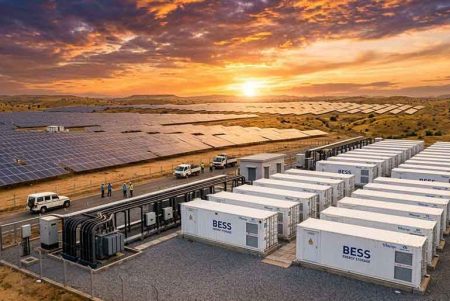
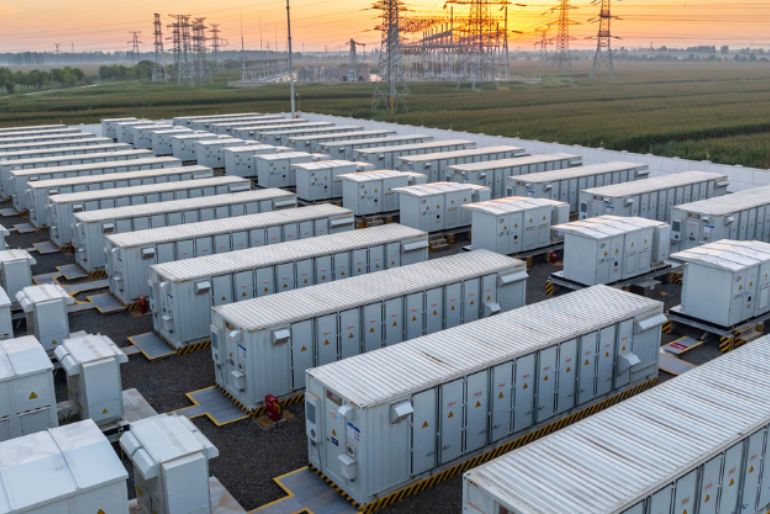
MKC Infrastructure Limited has started construction of a 300 MWh Battery Energy Storage System (BESS) project for NTPC Tamil Nadu Energy Company Limited (NTECL) at the Vallur Thermal Power Plant in Tamil Nadu. The project was officially launched through a ground-breaking ceremony held at the plant site, marking a major step towards strengthening India’s energy storage infrastructure.
The ceremony was attended by senior officials from both organisations, including Sanjay Kumar Sinha, Chief Executive Officer of NTECL and Executive Director at NTPC Limited, along with Parikshit Bambhania, Director of MKC Infrastructure Limited. Representatives from NTECL and MKC Infrastructure also participated in the event and highlighted their commitment to completing the project within the planned timeline.
The upcoming 300 MWh battery energy storage facility is expected to support grid stability by storing electricity during periods of lower demand and supplying power during peak consumption hours. The system will help manage variations in electricity supply and demand, particularly as India continues to increase the share of renewable energy in its power mix.
Battery energy storage systems are becoming increasingly important for India’s electricity sector as solar and wind power generation grows. These systems provide flexibility to the grid by balancing intermittent renewable energy output, reducing pressure on conventional power sources, and improving the reliability of electricity supply.
The deployment of large-scale BESS projects is also seen as a key solution to address renewable energy curtailment challenges. Industry assessments indicate that India requires significant battery storage capacity to efficiently integrate growing renewable energy capacity and reduce operational constraints linked to conventional power generation.
MKC Infrastructure said the Vallur BESS project represents an important addition to its clean energy portfolio and reflects its focus on developing sustainable power infrastructure. The project is expected to contribute towards India’s broader goals of modernising the electricity grid and enabling a more flexible and renewable-driven energy system.
 Electrify your feed! Click here to join our Whatsapp group and to get the latest updates, expert insights, and innovations driving India’s energy storage revolution.