
Close Menu
The Battery MagazineThe Battery Magazine
  • Just In
  • Batteries
    • Battery Manufacturing (BESS)
    • Battery Materials & Chemistries
    • Battery Recycling
    • C&I Storage
  • Solar
  • Renewable energy
    • Wind Energy
    • Hydropower
    • Green Hydrogen
    • Bioenergy
  • Tenders
    • Energy Storage
    • Solar Energy
    • Wind Energy
  • Policy
    • Storage
    • Solar
    • Wind
    • EV
    • Transmission
  • EV
    • EV Batteries
    • EV Charging Infrastructure
    • Electric Mobility Trends
  • Grid
    • Transmission & Distribution
    • Grid Infrastructure
    • Power Generation
    • Power Equipments
  • Exclusive
    • Cover Story
    • Watt Matters
    • Perspective
    • Articles
  • More
    • E-Mag
    • Events
    • Contact Us
Facebook LinkedIn WhatsApp
The Battery MagazineThe Battery Magazine
  • Just In
  • Batteries
    • Battery Manufacturing (BESS)
    • Battery Materials & Chemistries
    • Battery Recycling
    • C&I Storage
  • Solar
  • Renewable energy
    • Wind Energy
    • Hydropower
    • Green Hydrogen
    • Bioenergy
  • Tenders
    • Energy Storage
    • Solar Energy
    • Wind Energy
  • Policy
    • Storage
    • Solar
    • Wind
    • EV
    • Transmission
  • EV
    • EV Batteries
    • EV Charging Infrastructure
    • Electric Mobility Trends
  • Grid
    • Transmission & Distribution
    • Grid Infrastructure
    • Power Generation
    • Power Equipments
  • Exclusive
    • Cover Story
    • Watt Matters
    • Perspective
    • Articles
  • More
    • E-Mag
    • Events
    • Contact Us
LinkedIn Facebook WhatsApp YouTube
The Battery MagazineThe Battery Magazine
Home » Renewable energy » MNRE Updates Service Charge Guidelines for PM-Surya Ghar: Muft Bijli Yojana
Renewable energy

MNRE Updates Service Charge Guidelines for PM-Surya Ghar: Muft Bijli Yojana

ManshiBy ManshiDecember 26, 20253 Mins Read
Facebook Twitter LinkedIn WhatsApp
MNRE Updates Service Charge Guidelines for PM-Surya Ghar: Muft Bijli Yojana

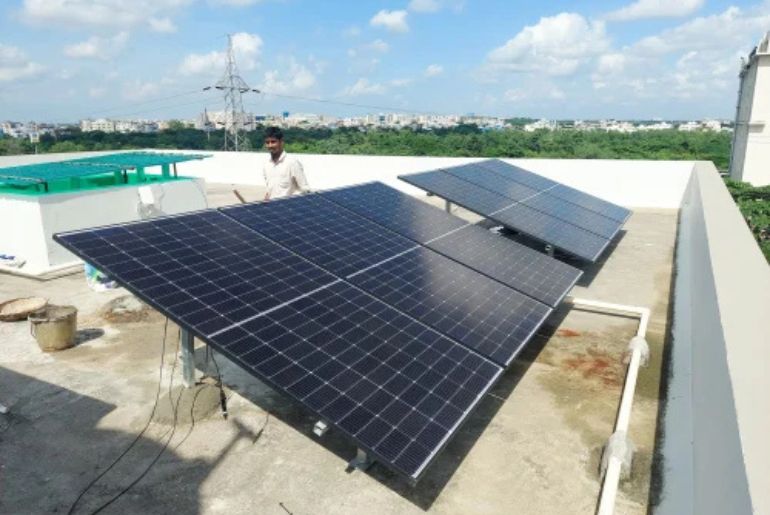
The Ministry of New and Renewable Energy (MNRE) has issued amendments to the operational guidelines for the Service Charge component under the PM-Surya Ghar: Muft Bijli Yojana (PMSG-MBY), aiming to streamline implementation and address operational challenges. The scheme, approved in February 2024 with a total outlay of ₹75,021 crore, targets the installation of rooftop solar systems in one crore households across India.

Under the revised guidelines, State Implementation Agencies (SIAs), primarily distribution utilities (DISCOMs), will continue implementing the scheme in their jurisdictions. States can also nominate alternative agencies, including State Renewable Energy Development Agencies. SIAs are required to establish dedicated administrative capacity at national and regional levels and are eligible to receive service charges for their implementation efforts.

Of the total INR 657 crore service charge allocation, INR 200 crore is earmarked as a base service charge for SIAs, distributed proportionally based on the number of domestic consumers or a minimum of INR 50 lakh per agency, whichever is higher, as per the latest Central Electricity Authority report. Funds will be disbursed in three equal annual installments at the start of each financial year, allowing SIAs to strengthen administrative capacity and deploy dedicated resources at the field level.

For the Model Solar Village component, implementing agencies, referred to as Model Solar Village Implementation Agencies (MSVIA), will receive INR 5 lakh per village. Special category states and union territories including Uttarakhand, Himachal Pradesh, Jammu & Kashmir, Ladakh, the North Eastern states, Sikkim, Andaman & Nicobar, and Lakshadweep Islands will receive INR 7.5 lakh per village. Half of the service charge is released upon village selection by the District Level Committee (DLC) for preliminary activities, including Detailed Project Report (DPR) preparation, and the remaining half after project completion.

The National Programme Implementation Agency (NPIA) is also allocated a base service charge of 5% of the total outlay, approximately INR 32.85 crore, with an option to receive an additional 5% to support management and infrastructure needs. These funds can be used for IT systems deployment, program management units, project management cells, vendor coordination, third-party evaluation, inspections, monitoring, call centers, net-metering facilitation, and other implementation-linked activities.

SIAs are instructed to allocate a portion of their funds to field units for office infrastructure upgrades, staff expansion, and technological improvements. Both NPIA and SIAs must submit periodic utilization reports, supported by Utilization Certificates (UCs), Audited Statements of Expenditure (ASOE), and other relevant documents. Any unutilized service charges, along with interest, must be refunded according to Government Financial Rules (GFR).

The MNRE emphasized that the amendments will enhance administrative efficiency, ensure proper monitoring of household and village-level solar installations, and support India’s transition toward clean and renewable energy.

A ministry spokesperson said, “By providing structured service charges and clear guidelines for fund utilization, we aim to empower state and field-level agencies to execute the program effectively while accelerating the adoption of rooftop and village-level solar systems across the country.”

whatsapp icon Electrify your feed! Click here to join our Whatsapp group and to get the latest updates, expert insights, and innovations driving India’s energy storage revolution.

clean energy India News MNRE renewable energy rooftop solar systems Solar
Manshi
  • Website

I'm journalism graduate with professional experience working across different news websites. I have been involved in news reporting, content writing, and digital media coverage, which has helped me develop a strong understanding of current affairs and storytelling. Currently, I am working with Battery Magazine, where I continue to create accurate, engaging, and reader-focused news content.

Keep Reading

PIP Partners with Fourier to Deploy Hydrogen-Powered Energy Storage System in Gujarat

PIP Partners with Fourier to Deploy Hydrogen-Powered Energy Storage System in Gujarat

RECPDCL Transfers Mekhali Power Transmission

RECPDCL Transfers Mekhali Power Transmission SPV to Dilip Buildcon

NavPrakriti and IIT Kharagpur

NavPrakriti and IIT Kharagpur Partner to Advance Battery Recycling and Critical Mineral Recovery

Comments are closed.

Renewable energy
PIP Partners with Fourier to Deploy Hydrogen-Powered Energy Storage System in Gujarat

PIP Partners with Fourier to Deploy Hydrogen-Powered Energy Storage System in Gujarat

June 4, 2026
IIT Guwahati

IIT Guwahati Develops Perovskite Technology Achieving 25.73% Solar Cell Efficiency

June 4, 2026
India’s Clean Energy Sector

India’s Clean Energy Workforce Grows by 6.6 Lakh, Rooftop Solar Leads Job Creation

June 4, 2026
SJVN Flags

SJVN Flags Renewable Power Demand Gap Amid Rising Capacity Additions

June 4, 2026
Batteries
NavPrakriti and IIT Kharagpur

NavPrakriti and IIT Kharagpur Partner to Advance Battery Recycling and Critical Mineral Recovery

June 4, 2026
Advait Energy Secures 150 MW/300 MWh BESS Project from GUVNL

Advait Energy Secures 150 MW/300 MWh BESS Project from GUVNL

June 4, 2026
cylib and Vianode

cylib and Vianode Partner to Advance Recycled Graphite for EV Batteries

June 4, 2026
Trina Storage

Trina Storage Wins 160 MWh Ultra-High Voltage Battery Project in Japan’s Kyushu Region

June 3, 2026

Subscribe for Updates

Get the latest news about energy storage in your inbox.

    © 2026 Thebatterymagazine.com.
    • Home
    • About Us
    • Contact Us
    • Privacy Policy
    • Terms of Service

    Type above and press Enter to search. Press Esc to cancel.