In the rapidly evolving landscape of India’s energy sector, Naxion Energy has emerged as a disruptive force, positioning itself as the country’s first homegrown manufacturer of Sodium-ion batteries (SIB). Driven by a vision of complete localization and energy independence, the company is tackling India’s reliance on imported lithium by leveraging the abundance of sodium. This strategic shift not only promises to insulate the Indian market from geopolitical supply shocks but also introduces a battery chemistry uniquely engineered for the subcontinent’s extreme climatic conditions—offering unparalleled safety, thermal stability, and ultra-fast charging capabilities.
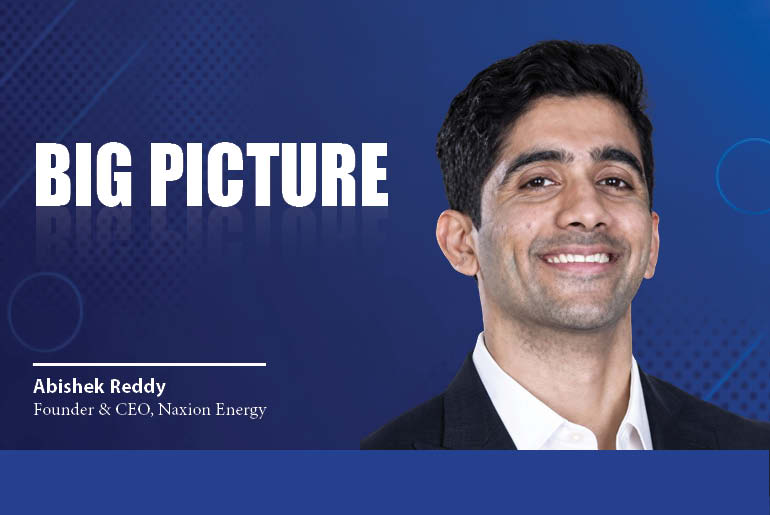
In a recent interaction, Abishek Reddy, Founder & CEO, Naxion Energy, spoke with Rashmi Verma and discussed the company’s mission to localize 95% of its supply chain. He highlighted how Naxion is moving beyond mere assembly to true cell manufacturing, with a focus on high-power applications like heavy industrial machinery, agricultural equipment, and grid-scale storage. From powering remote tribal villages in TopSlip to scaling a new manufacturing plant in Hyderabad by 2026, Reddy detailed how Naxion is bridging the gap between cutting-edge chemical engineering and practical, cost-effective energy solutions for a greener India.
Naxion Energy is India’s first Sodium-ion battery manufacturer. What motivated the company to choose Sodium-ion chemistry over lithium-ion and other established technologies?
We started this company with our end goal and vision in mind. To completely localize cell manufacturing to India. With increasing electrification both in industry as well as the automotive sector India’s we saw an enormous rise in demand for batteries. India doesn’t have any lithium reserves nor do we have long term tie ups with Lithium producing countries yet. We will always be beholden to the international market for lithium cells or raw material and hence will be prone to any geopolitical issues, trade wars or price shocks. Sodium on the other hand requires very abundantly available raw materials allowing us to localize about 90% of the supply chain. Other than that Sodium offers various performance advantages like safety, high charging and discharging rates, wider operating temperatures which makes it perfectly suited for India’s extreme climatic conditions.
Your Sodium-ion batteries claim advantages such as zero fire risk, ultra-fast charging, and long cycle life. Could you explain how your technology achieves these benefits, especially under India’s diverse climatic conditions?
SIBs have the below characteristics which give them very high safety standards:
- No fire risk(non flammable)
- No Lead Acid, No Lithium
- No toxic or rare-earth materials
- Much wider operating temperatures
This makes them perfectly suited for India’s extreme conditions. Lithium on the other hand has a relatively high risk of thermal runaway and causing uncontrollable fires at rest. During times of fast charging and discharging Lithium cells tend to rise in temperature. SIBs are also resistant to not catching fire or short circuiting when the cells undergo any physical damage. This is primarily due to its inherent chemical composition. This makes them very thermally stable. They use abundant less volatile materials, operate at lower voltages, and have more stable electrolytes creating a bigger safety margin and slower fire propagation if an event occurs, providing more time for safety systems to react.
Naxion recently deployed a solar-plus-storage BESS to fully power a 50-home tribal village in TopSlip. Can you share the challenges, learnings, and impact of this project?
We learned an enormous amount through this project. Learning from approaching customers and selling them BESS solutions to the technical aspects of BESS. Since this is still the early days of BESS in India, customers are still hesitant to make the high upfront investment. technical connects were something that our team already had by developing multiple battery packs and dealing with the thermal management issues that come from large battery systems. The biggest challenge was making it a cost effective solution so we had to go back to the drawing board and begin from component selection to meet both the performance and commercial needs. The main challenges we faced were the short timeline as well as inaccessibility of the installation site. The site sat on top of Annamalai hill which was accessible by a rough forest road. So transportation and assembly was a big challenge while making sure we adhere to the strictest safety and quality standards. The site is an elephant camp with tribal families so safety was of utmost importance. All of these factors made it challenging yet excellent project for our team to take up.
I also want to highlight the incredible effort from both our design and engineering teams as well as our on-site execution team. They worked tirelessly—often late into the night—to make sure every challenge was handled with professionalism and commitment. I truly feel fortunate to have such a dedicated group of people around me. Their passion, problem-solving mindset, and willingness to push through tough conditions is what made this project possible. I’m proud of them, and grateful to be building this journey together.
With products ranging from UPS systems to containerized BESS solutions, which market segment—mobility, industrial, or grid-scale—do you see growing the fastest for Sodium-ion technology in India?
I belive Sodium ion has a place in every segment. But currently the one challenge for SIBs are their lower energy density, which doesn’t make them immediately ready for the consumer mobility sector due to long range demands. The stationary energy storage sector doesn’t require high energy density, but will prioritize cost, safety, stability and performance, making it an excellent solution for it. Although BYD and CATL have announced their next generation SIB which have comparable densities to LFP when theyre out, mobility sector is ready for disruption too. Although the commercial mobility segment is not yet ready for SIBs, heavy industrial machinery, material movement and agriculre machinery is an excellent segment for the introduction of SIBs. Other than the manufacturing advantages. SIBs also provide various performance advantages that make them perfectly suited for heavy vehicles, industrial machinery and marine applications. Most such vehicles run in extreme environments and dangerous conditions. SIBs have very wide operating temperatures, high thermal stability and are non-flammable. Such equipment also have high power demands and require fast charging, both of which SIBs can provide. SIBs have higher charging and discharging rates than traditional batteries allowing industries to run high load vehicle but also reduce downtime by providing fast charging. Marine applications also require high safety due to the unstable conditions.
At Naxion we are just finalizing our prototyping and testing of our large agricultural machinery batteries and for forklifts.
One of your strengths is offering turnkey manufacturing services and customized BESS solutions. How does this integrated approach help OEMs and industries transitioning to clean energy?
Since we already have end to end capabilites in battery testing, prototyping and manufacturing we see ourselves as the prefect partner to also provide those services to other OEMs and indsutries. We manufacture our own branded products so we understand validation, engineering and operational complexities that go into the development of energy products and to bring them into the market. This helps us to streamline processes, shorten the development cycles and to maintain high quality standards not just for ourselves but for our partners. This allows them to focus on their expertise but also accelerates their clean energy transition without large investments into their own manufacturing lines. They can focus on their core business and invest into product development.
Sodium-ion batteries reduce dependence on imported materials like lithium and cobalt. How do you see this chemistry contributing to India’s long-term energy security and supply-chain resilience?
By adopting SIB technology we can localise upto 95% of the supply chain for the raw materials required for it production. This would not only help us secure ourselves from geopolitical shocks, pricing wars or other supply chain disruptions but I would give rise to a entirely new industry and economy that has since date not taken hold in India further help developing our nation’s industrial prowess. Adding billions to our GDP as well as developing our technical manpower.
Diversification is absolutely essential for a country like India with no Lithium reserves. This comes at a critical time when Energy Storage and EV demands are skyrocketing as multiple industries are getting electrified. Battery demand is going to exponentially go up. Relying on imports to meet those demands will only leave us vulnerable to any supply chain disruptions or trade wars. This can drastically hinder our economy. Diversifying not only protects us from those shocks but also help build alternate industries leading to technologies specifically developed for India’s unique environment.
With ₹25 crore in funding and a new manufacturing plant planned in Hyderabad for 2026, what are the key milestones in your upcoming roadmap, especially regarding Sodium-ion cell manufacturing?
Our road is still long but we have a few milestones. The first is to increase our pack manufacturing capacity. The interest of demand for our products has gone up tremendously in the last 9 months so we need all the extra capacity. The second will be to set up our supply chains for our foray into cell manufacturing. We have already evaluated and assessed multiple potential partners to JV for this endeavour, so the next steps will be equipment and raw material procurement.
As you explore new applications in defence, marine, and advanced ESS, what innovations or product launches can the industry expect from Naxion Energy in the next two years?
We have a large list of products that we plan on launching the next few months. This includes our SIB based container BESS systems specially engineered for Indian conditions.
Another product in the pipeline is our All in one UPS systems for uninterruptible power for critical applications.
As mentioned before our mobility packs for heavy equipment, industrial and agricultural harvesting vehicles is already being beta tested waiting to be launched by end of 2026.
 Electrify your feed! Click here to join our Whatsapp group and to get the latest updates, expert insights, and innovations driving India’s energy storage revolution.