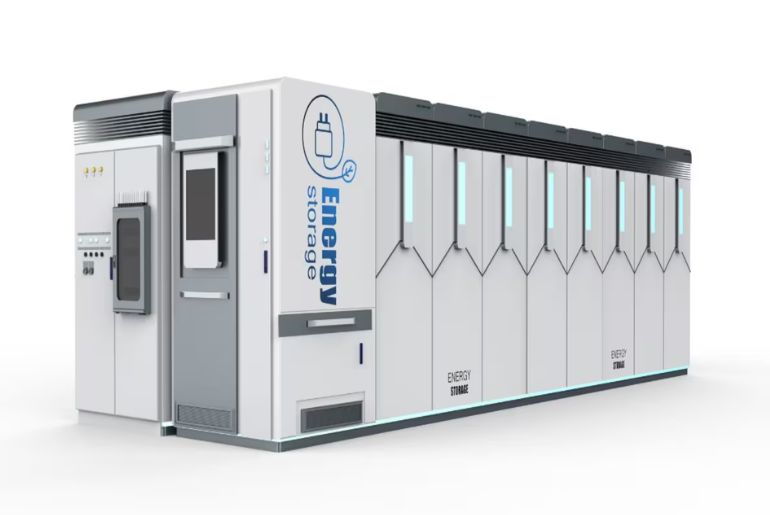
Pace Digitek Limited has secured a significant Battery Energy Storage System (BESS) Engineering, Procurement and Construction (EPC) contract from NTPC Limited for deployment at the Nabinagar Super Thermal Power Station in Bihar, marking a key development in the company’s expansion within the energy storage sector.
The company has received a Letter of Acceptance (LoA) for a project worth ₹4,945.4 million (excluding GST), according to a filing with the government. The contract includes building a battery energy storage system with a capacity of 200 MW and 400 MWh as part of a full EPC package. The scope includes supply, installation, commissioning, and lifecycle maintenance of the system.
The project should be done in about 15 months. Pace Digitek will also do full annual maintenance for 11 years after commissioning. This will cover the whole design life of the BESS system. The company’s duties cover a lot of different stages, such as ex-works supply, civil and structural work, logistics, testing, pre-commissioning, commissioning, and guarantee testing of all materials and equipment.
In addition, the scope includes extensive site-related services such as transportation of equipment from manufacturers to the project site, inland transit insurance, unloading, handling, storage, preservation, and in-plant transportation. The EPC package also incorporates insurance beyond transit, site fabrication of steel structures, installation works, training, and safety services.
Commenting on the development, Chairman & Managing Director Mr. Venugopal Rao Maddisetty said, “This order from NTPC represents a significant addition to our energy order book and reinforces our capabilities in executing integrated BESS projects. As energy storage becomes an increasingly important component of power infrastructure, our ability to deliver end-to-end execution positions us well for utility-scale opportunities.”
With this contract, Pace Digitek’s consolidated order book has reached approximately ₹110,200 million, spanning energy, telecom infrastructure, telecom power equipment, and emerging railway infrastructure projects. The Nabinagar project highlights the growing momentum in utility-scale battery storage adoption in India, as the sector moves toward improving grid stability, integrating renewable energy, and enhancing overall power system reliability.
 Electrify your feed! Click here to join our Whatsapp group and to get the latest updates, expert insights, and innovations driving India’s energy storage revolution.