
In a world where energy independence defines industrial strength, Nash Energy is emerging as a torchbearer of India’s cell manufacturing revolution. At the Battery Show India 2025, amid the hum of innovation and the buzz of new technologies, Nash Energy stood out — not merely as a participant but as a symbol of India’s growing confidence in mastering core battery technology.
Born from the six-decade-old legacy of the Nash Group, this young yet ambitious venture has quickly transitioned from traditional manufacturing to the cutting edge of lithium-ion cell production. With a clear mission to build “technology made in India, not just assembled in India,” Nash Energy has taken the bold route — diving straight into the heart of electrochemistry, a space long dominated by global players.
Backed by its Japanese technology acquisition, U.S. partnerships, and a dedicated team of scientists pushing the boundaries of cell chemistry, Nash Energy isn’t just chasing energy storage — it’s redefining it. Their journey from precision sheet metal to high-performance lithium cells reflects India’s transformation: from importer to innovator, from assembler to architect of energy solutions.
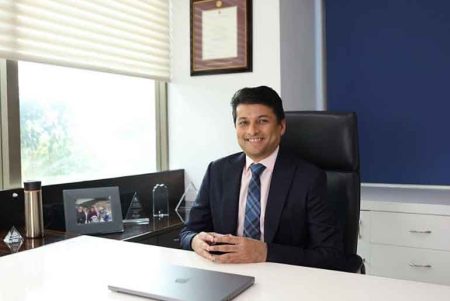
At the Battery Show, The Battery Magazine sat down with Mr. Himanshu Kansal, Head of Sales & Marketing at Nash Energy, to explore how the company is shaping a cleaner, more self-reliant future for India’s energy ecosystem.
Q: Mr. Kansal, how has the Battery Show 2025 experience been for Nash Energy?
This is our second time participating in the Battery Show, and we’re thrilled to be here. We started Nash Energy in 2023, and it’s exciting to introduce our products to the entire industry through such a prestigious platform. Nash Energy proudly stands as India’s first lithium cell manufacturer, and we take pride in competing with global leaders — particularly China — while advancing the “Make in India” initiative in the energy sector.
Q: Could you tell us about Nash Energy’s entry into lithium-ion cell manufacturing and its broader vision for India’s energy future?
Nash Group has a six-decade legacy in sheet metal and product manufacturing, serving multiple sectors including automobile and healthcare. In 2023, we decided to venture into the energy sector. Rather than entering the crowded battery assembly space, we identified a greater opportunity in cell manufacturing, which is the true core of energy storage.
With Hitachi as our global partner, we acquired a Japanese company specializing in electrochemistry. This acquisition gave us the technological foundation to develop our own cell manufacturing capabilities, marking a pivotal step toward self-reliance in advanced energy solutions.
Q: Nash Energy is currently producing LFP cylindrical cells (32140 format) and planning to develop NMC cells as well. What challenges have you faced in scaling production?
The main challenge lies in mastering the chemistry. Without owning the chemistry and technology, it’s impossible to compete globally. That’s why we acquired our Japanese technology firm — to ensure full independence from external (especially Chinese) technology transfers. Our LFP technology is entirely in-house, while NMC development is through a U.S.-based joint venture. Going forward, we plan to diversify into prismatic and pouch cells as well.
Q: How crucial is scaling for cost optimization in the battery industry?
Scaling is absolutely essential. The cost reduction in this industry is directly linked to achieving higher volumes. Without sufficient scale, the cost per unit remains high. It’s a volume-driven business, and economies of scale are the key to competitiveness.
Q: With the growing demand for solar-plus-storage systems, how do Nash’s cells fit into grid-level energy storage projects?
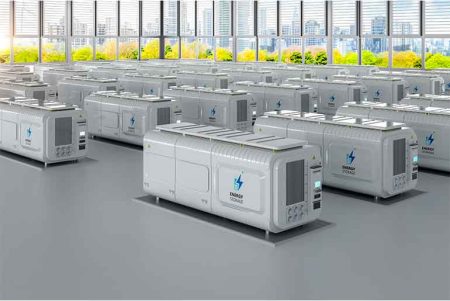
Cells are the heart of every battery system — whether for EVs, energy storage, or solar applications. Our lithium cells serve as the foundation for BESS solutions, enabling efficient energy capture and release in both renewable and industrial setups.
Q: How is Nash Energy addressing the challenges of raw material sourcing and supply chain localization?
That remains one of the biggest hurdles. Nearly 90% of raw material processing and 70% of mining are controlled by China, making complete independence difficult. However, we’re working on developing alternative supply chains through Africa and Australia, and though these options are costlier, they’re critical for diversification.
Q: Are battery cost sensitivities limited to India, or is it a global challenge?
It’s a global reality. Cost sensitivity is not unique to India — every market seeks value. Whether it’s the U.S. or India, customers look for the best product at the best price.
Q: How is Nash innovating toward higher energy density and next-gen chemistries?
Higher energy density is the ultimate goal for every cell manufacturer. Currently, we’re achieving around 165 Wh/kg, and our Japan-based R&D lab has already reached 190 Wh/kg at a lab scale. We aim to push this further, targeting much higher than 300 Wh/kg by 2030, which would be a game-changer.
Q: Does Nash have in-house R&D capabilities in India?
Yes, we have two strong research arms — one in Japan, where we employ around 17 Japanese scientists, and another in India with a team of 17–18 engineers, including PhDs specializing in electrochemistry, electrical, and energy systems.
Q: Are you also collaborating with academic and research institutions?
Absolutely. We have partnerships with three universities in Japan, including Okayama University, and are collaborating with several Indian universities as well. Academic partnerships are vital for innovation and talent development.
Q: Sustainability and recyclability are becoming crucial aspects of battery manufacturing. How is Nash addressing these?
Sustainability is central to our long-term strategy, but it’s also one of the toughest challenges. We’re continuously exploring recycling models that make economic sense while ensuring material recovery and reducing waste. It’s a complex but necessary pursuit.
Q: Finally, as an industry leader, what are your thoughts on India’s policy framework for the battery sector?
Policy support is critical for the industry’s growth. Our COO Mr Anil Kumar recently attended a government consultation where the focus was on import restrictions and Battery Component Value (BCV) policies targeting Chinese imports. Such measures will significantly strengthen localization. The current government’s proactive stance gives us confidence that the coming year will bring major policy reforms in support of domestic manufacturing.
 Electrify your feed! Click here to join our Whatsapp group and to get the latest updates, expert insights, and innovations driving India’s energy storage revolution.