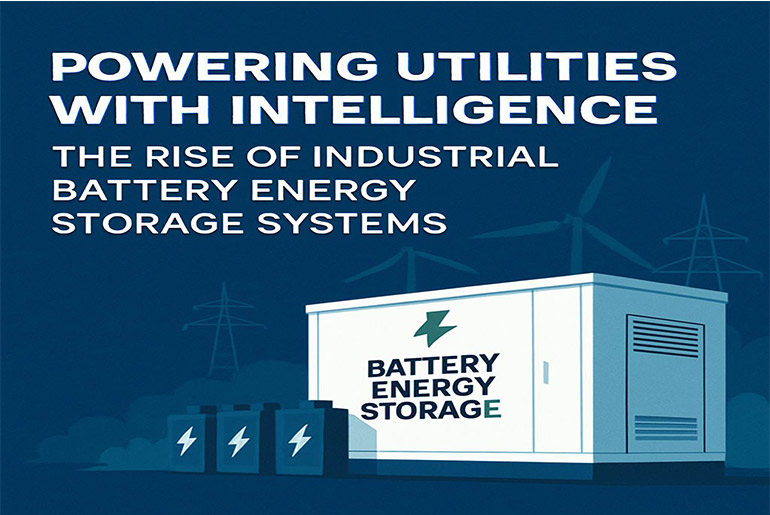
As the demand for clean, reliable, and round-the-clock energy accelerates globally, utilities are facing unprecedented pressure to build smarter grids. One technology rapidly redefining this space is Industrial Battery Energy Storage Systems (BESS)—a powerhouse solution that is no longer an option but a necessity for utility operators navigating the future of energy.
From stabilizing the grid to unlocking the full potential of renewables, industrial-scale BESS is becoming the centerpiece of utility innovation, offering benefits that range from peak shaving and load balancing to enabling time-shifted power delivery and reducing carbon intensity.
What Are Industrial Battery Energy Storage Systems?
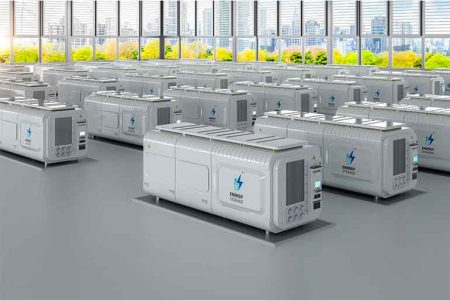
Industrial BESS refers to high-capacity systems that store and discharge electricity when needed—typically installed at substations, renewable energy plants, or grid nodes. These systems are engineered to support massive energy throughput and high-frequency cycling, making them ideal for utility-scale applications.
Core components include:
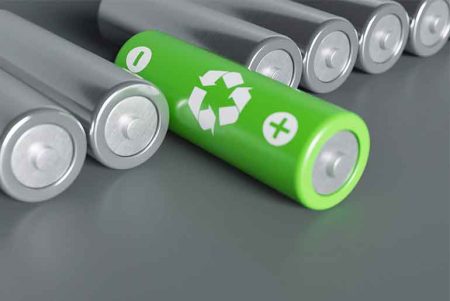
- Battery racks (typically lithium-ion, though newer chemistries like LFP and sodium-ion are emerging)
- Power conversion systems (PCS) that switch power between AC and DC
- Energy Management Systems (EMS) for real-time control and optimization
- Thermal management and fire safety systems
Unlike backup batteries, industrial BESS is dynamic—capable of responding within milliseconds to grid fluctuations, preventing outages, and enabling utilities to sell power into the grid at the most profitable times.
Real-World Momentum: Who’s Deploying and Why?
The global BESS market is projected to surpass USD 100 billion by 2030, driven largely by utility-scale deployments.
Key global deployments include:
- Moss Landing, California: A 400 MW/1,600 MWh project helping stabilize California’s renewable-heavy grid.
- UK’s National Grid: Uses BESS for real-time frequency regulation.
- Germany: Co-located battery storage at wind farms reduces curtailment and improves ROI.
India’s momentum is building fast:
SECI has floated tenders for over 4,000 MWh of grid-connected BESS capacity in FY24–25.
JSW, Tata Power, and NTPC are also exploring multi-hundred MWh scale deployments as part of their renewable asset diversification.
Why Utilities Are Betting Big on Industrial BESS
1. Peak Load Management: BESS allows utilities to store energy during off-peak periods and release it during peak hours, reducing stress on transmission lines and preventing blackouts.
2. Renewable Energy Integration: With solar and wind being intermittent, storage is essential to ensure energy can be dispatched even when the sun isn’t shining or the wind isn’t blowing.
3. Transmission Deferral: Instead of building costly new transmission infrastructure, BESS can act as a localized buffer, handling voltage spikes and frequency dips in high-demand zones.
4. Ancillary Grid Services: BESS supports functions like frequency regulation, voltage control, and black start capabilities—traditionally managed by fossil fuel-based spinning reserves.
5. Enhanced Profitability: By leveraging time-of-use pricing and energy arbitrage, utilities can store power when it’s cheap and discharge when it’s expensive.
6. Sustainability and Emissions Reduction: Fossil peaker plants can be replaced with cleaner, more flexible storage-backed solutions, drastically cutting carbon emissions.
Challenges to Address and the Road Ahead
Despite the clear advantages, industrial BESS comes with challenges:
High CapEx: Viability Gap Funding (like the ₹27 crore support in the Oriana-KPTCL project) is still needed to make large-scale projects viable.
Recycling and End-of-Life Management: As deployments grow, India must establish robust recycling ecosystems to avoid environmental consequences.
Local Manufacturing and Supply Chain: Most battery cells are still imported. Government PLI schemes aim to localize ACC battery manufacturing.
Technological Evolution: Utilities must choose carefully between lithium-ion chemistries, emerging solid-state solutions, and flow batteries.
Yet with policy backing, investor interest, and proven use cases, BESS adoption is set to soar.
Conclusion: The Strength in the Grid
Industrial Battery Energy Storage Systems (BESS) are no longer a pilot project—they’re heading utility operations. As India strives for 500 GW of renewables by 2030 and progresses away from fossil heavy infrastructure, BESS will define not only the flexibility of the grid but the affordability and reliability:
For utility providers who want to succeed in this decade of energy, a capital expenditure on industrial BESS is not just a smart move; it is a necessity:
The future grid is not just smart—it stores power.
 Electrify your feed! Click here to join our Whatsapp group and to get the latest updates, expert insights, and innovations driving India’s energy storage revolution.