India is taking another step toward round-the-clock renewable power as the Solar Energy Corporation of India Limited (SECI) has awarded its 1,500 MW Firm and Dispatchable Renewable Energy (FDRE) tender to Waaree Forever Energies, NTPC Renewable Energy Limited (NTPC REL) and ACME Solar Holdings.
The auction discovered tariffs in a narrow range of ₹5.99 to ₹6 per kWh, highlighting competitive pricing for renewable projects designed to deliver assured power during peak-demand periods.
The tender is structured to provide 1,500 MW of peak renewable power for four hours each day, translating into a total assured supply of 6,000 MWh. Unlike conventional renewable projects that depend heavily on weather conditions, FDRE projects are designed to combine renewable generation with appropriate storage and other technologies to deliver electricity when required.
Waaree Emerges as Largest Winner
Waaree Forever Energies, a subsidiary of Waaree Energies, emerged as the largest successful bidder in the auction. The company secured 700 MW/2,800 MWh of capacity at a tariff of ₹5.99/kWh.
NTPC REL secured the second-largest allocation, winning 500 MW/2,000 MWh at ₹6/kWh. ACME Solar Holdings was awarded the remaining 300 MW/1,200 MWh, also at ₹6/kWh.
Together, the three developers will provide the full 1,500 MW/6,000 MWh capacity covered under the auction.
The close tariff range between the successful bids indicates strong competition among developers and growing interest in projects capable of delivering renewable electricity beyond periods of solar or wind generation.
SECI Expands Firm Renewable Power Procurement
The auction was conducted under SECI’s SECI-FDRE-IX programme, following a Request for Selection (RfS) issued in June 2026.
The original tender sought developers for 1,200 MW/4,800 MWh of inter-state transmission system (ISTS)-connected renewable energy projects. The procurement was subsequently expanded to 1,500 MW, with the required assured peak supply increased to 6,000 MWh.
Under the revised structure, developers are required to provide four hours of assured peak renewable power each day.
This model is becoming increasingly important as India adds large amounts of variable solar and wind capacity to its electricity system. Solar generation is concentrated during daylight hours, while peak electricity demand can occur later in the day. Energy storage can therefore play a critical role in shifting renewable electricity to periods when the grid needs it most.
Storage Gains Importance in India’s Renewable Push
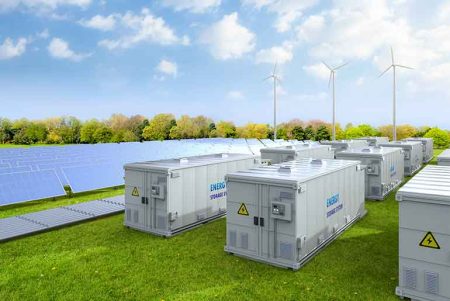
For the battery energy storage sector, the SECI auction is significant because FDRE procurement can create additional demand for large-scale storage systems, particularly battery energy storage systems (BESS).
By pairing renewable generation with storage, developers can supply electricity during predetermined peak periods instead of simply exporting power whenever renewable generation is available. This can improve grid flexibility while reducing dependence on conventional generation for balancing and peak demand.
The auction also demonstrates the growing importance of dispatchable clean power in India’s energy transition. As the country targets a much larger renewable energy base, the ability to deliver predictable electricity will become increasingly important for maintaining grid stability.
With Waaree Forever Energies, NTPC REL and ACME Solar securing the latest FDRE capacity, India’s procurement landscape is moving beyond renewable generation alone toward projects that combine clean power, firm delivery and energy storage.
For battery manufacturers, storage developers and renewable energy companies, such tenders could provide a growing pipeline of opportunities as India seeks to build a more flexible and reliable low-carbon power system.
 Electrify your feed! Click here to join our Whatsapp group and to get the latest updates, expert insights, and innovations driving India’s energy storage revolution.