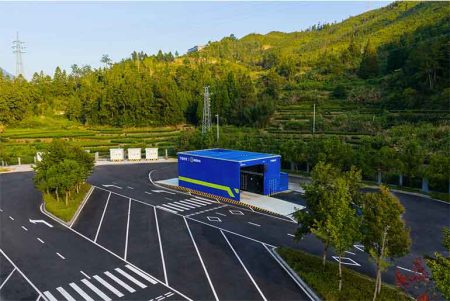
Tesla signed an approximately 557 million deal with the Shanghai government to construct its first mega energy storage station in China, another major jump for the company that is taking off as an energy player. The plant will use Tesla Megapack batteries, lithium-ion beasts packaged as shipping containers, to stabilize the ever more renewable-heavy power grid in China. Tesla has stated, through communicating in Chinese via social media service Weibo, that it will be the biggest site of this kind in China once it becomes fully operational.
The news is not only a local breakthrough. The possibility of this deal may be an indication of Tesla’s long-term change as an energy infrastructure company rather than an automaker.
The battery storage station will be co-located with the Tesla Megafactory in Shanghai’s Lingang district, which started to mass-produce Megapacks this year. When it is done, the plant will provide industrial-sized backup power to the local energy suppliers—or, simply, be like a huge battery bank, which can be recharged during off-peak hours and released during peak times when the grid has become overloaded.
A Megapack will be able to generate up to one megawatt of power over a period of four hours, which can provide the housing system of hundreds of homes at peak loading. This occurrence in bulk constitutes the powerhouse of Tesla utility-scale energy solutions, which are already installed in areas like California, Australia, and the U.K. However, this Shanghai installation represents a giant step: the connection of Megapacks into the structure of one of the biggest power networks in the world.
The grid-side energy storage station is not the only one that can easily adjust grid resources in real-time to smooth changes in demand, which Tesla likens to a smart regulator of urban electricity on the Chinese social media platform Weibo. The message was clear, though the translation was provided by Google: Tesla does not merely sell batteries but also establishes its positioning as an infrastructural actor in the process of being able to future-proof megacities with smart energy systems.
Such a position, as a type of software-defined vibration damper of the grid, may eventually become the most sustainable benefit of Tesla in the world energy trade. In China, where the modernization of the grid is presented as a national priority and facilitated by policies, it takes Musk’s firm to a strong place. The Shanghai battery power plant would be able to effectively relieve the pressure of power supply in the city and guarantee the safe, stable and efficient electricity demand of the city, the company said.
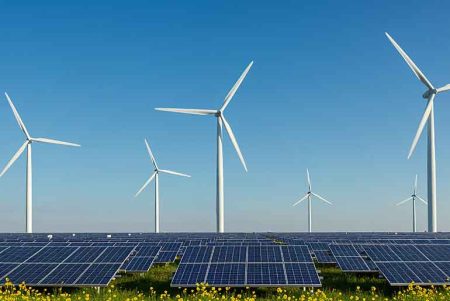
China could not have a better deal at hand. The country is betting big on wind and solar power, but these are, per se, unreliable sources. Energy storage, especially at grid scale, is increasingly seen as a key to providing more stable power delivery, especially in very large provinces.
In the first-quarter 2025 earnings announcement, Tesla reported energy storage deployments of 10.4 GWh, or more than twice this figure compared to the year before, and a company record. Higher revenue of 67 percent in energy, to $2.73 billion, as well as gross profit, which was at an all-time high, made the energy division one of the few highlights in what was otherwise a rocky quarter. This energy unit not only remains ahead of Tesla automotive company in its margin performance but also displays an aspect generating some speculation that the company will be less on wheels than on the grid.
This may no longer be conjectural.
During Tesla’s fiscal 2025 first-quarter earnings call, Musk said that “the energy business is doing very well,” adding that its growth would be long-term and substantial—expecting it to “eventually deploy terawatts of capacity per year.” In 2024, Musk said the energy storage business could someday outsize the car business: “It will increase—we actually know that it will—significantly faster than the car business, as we expected.”
It is not just a deal concerning the deployment of batteries in Shanghai. It is not the case of Tesla penetrating the energy grid of the biggest clean power market in the world. It also provides a precedent of the same infrastructure collaborations in Europe and the U.S.
 Electrify your feed! Click here to join our Whatsapp group and to get the latest updates, expert insights, and innovations driving India’s energy storage revolution.