The ePlane Company, an electric vertical take-off and landing (eVTOL) aircraft developer, has inaugurated a new prototyping and testing facility at the IIT Madras Discovery Campus in Thaiyur, near Chennai.
Spread across 60,000 square feet, the facility marks a major step in the company’s transition from early design concepts and subscale prototypes to flight-ready hardware and certification-grade full-scale prototyping. The company described it as the nation’s first integrated plant dedicated to the serial production of electric aircraft, signalling a milestone for India’s Urban Air Mobility (UAM) sector.
The facility was inaugurated by Professor V. Kamakoti, Padma Shri awardee and Director of IIT Madras. His vision for the 163-acre Discovery Campus has enabled the creation of high-tech infrastructure to support deep-tech ventures.
Integrated Engineering Hub
The new centre will serve as the engineering hub for the company’s passenger, relief, and cargo eVTOL aircraft. It brings together design, prototyping, integration, and subsystem testing teams under one roof.
Key capabilities at the site include composite fabrication, electric powertrain assembly, avionics testing, and a dedicated Ground Test Vehicle (GTV) facility for subsystem validation and full-scale development. The facility will also support critical development milestones such as tethered hover testing as the company moves toward Type Certification.
Designed for Dense Urban Mobility
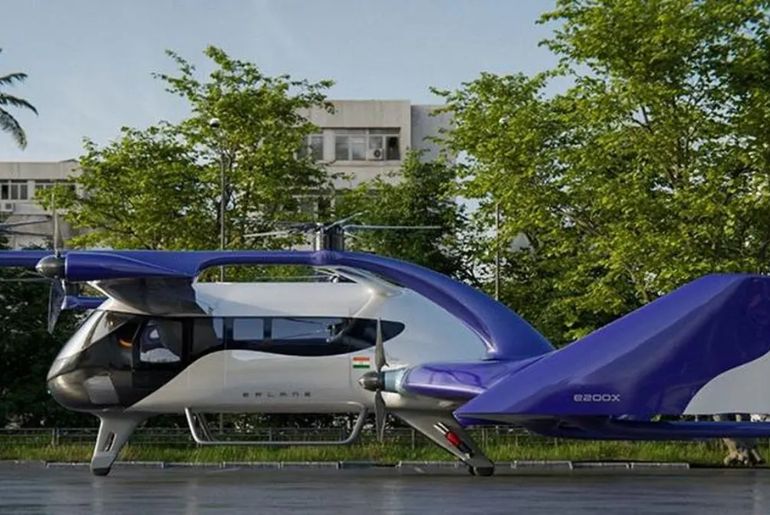
The company’s e200X aircraft is built specifically for densely populated cities. With an 8m x 10m footprint described as the most compact globally it enables rooftop-to-rooftop operations, unlike many global competitors that require larger landing areas. The design aims to suit India’s congested urban environment while meeting international standards.
Vision for the Future
“This facility is the engine of our commercial future,” said Prof. Satya Chakravarthy, Founder and Technical Lead of The ePlane Company.
He added, “With the support of IIT Madras, we have built a space where we can fulfil our vision of making flying as common and affordable as taking a taxi. This isn’t just about moving people; it’s about adding another layer of transport to the future of human mobility.”
The initiative reflects IIT Madras’ role in supporting deep-tech innovation through infrastructure, specialised talent, and academic validation, helping accelerate India’s zero-emission urban mobility ecosystem.
 Electrify your feed! Click here to join our Whatsapp group and to get the latest updates, expert insights, and innovations driving India’s energy storage revolution.