
For the last decade, the world has been obsessed with a single element: Lithium. It powers our phones, our laptops, and the sleek electric vehicles (EVs) hum through our streets. But as we move into 2026, a quiet realization has dawned on engineers and policymakers alike. While lithium is the undisputed king of the road, it doesn’t have to be the king of the power grid. In fact, relying on a single, expensive mineral for everything is creating massive bottlenecks in global Supply Chains.
To truly decarbonize our world, we need to decouple our stationary energy storage from the volatile Supply Chains of rare earth metals. Enter the “Age of Rust.” By using earth-abundant materials like iron, salt, and zinc, we are witnessing a geopolitical shift toward “Chemistry Independence.”
The Magic of Reversible Rust
Imagine a battery that breathes. That is essentially what an iron-air battery does. Developed by companies like Form Energy, which operationalized its massive Weirton factory in late 2025, these batteries operate on a principle called “reversible rusting.”
When the battery discharges energy to the grid, it “breathes in” oxygen from the air, causing the iron inside to oxidize and turn into rust. This chemical reaction releases electrons. When it’s time to charge the battery using excess wind or solar power, the process reverses: the rust “breathes out” oxygen and turns back into pure iron.
Because iron is one of the most abundant and recycled metals on Earth, it is completely immune to the pressures that haunt lithium Supply Chains. You don’t need deep-sea mining or complex geopolitical negotiations to find iron; it’s everywhere. This simplicity allows these batteries to store energy for over 100 hours—enough to power a city through a week-long “renewable lull” when the wind doesn’t blow and the sun doesn’t shine.
Zinc-Bromine: The Rugged Alternative
While iron-air is the marathon runner of the battery world, zinc-bromine flow batteries are the rugged workhorses. Unlike lithium-ion batteries, which can be finicky and prone to “thermal runaway” (fire), zinc-bromine systems use a water-based electrolyte. They are naturally fire-retardant and can be fully discharged every single day for twenty years without losing capacity.
The beauty of zinc is that it is globally distributed. By shifting grid storage to zinc, nations can bypass the concentrated Supply Chains of cobalt and nickel. In 2025, we saw a surge in “microgrid” deployments in remote areas using this tech, proving that you can have high-tech energy storage without high-stakes Supply Chains.
Turning Coal Mines into Gold Mines
One of the most poetic shifts in 2026 is the “Just Transition” of old infrastructure. As coal-fired power plants are retired, they are leaving behind massive, valuable assets: heavy-duty grid connections, giant turbines, and skilled workers.
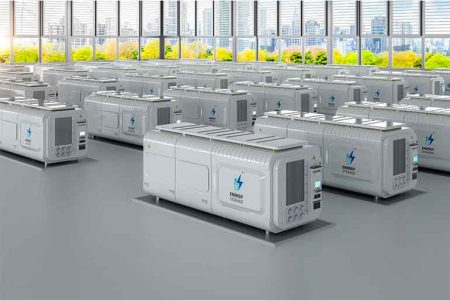
Instead of tearing these plants down, utilities are repurposing them into “Clean Energy Hubs.” In places like West Virginia and parts of Europe, old coal sites are being filled with shipping containers of iron-air batteries. By using the existing grid “plug,” we save billions in infrastructure costs and avoid the years of permits required for new Supply Chains of transformers and high-voltage lines.
Why “Chemistry Independence” Matters
Every time there is a diplomatic spat or a trade war, the Supply Chains for high-tech minerals tighten. This creates a “green inflation” that makes renewable energy more expensive. By diversifying the chemistries we use, we create a more resilient world.
If a country has a strong steel industry, it already has the foundation for its own energy storage Supply Chains. If it has access to zinc mines or salt flats, it can build its own grid-scale batteries. This is the heart of “Chemistry Independence.” It isn’t just about being “green”; it’s about being secure. We are moving away from a world where energy security depends on who has the most oil or the most lithium, and toward a world where energy security depends on who can best use the materials they already have.
Breaking the 100-Hour Barrier
The biggest criticism of renewable energy has always been its intermittency. Lithium batteries are great for four hours of backup, but what happens during a three-day storm? This is where the 100-hour storage capacity of iron-air changes the game.
By having a massive “buffer” of stored energy, we can finally retire the “peaker plants”—the natural gas plants that sit idle most of the year and only turn on during high demand. Replacing these plants with iron and zinc batteries simplifies the energy Supply Chains and lowers the cost for the average person.
The Economic Ripple Effect
When we simplify the materials, we simplify the manufacturing. Lithium-ion batteries require “clean rooms” and incredibly precise, expensive machinery. Iron-air batteries, by comparison, are much more forgiving. They can be built in converted steel mills using standard industrial processes. This lowers the barrier to entry for new companies and allows for localized Supply Chains that create jobs in the same communities where the energy is being used.
As we look toward the end of 2026, the data is clear: the most sustainable battery is the one that uses the most common materials. By leveraging the abundance of the Earth, we are finally building a grid that is as reliable as it is clean.
Conclusion: A Simpler, Steadier Future
The transition to iron and zinc doesn’t mean we are “quitting” lithium. Lithium will always be the best choice for a smartphone or a high-performance sports car. But for the giant, invisible “batteries” that keep our hospitals running and our lights on at night, we need something more humble.
We are entering an era where rust is a resource and salt is a solution. By decoupling our grid from fragile global Supply Chains, we aren’t just protecting the planet—we are protecting our future. The “Geopolitical Chemistry Independence” of 2026 is proof that sometimes, the most sophisticated solution is the simplest one.
Key Advantages
|
Technology |
Primary Material | Duration |
Best Use Case |
|
Iron-Air |
Iron / Rust | 100+ Hours |
Seasonal storage, retiring coal plants |
|
Zinc-Bromine |
Zinc / Water | 10-12 Hours |
Daily cycling, fire-safe microgrids |
|
Lithium-Ion |
Lithium / Cobalt | 2-4 Hours |
EVs, frequency regulation |
The diversification of our energy storage is the only way to ensure that our Supply Chains remain stable. As more countries adopt these “dirt-cheap” chemistries, the global reliance on a few concentrated mineral sources will fade. We are finally building a world where the sun and wind can power everything, supported by the very ground beneath our feet.
In this new landscape, the winner isn’t the one with the rarest minerals, but the one with the smartest Supply Chains. By focusing on what is abundant, we ensure that the green transition is affordable for everyone, not just those who can pay the “lithium premium.” The rust revolution has arrived, and it is here to stay.
 Electrify your feed! Click here to join our Whatsapp group and to get the latest updates, expert insights, and innovations driving India’s energy storage revolution.