SAEL Solar P6 Private Limited’s request for broad regulatory relaxations for a proposed captive renewable power project connected to its planned solar cell and module manufacturing facility in Uttar Pradesh was denied by the Uttar Pradesh Electricity Regulatory Commission (UPERC).
The Commission’s order, rejected SAEL Solar’s prayers for exemptions from transmission, wheeling and banking charges, unrestricted use of banked electricity and permission to establish captive generation capacity beyond the 125% ceiling specified in its Letter of Comfort.
SAEL Solar told the Commission that it had received a Letter of Comfort from the Uttar Pradesh government on July 10, 2025 for establishing an integrated photovoltaic manufacturing facility comprising 5 GW of solar cell fabrication and 5 GW of downstream module manufacturing capacity in the state.
The company said it plans to invest approximately ₹8,000 crore in the facility and argued that electricity would represent a significant and unavoidable component of its operating expenditure. It sought regulatory support to keep its energy costs competitive with international manufacturers.
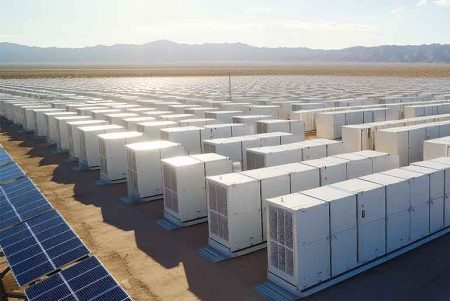
SAEL also proposed establishing a Captive Generating Plant (CGP) with Energy Storage System (ESS) to meet the electricity requirements of the manufacturing facility. It argued that the actual power consumption would require higher solar PV capacity along with storage.
The petition sought several major concessions from UPERC. These included permission to bank energy generated from the solar PV captive project along with ESS for the entire operating period and to withdraw that banked electricity at any time without restrictions based on peak/off-peak or solar/non-solar hours.
SAEL also sought 100% exemption from banking, wheeling and transmission charges for the electricity supplied from the captive project to its manufacturing facility. It further sought permission to establish CGP capacity above the 125% of contract demand permitted under its Letter of Comfort.
Uttar Pradesh Power Corporation Ltd. (UPPCL) opposed the petition, arguing that the requested relief would amount to a departure from the applicable regulatory framework. UPPCL said commercial viability, competitiveness and reduction of operating costs could not by themselves constitute grounds for exemption from statutory charges or relaxation of generally applicable regulations. It also pointed out that the Uttar Pradesh Solar Energy Policy, 2022 provides a 50% exemption in transmission and wheeling charges for eligible solar projects, rather than the 100% exemption sought by SAEL.
UPPCL further argued that the 125% capacity provision in SAEL’s Letter of Comfort was a defined threshold and that allowing unrestricted generation capacity without corresponding technical evaluation or system-impact assessment would not be appropriate.
UP Power Transmission Corporation Ltd. (UPPTCL) also opposed project-specific exemption from transmission charges. The transmission utility told the Commission that transmission charges are required not merely for the physical movement of electricity but also to recover the costs of maintaining a secure, reliable and adequately planned transmission network.
It warned that granting the exemption could result in an unrecovered regulatory revenue gap, defer legitimate revenue recovery by UPPTCL and potentially lead to redistribution of unrecovered transmission charges among other users through future tariff proceedings.
UPPTCL also objected to SAEL’s proposal to withdraw electricity injected during off-peak periods at its discretion, arguing that this could effectively turn the state transmission system into a virtual energy storage facility while the cost and responsibility of maintaining the network would continue to rest with the transmission utility.
UPERC ultimately sided with the respondents and found no grounds to grant the requested relief. The Commission observed that while industry establishment, investment and subsidies may serve the national interest, decisions on incentives or subsidies for a particular project rest with the government. It also noted that its regulations do not impose a ceiling on the capacity of a captive generating plant, but the quantum of electricity injected into the grid cannot exceed the applicable limits under the state’s open-access regulations.
Crucially, UPERC rejected SAEL’s reliance on its “Power to Relax” provision. The Commission said this power is intended to address genuine hardship in exceptional circumstances and cannot be used simply to incentivise a particular industry or create a project-specific regulatory regime. On the request to exceed the 125% capacity ceiling, the Commission said SAEL could approach the State Government directly, since the 125% limit under the Letter of Comfort was presumably linked to the applicable capital-subsidy limit under the state policy.
UPERC rejected SAEL Solar P6’s petition based on these findings. On September 2, 2026, Chairman Arvind Kumar, Member Sanjay Kumar Singh, and Member (Law) Griesh Kumar Vaish signed the directive. The immediate consequence is that SAEL is unable to use UPERC’s relaxation powers to secure the desired 100% transmission, wheeling, and banking-charge exemptions. Instead, the business would have to work within the relevant legal framework or apply to the Uttar Pradesh government for additional project incentives.
 Electrify your feed! Click here to join our Whatsapp group and to get the latest updates, expert insights, and innovations driving India’s energy storage revolution.