
The electric mobility landscape in India is progressing fast. It is transitioning from proliferation of charging stations to focused on an ecosystem that can be sustainable and trusted in the long-run. Battery storage is the center of this transition; this fast-evolving technology is positioning itself as the backbone of uninterrupted EV charging infrastructure that provides access to charging on a continuous, 24/7 basis, mitigates the dependency on the grid for energy supply, and makes charging through renewable sources a reality in urban centres, highways, and remote regions.
The Growing Demand and Grid Challenge
India’s power infrastructure is being pushed to its limits. Estimates predict EV charging demand to grow to 38 TWh by 2031–32 and peak power requirements to 366 GW. For this demand, experts predict the country will require battery storage solutions of 47 GW/237 GWh, alongside pumped hydro at 26 GW.
As of now, India’s storage capacity is only 0.2 GWh from Battery Energy Storage Systems (BESS), which underlines a shortfall in storage potential from the projected demand. In particular, the shortfall in storage especially battery storage is a legitimate risk to the sustainable charging ecosystem.
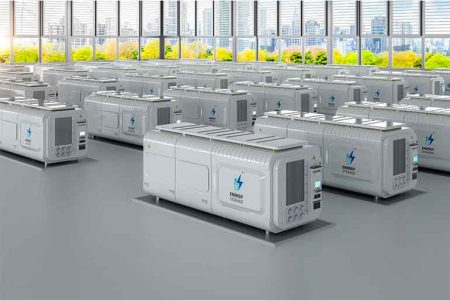
Bridging the Gap: Battery Storage to the Rescue Battery storage acts as a bridge to address the disconnect between renewable generation and EV charging demand. By capturing excess power during off-peak periods or during sunny hours, then releasing it when demand is higher, battery storage will smooth loads and provide grid stability. Innovations have already begun. A Mumbai based start up has already introduced a containerised battery storage system (PuREPower Grid, simple and straightforward) coupled with solar panels, which reduces stress on the local grid, as well as providing secure fast charging.
Furthermore, there is an ongoing response to NTPC & MERC activities for large-scale deployment of battery storage, such as tender exercises for the 500 MW/1 GWh BESS, and perhaps 100 MW systems that can support critical infrastructure along with all the EV hubs in Mumbai.
Real-World Applications: From Bengaluru to Gujarat
At the Bengaluru International Airport’s BESCOM EV Hub, India’s first solar-powered charging station with second-life BESS went live in June 2025. It features a 45 kWp rooftop solar system with a 100 kWh battery energy storage system (BESS) using refurbished EV batteries, allowing facility to provide 24/7, off-the-grid charging for as many as 23 vehicles.
In Gujarat, the monumental hybrid renewable energy park in Kutch district, which is anticipated to generate 30 GW of solar and wind energy, has plans for a 14 GWh, grid-connected scale battery energy storage system (BESS) to support balancing and stability of the transmission system and to aid in increased renewable energy integration.
Policy and Financial Enablers for BESS
The government is gradually stepping up to remove financial barriers for battery storage adoption. The 2025 Union budget would represent an attractive opportunity to remove the exorbitant 28% GST on battery systems as well as green financing or viability gap funding to kick-start BESS uptake.
India will not only launch a $627 million BESS program as part of a national battery scheme, but also introduce $2.1 billion in incentives to develop domestic battery manufacturing.
As a collective, these funding and support mechanisms are designed to encourage the expansion of local battery storage, while decreasing reliance on imported battery storage.
New Technology Innovations Accelerating and Supporting the Adoption of Battery Storage
Advancements in technology are increasing the possibilities and capabilities of BESS in EV charging contexts. Smart grid technology allows for dynamic load shifting and greater utilization of renewable energy at charging stations. IoT-enabled charging stations and AI-powered battery platforms can now monitor solar generation and when to charge or discharge to effectively balance out the demand for electricity at charging stations.
In Maharashtra, Exicom has been able to develop 50 charging stations with a combination of solar and storage, reducing reliance on the grid by 60%.
The use of storage could extend beyond just stationary systems and could also be found in distributed networks, through mobile EV batteries – like Vehicle-to-Grid (V2G) technology. As battery storage and the technology improves, we will be able to send energy from the mobile battery back to the grid when demand peaks.
Storage Limitations and Challenges.
Still, even with the promise of storage, challenges remain. Up-front costs due to GSTs, import reliance, commodity price variation continue to be a constraint to adoption and deployment.
Environmental risk related to battery disposal and the need for safety standards (ideally based on India’s local climate) make for a multi-faceted issue.
Additionally, India’s domestic existing capacity for manufacturing battery storage does not match the demand. With only a handful of facilities in operation (like those by Exide’s lithium-ion venture), scaling up is time-sensitive but capital- and resource-intensive.
Unlocking the Future: Battery Storage as an Enabler
Despite some challenges, increasing examples are showing how storage enables EV charging. From solar hubs in Bengaluru to treat-scale energy parks in Gujarat, storage is seen as vital to clean resilience and indeed enabling infrastructure.
By 2030, India’s ambitious renewable and EV goals will only be met with storage at the centre, as the link between intermittent energy sources, system stability, and consumer demand.
With more policy support, local manufacture of storage technology and creative financing, battery storage could be India’s tool to enable reliable, green, 24/7 EV charging all over the country.
 Electrify your feed! Click here to join our Whatsapp group and to get the latest updates, expert insights, and innovations driving India’s energy storage revolution.