With renewable capacity rising worldwide, grids face mounting pressure to balance intermittent power generation. Battery systems have so far dominated the energy storage conversation—but Thermal Energy Storage (TES) systems, often overlooked, are rapidly proving indispensable in strengthening grid resilience and ensuring energy security in clean-energy environments.
What Is Thermal Energy Storage (TES)?
TES systems store thermal energy—either heat or cold—for later use. Energy storage systems utilize the following three easy types:
- Sensible heat storage using materials such as, but not limited to, molten salts and water.
- Latent heat storage using phase change materials (PCMs).
- Thermochemical storage, utilizing reversible chemical reactions.
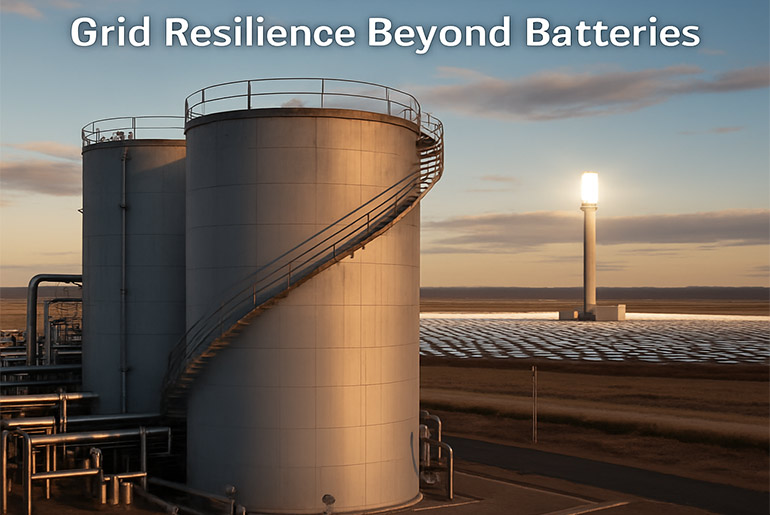
As an example, certain molten salts used in Concentrated Solar Power (CSP) plants will store heat released during the night, with the storage heat production in the day providing clean power at all hours.
The Rising Market for TES
The global TES market is expanding rapidly:
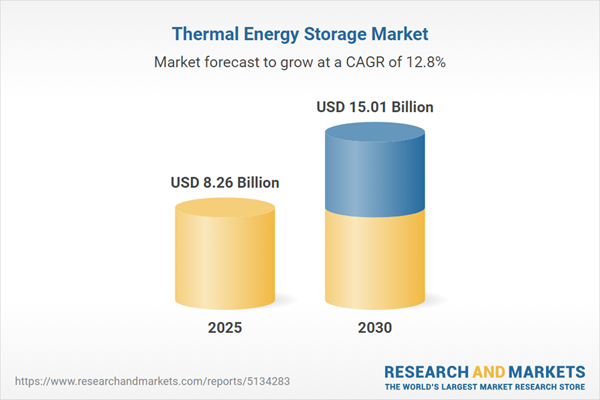
- According to Research and Markets, TES—valued at USD 8.26 billion in 2025—is projected to reach USD 15.01 billion by 2030, growing at a 12.7% CAGR.
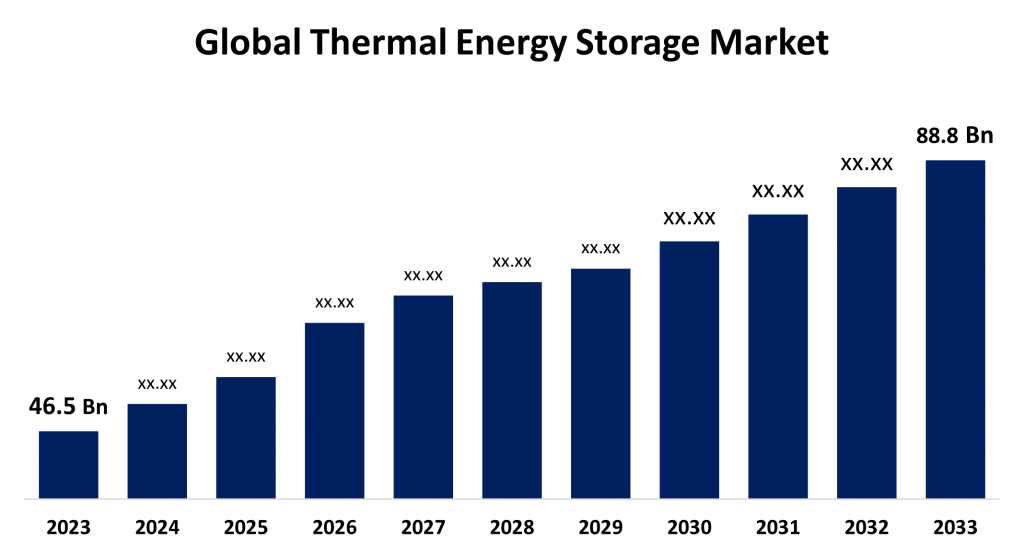
- Another projection from Spherical Insights puts the TES market at USD 46.5 billion in 2023, with a forecast to exceed USD 88.8 billion by 2033, at a 6.68% CAGR.
North America is expected to dominate market share, signaling strong adoption potential in energy-heavy economies.
TES vs. Battery Energy Storage
How does TES stack up against lithium-ion batteries?
- Cost Efficiency: Thermal storage systems may cost at least 35% less than Li-ion alternatives.
- Use Case Fit: TES plays a role in long-duration applications, industrial heat, and affordable large-scale storage, while batteries are typically best suited for applications needing high density and rapid responsiveness.
One publication lists Li-ion’s Levelized Cost of Storage (LCOS) as roughly $0.314/kWh, although direct comparisons of TES can differ by source.
TES: Strengthening Resilience in the Grid
TES systems contribute to the strength of the grid by supporting:
- Load shifting: Moving energy usage from peak to off-peak hours.
- Peak shaving: Reducing peak power requirements and reducing strain on the grid.
- Ancillary services: Balance in the grid, frequency support, redundancy.
Thermal storage is highly flexible for long duration when batteries have limitations on the duration of energy storage or scale.
India’s Clean Energy Agenda
India’s bold commitment to a renewable energy target of 500 gigawatts by 2030 shows its imperative need for multiple types of storage on the grid.
- The Modhera solar model village has been built so that it can operate solely on solar energy; it is also equipped with a 15 MWh battery system, but if we want to replicate this across the country, we will require other forms of storage as well, including TES, due to the uniqueness of its scale and efficiencies.
- The government has continued the momentum for supporting storage development to ease the greening of the grid by waiving transmission charges for storage projects until 2028 and has introduced incentives (~~₹54 billion (~USD631 million) for 30 GWh of battery storage systems and other systems).
- The Transformative Mobility and Energy Storage Mission (launched in 2019) and the National Energy Storage Mission together present India’s strategic vision for diversified energy storage options with a view to changing and stabilizing India’s electricity supply.
- As Minister Piyush Goyal recently said to the industry to “cut dependence on imports”, it would seem that homegrown TES technologies offer a good fit for India’s self-reliance initiative.
Tech Innovations & Emerging Use Cases
Innovation is accelerating TES effectiveness:
- AAdvanced materials include ceramic and composite media, as well as nano-enhanced phase change materials (PCMs).
- TES-enabled EV charging hubs serve as thermal buffers.
- Industrial waste heat recovery integration.
- AI/ML tools optimize charging/discharge cycles for efficiency and cost.
The Road Ahead
Although the potential for TES is great, its adoption faces challenges:
- The high upfront costs and limited deployment can be problematic from a scale to a cost perspective.
- Material R&D is trailing behind battery advancements.
- There are continuing challenges with standards and integration and both regulatory and operational clarity remains vague.
The Silent Endurance of Clean-Energy Grids
Energy markets require more resilient and scalable storage solutions, and with the continuing expansion of solar and wind energy, TES offers a long-duration and cheap flexibility solution via molten salt tanks, PCM chambers, and thermochemical storage. While it is advantageous to invest in TES, it is critical for the security and stability of power systems and even more so for developing economies like India to have affordable and reliable electricity sources.
 Electrify your feed! Click here to join our Whatsapp group and to get the latest updates, expert insights, and innovations driving India’s energy storage revolution.