The rapid rise of Battery Energy Storage Systems has transformed the way the world thinks about clean energy, but with larger batteries comes a greater responsibility to ensure they remain safe throughout their lifecycle. As the industry races to deploy gigawatt-hours of storage capacity, one question is becoming impossible to ignore—not how to extinguish a battery fire, but how to prevent one from happening in the first place. It is this challenge that Alaknanda Systems has spent the last few years addressing, drawing on more than three decades of expertise in fire detection and protection to develop specialised solutions for Battery Energy Storage Systems.
At India Energy Storage Week (IESW) 2026, Shweta Kumari, Sub-Editor, The Battery Magazine, spoke with K. M. Bhargava, Founder, Alaknanda Systems, about the growing importance of fire prevention in Battery Energy Storage Systems, the need for stronger regulations, and why early detection—not suppression—will define the future of BESS safety. From launching a comprehensive handbook on Battery Energy Storage System Fire & Explosion Safety to developing intelligent technologies that detect thermal runaway precursors, Mr K.M. Bhargava shares why safety must evolve alongside India’s rapidly expanding energy storage ambitions.
Alaknanda Systems has built a strong reputation in fire safety over the years. Could you introduce the company and tell us what brought you to India Energy Storage Week this year?
Alaknanda Systems has been working in the field of fire detection and fire suppression solutions for more than 30 years. Over the last few years, as Battery Energy Storage Systems (BESS) have gained momentum, we identified a significant gap in the industry’s approach to fire safety.
While energy storage technology has advanced rapidly, fire safety solutions specifically designed for BESS have not evolved at the same pace. Recognising this need, Alaknanda Systems developed specialised fire safety solutions tailored for BESS.
India Energy Storage Week is one of the country’s most important platforms dedicated to energy storage. It provides an excellent opportunity to showcase our solutions, engage with industry stakeholders and contribute to the growing conversation around BESS safety.
Battery Energy Storage Systems are witnessing unprecedented growth in India. What major trends are you observing in the market?
The Indian BESS market is expanding at an extraordinary pace.
Over the past year alone, we have witnessed remarkable growth across utility-scale, grid-scale and commercial & industrial (C&I) energy storage projects. Awareness about Battery Energy Storage Systems has also increased significantly, and more industries are recognising their importance in supporting renewable energy integration.
However, one area that still requires greater attention is fire safety. As deployments increase, ensuring safe system design becomes equally important. International incidents have demonstrated how difficult battery fires can be to manage, making proactive safety measures an essential part of every BESS project.
India has tremendous potential to become one of the global leaders in BESS, but safety must grow alongside capacity.
Fire safety has become one of the biggest concerns in BESS. How is fire protection in BESS different from conventional buildings?
The philosophy behind fire safety in Battery Energy Storage Systems is fundamentally different from conventional buildings.
In a building, the objective is relatively straightforward—you detect the fire, evacuate people and suppress fire using appropriate fire suppression systems.
BESS fire behaves differently. Once the thermal runaway starts in the battery, suppressing the fire becomes extremely challenging using existing suppression technologies.
Therefore, the primary objective in BESS is not simply extinguishing a fire—it is preventing the fire from occurring in the first place.
This requires continuous monitoring, early detection and understanding the warning signs that appear well before thermal runaway starts.
What solutions is Alaknanda Systems showcasing at India Energy Storage Week, and what differentiates your approach?
One of the biggest challenges today is creating greater awareness about Battery Energy Storage System fire safety.
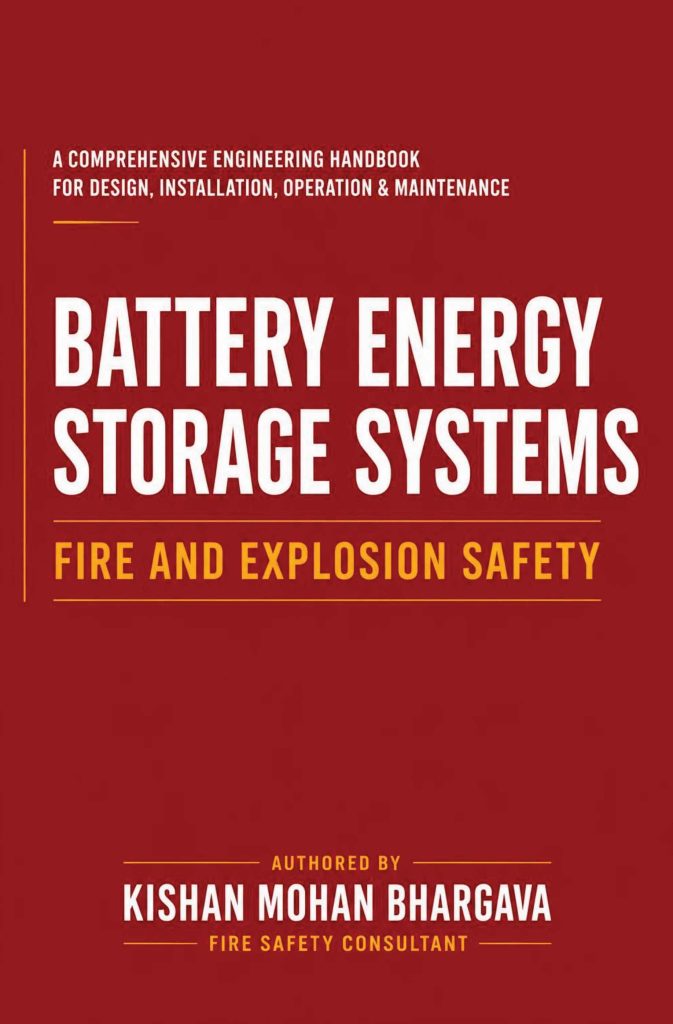
To address this, I have authored a Handbook on Battery Energy Storage System Fire & Explosion Safety, which explains the fundamentals of BESS technology, causes of battery fires, preventive measures, post-fire scenarios, and both national and international safety standards.
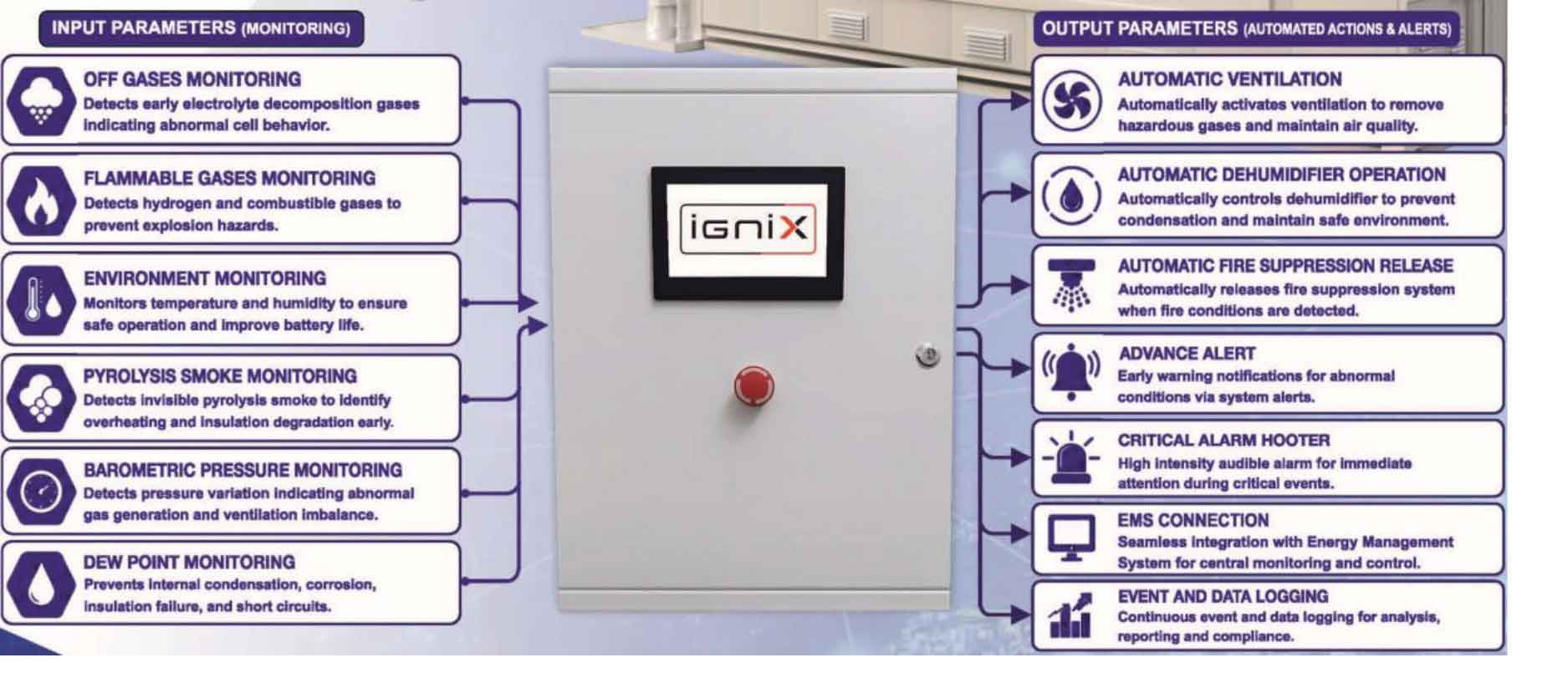
Alongside this educational initiative, Alaknanda Systems has developed an intelligent fire prevention solution IGNIX which monitors multiple parameters and detects fire precursors before thermal runaway occurs.
Battery systems exhibit several warning indicators before a fire develops. Our solution continuously monitors these precursors using highly accurate sensors connected to a programmable logic controller (PLC). The collected data is analysed in real time, allowing preventive actions to be initiated before a hazardous situation escalates.
Our philosophy is simple—prevention is far more effective than suppression.
What policy and regulatory measures are still needed to strengthen BESS safety in India?
The regulatory framework is evolving rapidly.
The Central Electricity Authority (CEA) has already released regulations addressing Battery Energy Storage System fire safety, which are expected to become applicable from 1 April 2027. However, this is only the beginning. Several organisations, including CEA, BIS, fire departments and international standards bodies such as UL, FM Global and NFPA, continue to develop codes, standards and best practices for this emerging sector.
Since BESS represent a relatively new technology, regulations will continue evolving as industry experience grows. I believe the next eight to twelve months will bring significant progress in strengthening India’s safety ecosystem.
What innovations can the industry expect from Alaknanda Systems over the coming year?
Our focus remains on early detection. We are developing technologies capable of identifying abnormalities at an even earlier stage, significantly reducing the probability of thermal runaway. One of the areas we are actively working on is battery-level sensing, which can detect early warning signs before hazardous conditions develop. By generating alerts much earlier in the process, these solutions can substantially improve the overall safety of Battery Energy Storage Systems. As the industry grows, we believe predictive safety technologies will become an essential component of every BESS installation.
As Battery Energy Storage Systems become larger and more energy-dense, how should safety considerations evolve right from the project design stage rather than being treated as an afterthought?
Safety must become a design philosophy rather than an add-on. Fire prevention begins at the concept stage through proper cell selection, equipment quality, compartmentation, spacing, ventilation, environmental control and independent fire detection. Designers should assume that components can age, insulation can deteriorate, and environmental conditions such as humidity and condensation can create new hazards over a 15–20 year operating life. Early monitoring of off-gasses, temperature, humidity and other fire precursors should therefore be integrated into every BESS from the beginning. A well-designed system increases the safety factor and is better and more economical than correcting deficiencies after commissioning or failure.
Many developers focus primarily on battery performance and cost. How can the industry create greater awareness about investing in advanced fire prevention technologies from the beginning of a project?
Fire safety should be viewed as an investment in asset protection rather than an additional cost. A single BESS fire can result in equipment loss, project downtime, insurance claims, reputational damage and loss of investor confidence. By comparison, investing in independent fire prevention, early detection and suppression systems represents only a small fraction of the overall project cost. Greater awareness and implementation can be achieved through detailed standards, design guides, training, case studies and collaboration between manufacturers, EPC companies, insurers and regulators. The industry needs to move from a compliance mindset to a risk-management mindset.
Do you foresee AI, predictive analytics and digital monitoring playing a larger role in Battery Energy Storage System fire prevention over the next five years? How is Alaknanda Systems preparing for this shift?
Absolutely. The future of BESS fire safety lies in predictive intelligence rather than reactive response. AI and predictive analytics can continuously analyse trends in temperature, humidity, off-gassing, smoke and other environmental parameters to identify abnormal behaviour long before thermal runaway occurs. Instead of relying on a single alarm point, intelligent systems will recognise patterns and recommend preventive actions such as ventilation, dehumidification, load reduction or maintenance. At Alaknanda Systems, we have developed the IGNIX FPDS platform to support advanced analytics, real-time monitoring and integration with BMS, EMS and SCADA while remaining an independent safety layer dedicated to fire prevention. We believe the next generation of BESS will rely on intelligent monitoring to improve both safety and battery reliability.
 Electrify your feed! Click here to join our Whatsapp group and to get the latest updates, expert insights, and innovations driving India’s energy storage revolution.