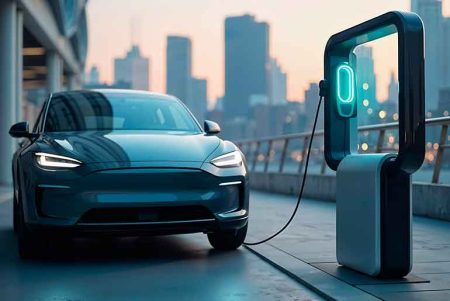
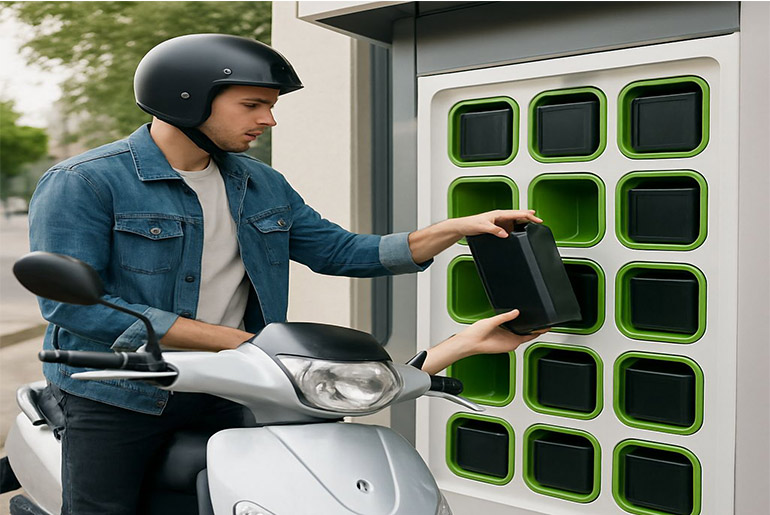
As electric vehicles (EVs) race toward the mainstream, one nagging question remains: how do we charge them faster, cheaper, and more conveniently? Picture this: You pull your scooter into a small roadside kiosk, slide out your depleted battery, pop in a fully charged one, and drive off in under two minutes. No waiting, no range anxiety, no hefty upfront battery cost. Welcome to the world of Battery-as-a-Service (BaaS).
The Rise of Battery-as-a-Service
Battery-as-a-Service decouples battery ownership from the EV itself, allowing users to subscribe to battery usage while the service provider retains ownership and handles maintenance, charging, and replacement. This innovative model eliminates one of the biggest barriers to EV adoption: the cost of batteries, which can account for up to 40% of an EV’s price.
With BaaS, EVs become more affordable, and users gain access to a robust infrastructure of battery swapping or modular charging. The model also improves energy efficiency across the grid, reduces e-waste through centralized battery monitoring, and accelerates the EV ecosystem by enabling faster fleet transitions.
Why BaaS Makes Sense Now
Global EV sales surpassed 14 million units in 2023, with BloombergNEF forecasting 75% of new car sales to be electric by 2040. Yet, concerns about long charging times, high battery costs, and infrastructure gaps persist, especially in emerging markets where charging stations remain scarce.
Enter BaaS—a model that not only addresses these concerns but is uniquely suited to densely populated urban centers and two- and three-wheeler markets, where space, time, and affordability are paramount.
Gogoro: Taiwan’s Swapping Sensation
Founded in 2011, Gogoro has become synonymous with battery swapping. As of early 2024, Gogoro operates over 12,000 GoStations in Taiwan alone, serving more than 600,000 riders with over 400,000 battery swaps daily. The company’s swappable batteries power a range of smart scooters and have helped reduce over 300,000 tons of CO2 emissions.
Gogoro’s business model is elegant: users buy a vehicle without the battery and subscribe to a monthly plan based on their usage. They can then access an extensive network of automated battery-swapping stations strategically located across urban zones. Swapping a battery takes less than 30 seconds.
Gogoro is expanding globally, with operations launched in India (in partnership with Zypp Electric), Israel, and Indonesia. In India, the company’s pilot projects are aimed at last-mile delivery fleets—an area where downtime equates to lost income and fast swapping can drastically improve unit economics.
Sun Mobility: India’s BaaS Trailblazer
Domestically, Sun Mobility is at the forefront of India’s BaaS movement. The company was founded by Chetan Maini (the founder of India’s first electric car, the Reva) with the aim of scaling EVs and improving accessibility through modular battery swapping.
Sun Mobility offers solutions for two-wheelers, three-wheelers, and buses. Central to an expanding infrastructure of more than 300 stations across 18+ cities is its Smart Battery and Quick Interchange Station as the focal points of the service delivered to the user base of over 6.5 million swap transactions as of 2024.
With Sun Mobility’s recent cooperation with IndianOil, the first stage is to open thousands of battery swapping stations at existing fuel stations, which will accelerate their growth and scale, taking advantage of existing familiar fuel station sites across urban and rural India. Sun Mobility is also partnering with many leading OEMs and fleet operators, including Piaggio and logistics partners of Amazon.
Data driven growth and benefits
According to a recent NITI Aayog report on battery as a service (BaaS), BaaS can reduce upfront costs of EVs by as much as 40% and total cost of ownership (TCO) by 20-30% when taking into account the battery’s lifespan. This is crucial for price-sensitive markets such as India, where getting the initial cost of the vehicle within reach of consumers will be fundamental to mass EV adoption!
There are a variety of other possible benefits, including
- Less downtime: Swapping batteries takes minutes compared to the hours needed to plug in and charge.
- Grid stability: Centralized charging means that synchronous load management is alleviated and load balancing (with renewables) will be better.
- Battery lifecycle management: Companies can monitor battery health and usage, and recycling will be easier.
- Fleet scalability: Logistics players can rapidly deploy and scale fleets, with an emphasis on operations, not charging infrastructure.
Challenges and Roadblocks
Despite its promise, BaaS faces hurdles:
- Standardization: Lack of a unified battery format across OEMs complicates interoperability.
- High upfront infrastructure costs: Building and maintaining swap stations at scale requires significant capital.
- Policy uncertainty: Clear regulatory support is still evolving in many regions.
However, governments are beginning to respond. India’s battery swapping policy draft, released by NITI Aayog, proposes incentives for interoperable platforms and inclusion of swapping under FAME II subsidies.
The Road Ahead
The next wave of EV growth will hinge on how fast, flexible, and affordable charging solutions can be. BaaS provides an attractive alternative, especially in markets where vehicle usage is intense and refueling time must be minimal.
Startups and legacy players alike are exploring BaaS. Bounce Infinity, Ola Electric, and Battery Smart are testing swapping models. Chinese giants like NIO and Aulton are building thousands of swap stations to support electric cars.
According to a global consulting firm, McKinsey, it is estimated that the battery-swapping market will surpass $35 billion by 2030, as lightweight urban mobility and commercial EV fleets grow.
Conclusion: Batteries without Borders
Battery-as-a-Service is not just a clever workaround, it is a re-imagination of how energy can accessed, shared and monetized. Companies like Gogoro and Sun Mobility are demonstrating that smart hardware, data and ecosystem thinking can shift electric vehicle ownership from a high-cost commitment to a simple service.
As the world transitions to net-zero goals, flexible and smart models like BaaS remain critical to maximizing the potential of clean mobility, faster, smarter and without plugging in.
 Electrify your feed! Click here to join our Whatsapp group and to get the latest updates, expert insights, and innovations driving India’s energy storage revolution.