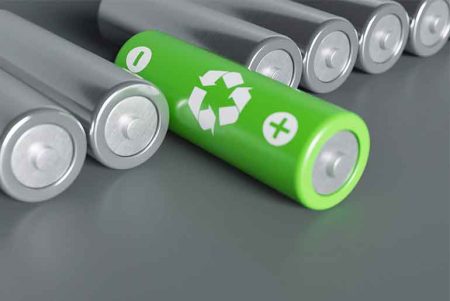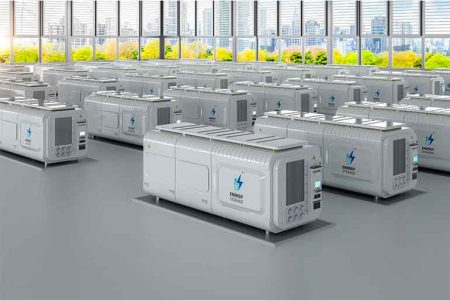

Lithium-sulfur has long been described as the “holy grail” of next-generation batteries. With a theoretical gravimetric energy density approaching 2,600 Wh/kg, lithium-sulfur promises nearly five times the energy density of today’s lithium-ion systems. If realised at scale, lithium-sulfur could redefine electric aviation, long-range drones, defence systems, and eventually even electric vehicles.
And yet, after more than two decades of research, lithium-sulfur remains stubbornly trapped between promise and practicality.
The reason is not lithium. It is not sulfur. It is chemistry—specifically, the internal polysulfide “shuttle effect” that quietly destroys lithium-sulfur batteries from the inside out.
As of the end of 2025, the current understanding of lithium–sulfur battery technology will have changed dramatically. Rather than managing the problem of the shuttle effect, major developments are being made in how to minimize, if not eliminate, the causes of the shuttle effect altogether. Approaches such as solid catholytes, nanostructured sulfur hosts, and fully solid-state architectures are reshaping how lithium-sulfur batteries are designed. In parallel, governments have stopped treating lithium-sulfur as a distant laboratory curiosity. Instead, it is increasingly being recognised as a strategic technology—one that can strengthen mineral security, reduce supply-chain dependence, and support long-term energy resilience.
The purpose of this article is to consider lithium-sulfur as a potential technology for energy storage by providing a complete view of its chemistry, potential engineering problems, developmental status, and the political implications of lithium-sulfur battery commercialization. Furthermore, the article provides a benchmark from which to gauge where lithium-sulfur battery technology is today and how that technology can continue to evolve in the future.
1. The Chemical Anatomy: Understanding the Lithium-Sulfur Shuttle Effect
At the heart of every lithium-sulfur battery lies an elegant but unstable reaction.
Sulfur begins in its elemental form as cyclooctasulfur (S₈). During discharge, lithium ions react with sulfur, breaking the S₈ ring into a sequence of lithium polysulfides (Li₂Sₓ, where x = 8 → 2). This stepwise reduction is what enables lithium-sulfur’s extraordinary theoretical energy density.
But this same process triggers lithium-sulfur’s greatest weakness.
In conventional liquid electrolytes—typically ether-based solvents like DOL/DME—long-chain polysulfides such as Li₂S₈ and Li₂S₆ are highly soluble. Once dissolved, they migrate freely through the electrolyte toward the lithium anode.
There, they undergo parasitic side reactions, forming insoluble Li₂S and Li₂S₂ layers that coat the anode surface. This has three devastating consequences:
- Active sulfur is permanently lost from the cathode
- The anode becomes chemically “clogged,” increasing resistance
- Coulombic efficiency collapses over repeated cycles
This continuous back-and-forth migration of sulfur species is known as the lithium polysulfide shuttle effect, and it is the primary reason lithium-sulfur cells historically suffer from rapid capacity fade, poor cycle life, and unstable performance.
In simple terms: lithium-sulfur batteries slowly eat themselves.
2. Nanotechnology’s First Line of Defence: MOFs and Graphene Sieves
Before abandoning liquid electrolytes altogether, researchers spent years trying to trap sulfur physically while still allowing lithium ions to move freely.
MOFs: Molecular Cages for Sulfur
Metal-Organic Frameworks (MOFs) have emerged as one of the most precise tools in lithium-sulfur research. These crystalline materials consist of metal nodes connected by organic linkers, forming highly tunable nanoporous structures.
In lithium-sulfur cathodes, MOFs act as molecular sieves:
- Their pore sizes are engineered to allow Li⁺ ions to pass
- Larger sulfur molecules and polysulfides are physically confined
- Polar functional groups chemically anchor sulfur species
This dual physical-chemical trapping dramatically reduces sulfur dissolution while maintaining ionic conductivity—one of the most elegant solutions proposed so far.
Graphene and the “Tortuous Path”
Sulfur, unfortunately, is also an electrical insulator. This is where graphene enters the lithium-sulfur story.
Companies like Lyten are using methane-derived 3D graphene architectures to create a highly conductive, maze-like framework. The idea is not to block polysulfides entirely, but to force them through a tortuous diffusion path that slows migration to a crawl.
Graphene improves:
- Electrical conductivity
- Structural integrity during sulfur’s ~80% volume expansion
- Mechanical stability over long cycling
Yet even the best nanostructured liquid-electrolyte systems still suffer gradual sulfur loss. The conclusion by 2025 became unavoidable: as long as liquid electrolytes exist, the shuttle never truly dies.
3. The 2025 Breakthrough: Solid Catholytes and the End of Dissolution
The most transformative shift in lithium-sulfur research has been conceptual, not incremental.
Instead of asking, “How do we stop sulfur from dissolving?”
Researchers are now asking, “What if sulfur had nothing to dissolve into?”
Solid Catholytes Explained
Enter the solid catholyte.
A solid catholyte is a hybrid material that combines the sulfur active material and solid electrolyte into a single phase. Often built from sulfurized polymers or inorganic sulfur compounds, these materials conduct lithium ions while keeping sulfur chemically immobilised.
The advantages for lithium-sulfur are profound:
- No liquid solvent → no polysulfide dissolution
- Sulfur remains tethered at the cathode
- Shuttle effect is fundamentally eliminated
This approach reframes lithium-sulfur from a “liquid-managed” system to a solid-state chemical architecture.
The Remaining Challenge: Solid–Solid Interfaces
Solid catholytes introduce a new enemy: interfacial contact loss.
Sulfur expands dramatically during lithiation. If this expansion breaks contact between the catholyte and the solid electrolyte, ion transport collapses and the cell fails mid-cycle.
As of 2025, research is focused on:
- Elastic polymer-ceramic composites
- Self-healing interfaces
- Graded mechanical architectures
Lithium-sulfur’s success now depends less on chemistry and more on mechanical and materials engineering.
4. The 2025 Commercial Landscape: From Lab to Line
Lithium-sulfur is no longer confined to academic journals. A small but serious group of companies has begun pushing it into real applications.
- Lyten is shipping 6.5 Ah lithium-sulfur pouch cells to aerospace and defence customers after acquiring Northvolt assets.
- Zeta Energy is developing anode-free lithium-sulfur architectures to eliminate lithium dendrites entirely.
- Li-S Energy has passed stringent US military nail-penetration tests, demonstrating lithium-sulfur’s intrinsic safety advantages.
- Gelion is pursuing quasi-solid electrolytes as a manufacturing bridge between lithium-ion and full solid-state lithium-sulfur.
A key metric across all programmes is the Electrolyte-to-Sulfur (E/S) ratio. By late 2025, competitive lithium-sulfur cells must achieve E/S < 1.2 µL/mg to remain weight-competitive.
5. The 360-Degree Policy Angle: Why Governments Care
Lithium-sulfur is geopolitically attractive because it eliminates nickel, cobalt, and manganese entirely.
United States
The US Department of Energy funds lithium-sulfur explicitly as a critical mineral independence strategy. NASA’s EPSCoR programme targets lithium-sulfur for high-altitude platforms where weight savings are mission-critical.
European Union
The EU’s TALISSMAN project (launched July 2025) mandates lithium-sulfur designs that are safe-and-sustainable-by-design, requiring recyclability before commercialisation.
India
India’s VGF funding framework for BESS now explicitly includes non-lithium-ion pilots, while upcoming FAME-III discussions are expected to prioritise advanced chemistry cells that leverage domestically available sulfur.
For India, lithium-sulfur aligns perfectly with:
- Mineral security
- Cost reduction
- Circular economy goals
6. Why 2026 Is the Differentiation Year
By 2026, lithium-sulfur will likely split into two paths:
- Semi-solid lithium-sulfur for drones, light EVs, and stationary pilots
- All-solid-state lithium-sulfur for aerospace and defence, using sulfide electrolytes despite high costs
The winners will not be those with the highest energy density—but those who master interfaces, manufacturability, and reliability.
Conclusion: Lithium-Sulfur’s Second Act
Lithium-sulfur is no longer chasing lithium-ion. It is carving its own role.
By attacking the shuttle effect at its root—through solid catholytes, nanostructured confinement, and solid-state design—the technology is finally aligning theory with reality.
In a world constrained by minerals, geopolitics, and climate urgency, lithium-sulfur offers something rare: abundance, performance, and strategic independence.
The shuttle once defined lithium-sulfur’s failure.
Solid chemistry may now define its success.
 Electrify your feed! Click here to join our Whatsapp group and to get the latest updates, expert insights, and innovations driving India’s energy storage revolution.