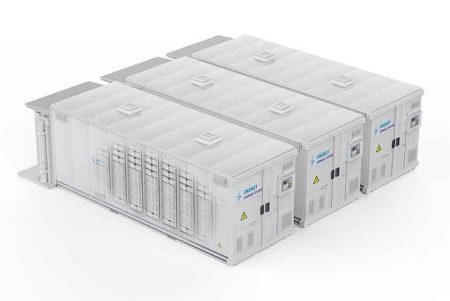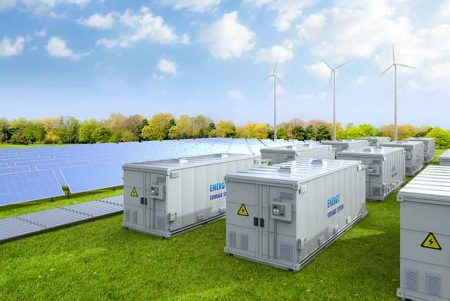
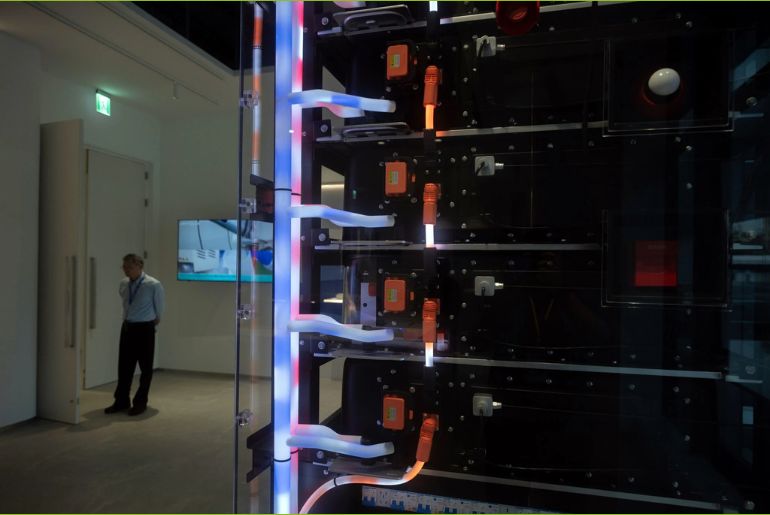
BloombergNEF has released a new report stating that energy storage is experiencing significant growth, with global deployment setting new records every year since 2014 and exceeding 100 gigawatts of annual additions for the first time in 2025. The report further notes that BloombergNEF expects the market to continue expanding, although the ongoing conflict in the Middle East could have varied implications for the industry. It also highlights that the chemistries used in stationary energy storage systems are expected to evolve throughout this decade, as a growing number of non-lithium batteries gain market share.
Energy storage surge far outpaces wind and solar growth
Annual additions of energy storage, excluding pumped hydro, reached 112 gigawatts in 2025 – up 48% from 2024 – with 307 gigawatt-hours of batteries added worldwide. It only took four years for energy storage to increase annual additions to more than 100 gigawatts from 10 gigawatts, whereas it took roughly eight and 15 years for solar and wind, respectively. This record underscores growing market momentum and increased industry maturity.

By the numbers
- 112 GW- Global energy storage annual additions in 2025, excluding pumped hydro
- 158 GW- Global energy storage annual additions forecast for 2026, excluding pumped hydro
- 308 GW- Global energy storage annual additions forecast for 2036, excluding pumped hydro
China makes up over half the global market and accounted for 54% of additions last year, followed by the US with a 16% share. Deployment in Australia rose nearly sixfold from 2024, driven by favorable power market conditions and a new subsidy scheme for residential storage. Saudi Arabia leapfrogged some peer countries as Chinese suppliers began tapping into the market.
Annual energy storage additions are approaching solar capacity in gigawatt terms, shrinking the gap seen a decade ago. For every 6 megawatts of solar, 1 megawatt of batteries was added in 2025; that marks significant growth from 2016, when 56 megawatts of solar were added for every 1 megawatt of batteries. The ratio is set to narrow further to 4:1 in 2026, as energy storage additions accelerate despite a slowdown in solar additions.
BNEF expects the energy storage sector to continue growing over the next decade. Falling costs, greater renewables penetration, co-location mandates, auctions, and emerging applications, such as data centers and electric vehicle charging, are all poised to lift annual storage additions beyond 300 gigawatts by 2036.
The Iran war has yet to reach energy storage
The direct impact of the Iran war on energy storage markets has been limited to date, primarily due to China’s dominance in battery supply chains. Nonetheless, soaring fossil fuel prices could have several implications.
In competitive power markets, higher intraday power spreads, driven by soaring fuel prices, improve revenues for energy storage. Additionally, if the conflict leads to sustained increases in retail electricity prices, more households and businesses may consider installing rooftop solar and batteries to reduce reliance on grid electricity, as seen in Europe following Russia’s invasion of Ukraine.
Still, shipping and manufacturing costs for some equipment may rise due to soaring oil prices, potentially increasing project costs. Any tailwinds for the sector are also likely to be highly regional, and will depend on how each market assesses energy security and the duration of the conflict.
Non-lithium chemistries gain traction
Lithium-ion batteries, especially lithium iron phosphate (LFP), have dominated chemistry share for storage. In 2025, LFP accounted for more than 90% of annual additions. However, this dynamic is set to change this year.
In 2026, annual additions of long-duration energy storage, or energy storage with durations of six hours or longer defined in BNEF’s latest E-S Market Outlook report, are set to quadruple to two gigawatts. Most of that capacity will come via non-lithium-ion technologies, with growth concentrated in China. Policy mandates and procurements in other markets also support this trend over the decade.
BloombergNEF also expects sodium-ion batteries to start gaining share in the stationary storage space. The technology is generally more expensive than lithium-ion batteries today due to limited scale, but widespread sodium material abundance and growing economies of scale could reduce costs over time.
Several technology providers have secured sodium-ion supply agreements across markets. In April, Contemporary Amperex Technology Co. (CATL) and Beijing HyperStrong Technology Co. signed a three-year partnership totaling 60 gigawatt-hours of sodium batteries. In 2025, US-based technology provider Peak Energy also announced a roughly 5-gigwatt-hours supply agreement with US-based developer Jupiter Power for deployment between 2027 and 2030.
 Electrify your feed! Click here to join our Whatsapp group and to get the latest updates, expert insights, and innovations driving India’s energy storage revolution.