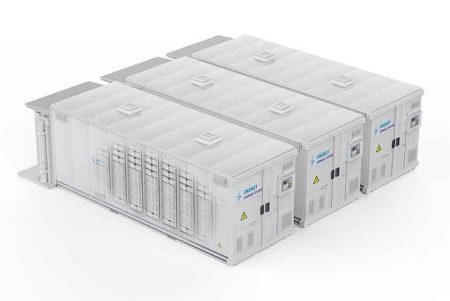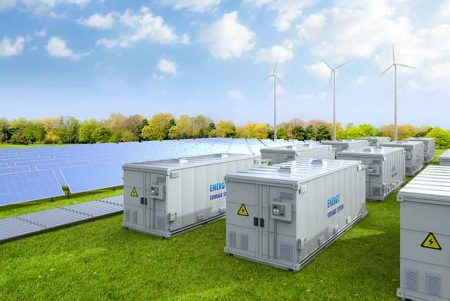
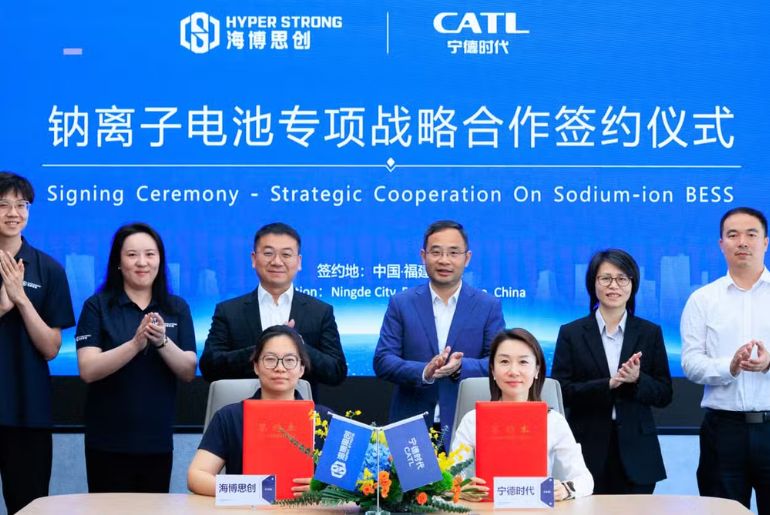
A strategic cooperation agreement has been signed between CATL and energy storage integrator HyperStrong for sodium-ion batteries. This marks a milestone in the industrialisation of this emerging battery technology.
On Monday, the world’s largest electric vehicle (EV) and ESS battery maker announced that it would deliver 60 gigawatt-hours (GWh) of sodium-ion batteries to Beijing HyperStrong Technology over three years in a landmark deal for the new battery technology.
According to Contemporary Amperex Technology Ltd (CATL), as its first strategic partner for energy storage sodium batteries, HyperStrong will collaborate with the battery giant in technology research and development, product application, and project implementation.
“The deal could be interpreted as a ‘DeepSeek moment’ for the global ESS battery industry, since wide use of sodium in production could greatly reduce costs and improve manufacturing efficiency,” said Davis Zhang, a senior executive at Suzhou Hazardtex, a supplier of specialised batteries. “Commercialisation of sodium-ion batteries will benefit the EV and ESS industries.”
Artificial intelligence start-up DeepSeek drew the world’s attention to China’s AI prowess in early 2025 when it released a breakthrough large language model developed at a lower cost than Western counterparts.
In manufacturing processes, CATL has systematically resolved production issues such as foaming in hard carbon production lines and moisture control through core technologies, including angstrom-level pore size adjustment, surface molecular water locking, and adaptive dynamic formation processes, ensuring consistency in mass production.
Sodium-ion batteries offer several advantages including:
- Wide temperature adaptability
- Outstanding high-temperature cycle life
- Lower heat generation during operation
- Smaller cell expansion stress
- Safety stability
In long-duration energy storage applications, they can simplify the overall architecture of storage systems, reduce auxiliary energy consumption, and improve station operating efficiency and overall economics.
Additionally, CATL’s energy storage sodium-ion batteries adopt a platform design with the same dimensions as lithium-ion batteries, making them compatible with existing supply chains, effectively reducing adaptation costs and significantly shortening the time window from product to station deployment.
The sodium-ion battery collaboration amounts to 60GWh after HyperStrong revealed its strategic partnership with CATL, which will be supplying it with 200GWh of batteries in a three-year cycle starting November 2025, according to CLS. As per the broader contract signed between January 1, 2026, and December 31, 2035, HyperStrong pledged to purchase at least 200GWh of batteries from 2026 to 2028.
According to CATL’s annual report, in 2025, its power battery sales reached 541GWh, and its energy storage battery sales reached 121GWh. In other words, 60 GWh is equivalent to half of the energy storage battery volume it delivered in 2025.
The order was the world’s largest for sodium-ion batteries to date, in line with booming construction of ESS infrastructure buoyed by AI computing and data centres around the world.
“This agreement signals that CATL has overcome all the challenges in mass-producing sodium-ion batteries,” the company said in a statement. “We now have the capability for large-scale delivery.”
The country’s leading battery producers unveiled plans to add more than 600GWh of new production capacity for the ESS market in just the first two months of 2026, the GGII Energy Storage Research Institute, a Shenzhen-based consultancy, said in a research report earlier this month.
 Electrify your feed! Click here to join our Whatsapp group and to get the latest updates, expert insights, and innovations driving India’s energy storage revolution.