

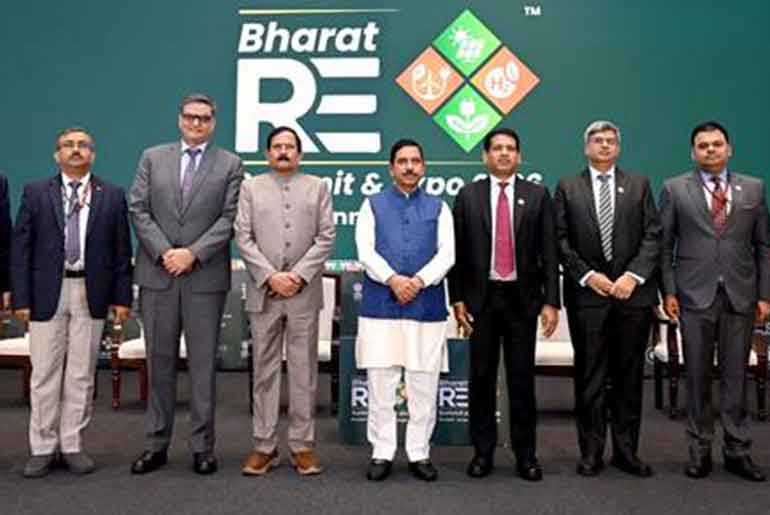
India has emerged as a major global force in renewable energy, with its progress and ambitions attracting international attention, Union Minister for New and Renewable Energy Pralhad Joshi said at the conclusion of the Bharat Renewable Energy (BRE) Summit & Expo 2026 in New Delhi on November 5.
Addressing the media, Joshi said Bharat Mandapam brought together global policymakers, investors, industry leaders and innovators from across the world. With participation from more than 135 countries, the summit became one of India’s largest international platforms for renewable energy.
He noted that three major renewable energy events were held together for the first time, with strong participation from domestic and international stakeholders reflecting confidence in India’s renewable energy growth.
Prime Minister Highlights Renewable Energy’s Role in National Resilience
The summit was inaugurated by Prime Minister Narendra Modi on November 2, 2026. In his address, the Prime Minister highlighted the strategic importance of India’s sustained renewable energy investments in strengthening national resilience against global disruptions, including the COVID-19 pandemic and the West Asia crisis.
He observed that investments in renewable energy had largely shielded India from these disruptions while strengthening its energy security.
The Prime Minister also emphasised that India’s renewable energy journey is transforming the domestic energy landscape while generating solutions and experiences that can benefit countries worldwide. He reiterated India’s commitment to sharing clean energy innovations with humanity and supporting the global energy transition.
Modi called for greater participation in the clean energy innovation ecosystem, inviting startups, IITs, innovators and entrepreneurs to develop solutions and business models that can increasingly meet household energy requirements through clean energy.
BRE Summit 2026 Records Strong Global Participation
Organised from November 2 to 5, the four-day summit brought together policymakers, industry leaders, investors, technology providers, researchers, startups and international institutions to advance the clean energy transition.
The event attracted more than 75,000 visitors, over 400 exhibitors and more than 627 speakers across 113 sessions. Around 800 delegates from 135 countries participated, including representatives from partner countries, International Solar Alliance (ISA) members, international organisations and diplomatic missions in India.
High-level participation included 32 international ministers, six Chief Ministers and 10 State Energy Ministers, reflecting engagement across national and state governments.
The summit strengthened confidence in India’s clean energy market and helped translate national and global renewable energy ambitions into an implementation-oriented agenda.
Renewable Energy Strengthens India’s Energy Security
The summit highlighted India’s clean energy policies and the democratisation of the energy transition, which are helping decouple economic development from fossil-fuel emissions.
More than a quarter of India’s annual electricity consumption came from renewable energy sources during the previous financial year. The country’s experience demonstrated how sustained investments, stable policy frameworks, institutional reforms and technological innovation can strengthen energy security while supporting economic growth.
Investors Express Confidence in India’s Clean Energy Market
A major outcome of the summit was the confidence expressed by domestic and international investors in India’s renewable energy investment opportunities.
To achieve the national target of 500 GW of non-fossil fuel capacity, India requires investments of approximately USD 220 billion. Discussions during the summit indicated that capital availability was not a constraint, with investors expressing interest in India’s long-term clean energy growth prospects beyond immediate 2030 requirements.
Investor participation extended beyond traditional strategic investors to pension funds, institutional investors and providers of long-term patient capital, reflecting the growing depth of India’s clean energy financing ecosystem.
The deliberations also highlighted the importance of bankable power purchase agreements, predictable offtake arrangements, clearer risk allocation and deeper bond markets. Infrastructure Investment Trusts (InvITs) and blended finance were discussed as instruments for mobilising capital at scale.
Investment Roundtable Focuses on Renewable Energy Implementation
Pralhad Joshi held several high-level engagements during the summit, including a CEO-level clean energy investment roundtable involving Chief Ministers, State Energy Ministers, senior government officials and industry leaders.
The roundtable identified priorities for converting renewable energy ambitions into implementation, including synchronised planning of generation, transmission, storage and demand centres, alongside greater certainty in land availability, approvals and project execution.
The Minister also held bilateral meetings with the French Minister Delegate for Ecological Transition and Denmark’s Minister for Business and Competitiveness to discuss common interests and global energy scenarios.
More than 100 business-to-business meetings were held on the sidelines of the summit, providing opportunities for partnerships and collaboration.
Energy Storage and Grid Flexibility Emerge as Priorities
The summit’s discussions reflected the evolution of India’s clean energy agenda from expanding renewable energy capacity towards building a reliable, flexible and integrated power system.
With electricity demand increasing from industry, cooling, electric mobility and data centres, the next phase of the transition will require greater emphasis on energy storage, transmission infrastructure, grid flexibility, ancillary services, forecasting, demand response and green open access.
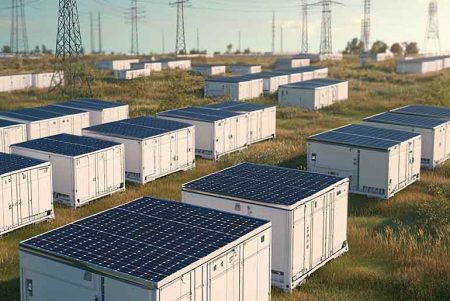
Energy storage emerged as one of the most important near-term priorities. Participants emphasised aligning storage and transmission planning with renewable energy procurement and emerging demand centres, while strengthening grid management and institutions.
The discussions also highlighted the role of modern artificial intelligence-based systems in forecasting wind and solar generation.
New contract structures and technical designs, including Round-the-Clock Renewable Energy and Firm and Dispatchable Renewable Energy (FDRE), were discussed. The globally competitive tariff of ₹5.25 per unit discovered in the recent SECI tender attracted significant interest from foreign delegates and policymakers.
Summit Highlights Green Procurement and Domestic Manufacturing
The summit highlighted the growing importance of green procurement in improving industrial competitiveness, supporting exports and accelerating industrial decarbonisation.
It also emphasised the transition from a petro-economy dependent on fossil fuels towards an electro-economy based on independent electrical power systems.
Strengthening India’s domestic clean energy manufacturing ecosystem was another major focus. Discussions emphasised moving beyond assembly towards domestic manufacturing of materials, components, equipment and advanced technologies.
Shared laboratories, pilot manufacturing lines, demonstration facilities and testing and certification infrastructure were identified as important requirements for strengthening domestic manufacturing capabilities.
The summit brought together stakeholders working across next-generation solar technologies, perovskite cells, recyclable wind turbine materials, long-duration energy storage, electrolysers, fuel cells, artificial intelligence applications in renewable energy and floating solar.
Research and Innovation Linked to Commercial Deployment
The summit placed particular emphasis on connecting research and innovation with commercial deployment.
Public procurement, field demonstrations, testing and certification infrastructure, and collaboration between industry and research institutions were identified as important instruments for accelerating the commercialisation of Indian technologies.
Youth participation and entrepreneurship remained integral to the innovation agenda. More than 300 startups participated across growth and early-stage categories in the RE Hackathon, while the RE GEN Challenge witnessed participation from students across IITs, universities, colleges and schools.
The innovation ecosystem at the expo featured 70 startup pods, 40 academic posters and 10 research papers, bringing together young talent, researchers and entrepreneurs to contribute to India’s emerging clean energy technology ecosystem.
Green Hydrogen Conference Advances India’s Green Hydrogen Ambitions
The Fourth International Conference on Green Hydrogen provided a platform for advancing India’s green hydrogen ambitions.
Discussions focused on developing dependable domestic demand, long-term offtake arrangements, export opportunities, standards and certification, testing and safety frameworks.
An important commercial development was the signing of a Memorandum of Understanding between Solar Energy Corporation of India (SECI) and Rotterdam-based Power2X to advance the supply and offtake of green molecules from India to international markets.
The first tranche indicated a potential volume of 300,000 tonnes per annum of green methanol, reflecting growing opportunities for India in emerging global green molecule markets.
ISA Assembly Advances International Solar Cooperation
The Ninth Session of the International Solar Alliance Assembly marked an important milestone in international solar cooperation.
The Assembly considered the Director General’s Report for 2026, the Workplan and Budget for 2027, audited accounts for 2025, and proposals concerning Partner Organisation status for the African Union, COMESA, SELCO, SNV and the All India Discoms Association.
A major international announcement was the proposed USD 200 million Africa Solar Facility under the ISA to facilitate access to finance and accelerate solar deployment across African countries.
Discussions identified project aggregation, blended finance, patient capital, local-currency financing and payment-risk mitigation as important instruments for mobilising investment.
The Africa50 Distributed Renewable Energy Fund and Nigeria DRE Fund were highlighted as financing models. The Africa50 DRE Fund is designed to address investment barriers associated with smaller distributed renewable energy projects, including project-level and payment risks, through regional and global financing structures.
The Francophone and Sahel Energy Resilience Initiative was also highlighted, focusing on solar-plus-storage solutions for critical power requirements, rooftop solar for public facilities and productive-use solar for agriculture and livelihoods.
Drawing on India’s experience in solarising agricultural pumps, the ISA advanced its ambition of deploying one million solar pumps globally. The ISA Small Island Developing States (SIDS) Platform aims to facilitate up to 500 MW of solar capacity across SIDS by 2030.
The SUNRISE photovoltaic and battery circularity network has expanded to 35 countries.
These initiatives reflect India’s approach of combining domestic experience, technology, financing, capacity building and implementation capabilities to support the clean energy aspirations of the Global South.
ISA Academy and Global Capability Centre Launched
The summit witnessed the launch of the ISA Academy and the Global Capability Centre – SHINE, aimed at strengthening capacity building, digital learning and cooperation in grid-related areas.
A total of 10 MoUs and Framework Agreements were signed during the summit, expanding cooperation across technology, research, capacity building, manufacturing and project implementation.
Framework Agreements were signed by ISA with Breakthrough Energy Ventures, the India Energy & Climate Center at the University of California, Berkeley, and Schneider Electric Foundation.
MoUs were signed by ISA with Shakti Pumps (India) Limited and Railway Energy Management Company Limited, among other partnerships announced during the summit.
Summit Releases 37 Reports and Knowledge Resources
The BRE Summit & Expo 2026 strengthened India’s renewable energy knowledge and evidence base through the release of 37 reports, assessments, guidebooks and digital platforms.
The publications cover policy, manufacturing, deployment, skilling and safety, supporting the renewable energy ecosystem across these areas.
Ease of Doing Solar and the Renewable Energy State Assessment Framework (RE-SAF) provide policymakers and states with a common basis for benchmarking progress and identifying barriers. The National Hydrogen Survey adds to the evidence base for the green hydrogen sector.
Studies on solar manufacturing, wind indigenisation and battery electrolyte identify domestic capacity gaps and areas where industry can build supply chains.
The Skilling Blueprint for the top 100 renewable energy districts links workforce readiness with deployment requirements.
Together, these publications are expected to provide investors, developers, utilities and state agencies with clearer evidence for planning and decision-making while improving coordination between government, industry and development partners.
The summit reaffirmed India’s commitment to achieving its clean energy goals while contributing to global energy security, sustainable development and climate action.
It also demonstrated that India’s renewable energy journey is increasingly defined not only by capacity additions but also by integrated energy systems, long-term investment, innovation, domestic manufacturing and the sharing of successful solutions with the world.
 Electrify your feed! Click here to join our Whatsapp group and to get the latest updates, expert insights, and innovations driving India’s energy storage revolution.