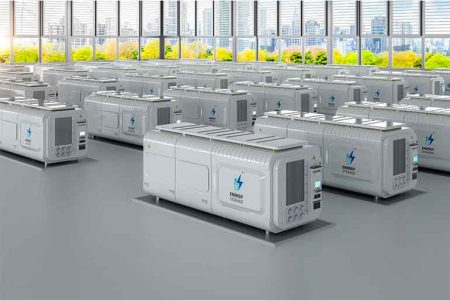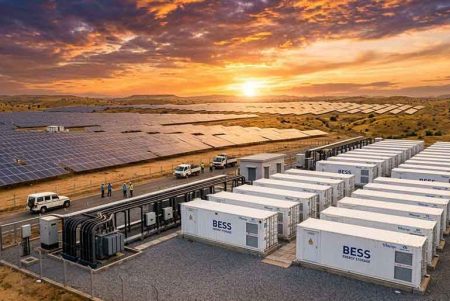
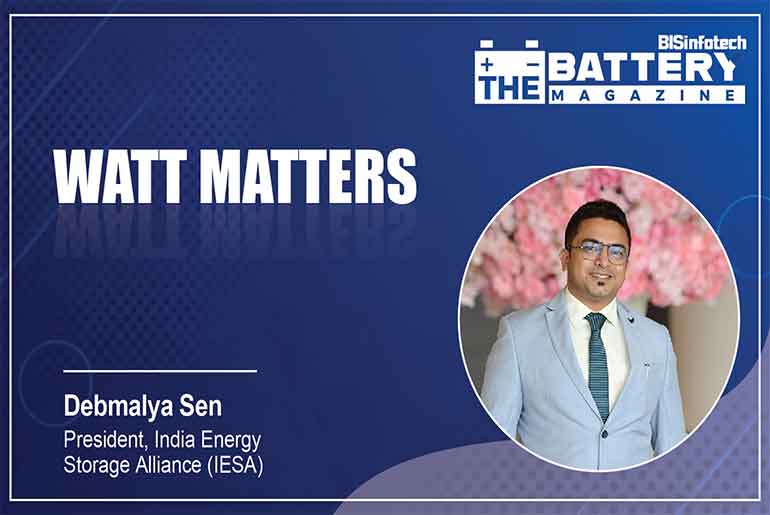
Just a year ago, Battery Energy Storage Systems (BESS) were largely discussed as the next frontier of clean energy. Today, that conversation has fundamentally changed. Across utility-scale projects, commercial and industrial applications, and manufacturing investments, energy storage has moved beyond potential to become one of the fastest-growing segments of India’s energy transition. As deployments accelerate and investments pour into the ecosystem, the focus is now shifting towards building resilient supply chains, expanding domestic manufacturing, and creating long-term policy certainty that can sustain this remarkable momentum. In an exclusive conversation with Shweta Kumari, Sub-Editor, The Battery Magazine, Debmalya Sen, President, India Energy Storage Alliance (IESA), reflects on the extraordinary pace at which India’s Battery Energy Storage System sector has evolved over the past year. From what he describes as a “tiger’s leap” in deployments to the urgent need for storage mandates, diversified supply chains and indigenous manufacturing, Sen shares why energy storage has officially entered its era of large-scale adoption—and what India must do next to maintain that momentum.
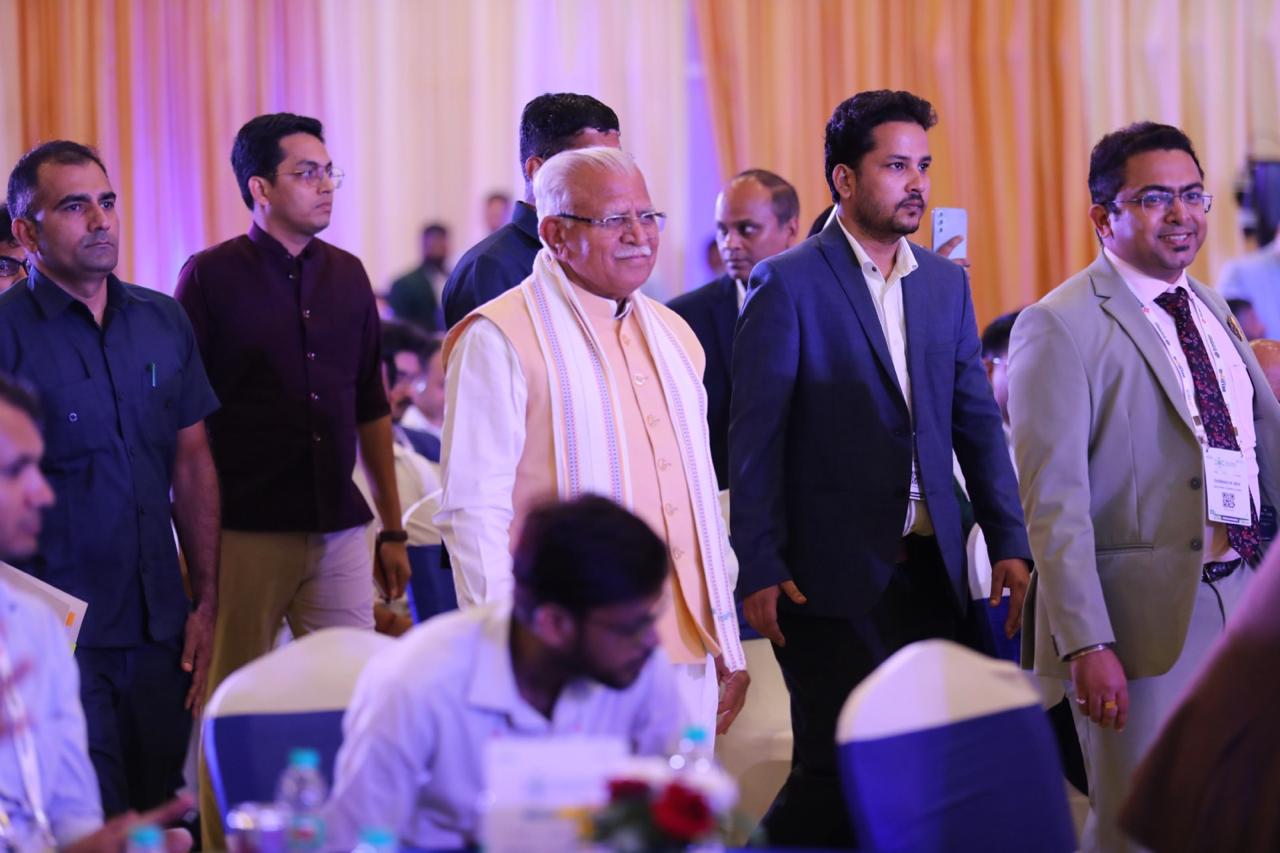
Over the past year, India’s energy storage sector has witnessed remarkable momentum. From your perspective, what are the biggest transformations you’ve observed since the last edition of India Energy Storage Week?
The progress has been nothing short of a tiger’s leap. If I had told you during last year’s India Energy Storage Week that India would install nearly 8 GWh of battery energy storage capacity in just the first six months of 2026, most people would have found it difficult to believe. Yet, that is exactly where we are today.
The manufacturing ecosystem has also evolved significantly. India currently has around 8 GWh of BESS pack manufacturing capacity, covering the value chain from cell integration to containerized battery systems, and this is expected to expand to nearly 220 GWh in the coming years. We are also witnessing major investments from industry players that further strengthen India’s manufacturing ambitions.
Naturally, there will be challenges relating to costs and project execution, but overall, India is firmly moving in the right direction.
Having closely worked with policymakers, manufacturers and technology providers through IESA, what industry trends stand out to you today?
The biggest change is that energy storage is no longer viewed as an emerging technology—it has become a technology of today.
When I entered the industry in 2017, energy storage was always described as “the future.” That perception remained largely unchanged until last year. However, this year the narrative has completely shifted.
Today we are seeing solar-plus-storage projects becoming mainstream, merchant storage projects emerging, behind-the-meter deployments increasing, and batteries finding wider adoption across commercial and industrial applications.
This shift is also reflected in India Energy Storage Week itself. Every year the exhibition has grown, but this edition has exceeded expectations in terms of exhibitor participation, technologies on display and visitor engagement. It clearly reflects the industry’s growing confidence.
Between electric mobility and stationary energy storage, which segment has witnessed stronger momentum globally?
Globally, electric vehicles continue to grow, but the pace has moderated over the last two years, with annual growth of around 22–23 percent.
Energy storage, on the other hand, has entered a phase of exponential expansion. Over the past two years, the sector has grown by nearly 114 percent globally.
I recently heard someone describe it very well: energy storage today is where the EV industry was in 2021–22. I believe that comparison accurately reflects the stage the industry is currently in.
As Battery Energy Storage Systems become central to the clean energy transition, what are the biggest challenges the industry must still overcome?
The first major challenge is the global battery supply chain. Even today, it remains highly concentrated, and diversifying that supply chain continues to be difficult.
The second challenge is technology diversification. At present, most industry discussions revolve around lithium-ion batteries because they dominate the market. However, alternative technologies such as sodium-ion batteries, vanadium flow batteries and several others are steadily evolving.
Developing multiple technology pathways alongside a more resilient supply chain will be critical for the long-term growth of the industry.
What message would you like to share with entrepreneurs and startups entering the Battery Energy Storage System ecosystem?
I think that they are already late—but only because the sector is growing so rapidly.
We are already seeing startups working successfully in areas such as Battery Management Systems (BMS), Energy Management Systems (EMS) and several component-level technologies. That itself demonstrates how quickly the ecosystem is maturing.
The market is undoubtedly becoming more competitive, but the opportunity remains enormous. My advice would simply be: if you have an innovative product, bring it to market quickly.
India is rapidly expanding its battery manufacturing ecosystem. What, in your opinion, should be the country’s immediate priority?
While cell manufacturing remains India’s long-term objective, it will still take some time before large-scale domestic cell production becomes widespread.
In the immediate future, we should focus on strengthening pack manufacturing and containerized Battery Energy Storage System manufacturing within the country. Instead of importing complete battery containers, India should invest in manufacturing these systems domestically. Even that step alone can create significant value addition and strengthen our manufacturing ecosystem.
However, achieving this requires long-term policy certainty. Businesses and startups invest based on policy signals. If policies change every few months, it becomes difficult for companies to make long-term investment decisions. Stable and predictable policies are essential for sustained industry growth.
If there is one policy intervention that you believe India urgently needs to accelerate Battery Energy Storage System adoption, what would it be?
India needs clear energy storage targets and storage mandates.
Just as renewable energy targets played a significant role in accelerating solar and wind deployment, similar targets can help drive the growth of energy storage.
Today, we have estimates of how much storage the grid will require in the future, but we do not have clearly defined national deployment targets.
From my experience, targets work extremely well in India. Once clear goals are established, the entire ecosystem aligns itself to achieve them.
India Energy Storage Week has grown significantly over the years. What can the industry expect from the next edition?
The success of India Energy Storage Week is entirely driven by the support of the industry and all our stakeholders.
With every edition, expectations naturally increase. Simply repeating what we have already achieved will not be enough.
We will continue brainstorming with our partners and stakeholders to make the next edition even bigger, more impactful and more valuable for the global energy storage community.
As India scales from gigawatt-hours to potentially hundreds of gigawatt-hours of energy storage deployment, what single capability must the country build today to remain globally competitive over the next decade?
If I had to identify one priority, it would be building and training a skilled workforce for the Battery Energy Storage System (BESS) sector.
India already has a strong talent base in the conventional power industry, but as energy storage deployments accelerate, there is an urgent need to upskill and repurpose this existing workforce so that they become proficient in BESS technologies.
The focus should not be limited to classroom learning or theoretical knowledge presented through Excel sheets and PowerPoint presentations. What the industry truly needs is hands-on expertise. Professionals must be trained in construction, installation, commissioning, operations and maintenance (O&M), fault detection, troubleshooting, manufacturing, and the day-to-day operation of Battery Energy Storage Systems.
As India prepares for large-scale deployment over the coming decade, developing a technically skilled workforce with practical, on-ground experience will be one of the most important factors in ensuring that the country remains globally competitive.
Beyond lithium-ion batteries, which emerging energy storage technologies do you believe have the greatest potential to complement India’s energy transition, and what ecosystem support will they require to reach commercial scale?
While lithium-ion batteries will continue to dominate the market for the foreseeable future, I believe pumped hydro energy storage will remain an important part of India’s long-duration energy storage landscape.
Alongside pumped hydro, vanadium flow batteries and sodium-ion batteries are emerging as two of the most promising technologies that have the potential to become highly competitive alternatives to lithium-ion, particularly for specific use cases where longer duration, safety or resource availability become important considerations.
Like any emerging technology, these solutions will require the right ecosystem to reach commercial scale. Continued investment in technology development, pilot deployments, manufacturing capabilities and supportive policies will be essential to accelerate their adoption and enable them to complement India’s rapidly growing energy storage ecosystem.
These technologies may not replace lithium-ion, but they will certainly play an important role in building a diversified and resilient energy storage portfolio for the future.
 Electrify your feed! Click here to join our Whatsapp group and to get the latest updates, expert insights, and innovations driving India’s energy storage revolution.