
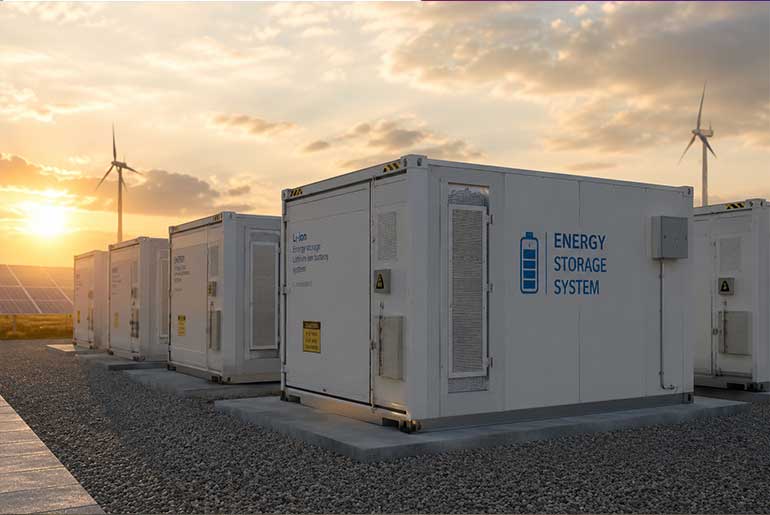
In a significant step towards supporting the implementation of Europe’s upcoming battery regulations, DENSO Corporation, TÜV Rheinland Japan and AESC have successfully completed a real-world validation of a battery passport for energy storage systems (ESS). The validation, conducted using actual operational data from AESC’s energy storage business, confirmed both the practicality and regulatory compliance of the battery passport framework, laying the foundation for AESC’s energy storage products to enter the European market.
The initiative comes as the European Union prepares to make battery passports mandatory from February 2027 for batteries used in automotive, industrial and other applications under the EU Battery Regulation. Battery passports are expected to play a crucial role in improving traceability, sustainability, resource circularity and transparency across the battery value chain.
Against this backdrop, DENSO and TÜV Rheinland Japan, which entered into a memorandum of understanding in September 2025 to advance the Digital Product Passport (DPP), conducted the validation using actual data from AESC’s ESS batteries intended for the European market. AESC served as the data provider, enabling the partners to assess both the practicality and compliance of battery passports under real-world business conditions.
DENSO provided a service to support the generation and management of battery passport in accordance with the EU Battery Regulation. Based on standards established by the Battery Pass Consortium, the service generates a battery passport for each product and enables access to battery information via a QR code affixed to the product. The service also includes an access-rights management function that controls information available for viewing depending on the user’s role, ensuring data security while respecting the data sovereignty of each stakeholder and supporting regulatory compliance.
As manufacturer of energy storage products, AESC prepared the necessary data for compliance with the upcoming battery passport mandate and provided data from its existing ESS business, while taking into account future exports to Europe and customer requirements.
In preparation for full compliance with the upcoming battery passport mandate, AESC has implemented comprehensive sustainability and compliance measures across its value chain, extending beyond the specific data scope of this validation. The company deploys systematic supply chain oversight to enforce compliant practices and rigorous quality control. To support long-term sustainability, AESC has estSSablished, through the use of digital battery passport solutions, a closed-loop circular economy framework for battery recycling and reuse.
As a third-party certification body, TÜV Rheinland Japan verified the data handled by the battery passport service based on the EU Battery Regulation and standards such as DIN DKE SPEC 99100.
Results of the Validation
Through validation using actual data, the companies identified the data preparation and operational challenges associated with the EU Battery Regulation’s requirements in a real-world business environment. The validation also confirmed that DENSO’s battery passport service extends beyond meeting formal regulatory requirements and represents a highly practical solution that can be integrated into real-world business processes. In addition, the verification conducted by TÜV Rheinland Japan, as a third-party certification body, verified that the battery passport is effective in both regulatory compliance and data reliability.
Based on this validation using ESS battery data, DENSO and TÜV Rheinland Japan will expand their efforts to include AESC’s automotive traction batteries and jointly advance the practical implementation of battery passport across a broader range of applications. Through these initiatives, they will advance regulatory compliance not only in Europe but also in global markets, support value creation for customers such as automakers through resource circulation and contribute to the realization of a sustainable society.
 Electrify your feed! Click here to join our Whatsapp group and to get the latest updates, expert insights, and innovations driving India’s energy storage revolution.