
As the world moves quickly toward electrification, lithium-ion batteries are now central to modern energy storage, powering devices from smartphones and laptops to electric vehicles and large-scale storage systems. While most industry attention goes to cathodes, anodes, and new battery chemistries, one key part often goes unnoticed: the battery separators. Even though separators account for only a small share of a battery’s cost, they have a significant impact on safety, performance, and lifespan.
A lithium-ion battery separator is a thin, porous membrane positioned between the anode and cathode within a cell. Its primary function is deceptively simple yet essential: it allows lithium ions to pass freely between the electrodes while preventing direct electrical contact that could result in short circuits. Typically measuring between 5 and 30 microns in thickness, the separator serves as the battery’s first line of defense against thermal runaway and catastrophic failure. Although separators account for only about 8–12% of cell cost, they play a disproportionate role in determining battery safety, fast-charging capability, cycle life, thermal stability, and overall reliability. As battery energy densities continue to increase, separator performance has become a critical differentiator for next-generation lithium-ion batteries.
Global Market Riding the Electric Vehicle Wave
Around the world, the battery separator market is changing rapidly due to the rapid growth of electric vehicles and energy storage systems. As a result, separators now need to be thinner, stronger, and more heat-resistant than those used in older consumer electronics.
Most commercial separators have been made from polyolefin materials, such as polyethylene (PE) and polypropylene (PP). These materials became popular because they are chemically stable, strong, and affordable.
Table 1: Classification of Separator Materials, Properties, and Key Trade-offs
| Separator Category | Material / Structure | Key Benefits | Key Considerations |
| Polypropylene (PP) | Single polymer layer | High strength, good thermal resistance | Lacks shutdown functionality due to a higher melting point |
| Polyethylene (PE) | Single polymer layer | Excellent safety, good wettability | Lower mechanical strength |
| Multilayer Separators | PP/PE/PP Trilayer | Balanced performance, enhanced safety, improved durability | More complex manufacturing process |
| Advanced Ceramic-Coated Separators | Polyolefin (PP or PE) + Al₂O₃ / SiO₂ coating | High thermal stability, improved safety, reduced shrinkage | Higher cost, additional processing step |
| Polymer Blend | PVDF, PAN, blends with PP/PE | Better electrolyte retention, improved performance | Higher material and processing cost |
| Nonwoven | Fiber-based (spun bond/melt-blown) | High porosity, strong electrolyte absorption | Lower uniformity compared to film separators |
| Composite / Functional | Polyolefin (PP or PE) + additives (ceramic, nanofibers) | Customizable properties, high safety, and advanced performance | Complex processing, higher cost |
Source: Source: CES Analysis and Secondary Sources
Beyond safety, separator characteristics such as porosity, pore size distribution, electrolyte wettability, and thermal stability directly influence battery performance. Higher porosity and improved wettability enhance ionic conductivity and enable faster charging, while superior thermal stability improves safety under demanding operating conditions. As a result, separators are increasingly viewed not as passive battery components but as critical enablers of battery performance, durability, and safety.
Over time, manufacturers introduced multilayer structures, such as PP/PE/PP trilayer separators, combining the thermal-shutdown capability of polyethylene with the mechanical robustness of polypropylene. Today, however, the industry is moving beyond conventional designs toward advanced ceramic-coated and composite separators that meet the stringent requirements of next-generation battery systems.
Manufacturing Technologies: The Race Between Cost and Performance
This technological evolution is closely linked to advances in separator manufacturing processes. Globally, two dominant production technologies have emerged: dry and wet processes. The dry process, commonly used for polypropylene-based separators, involves melt extrusion followed by stretching to create microporous structures. Its relatively simple manufacturing route and solvent-free operation make it cost-effective and environmentally attractive. However, limitations in pore uniformity and mechanical performance have restricted its use in high-performance battery applications.
The wet process has become increasingly preferred for electric vehicle batteries. Using thermally induced phase separation and biaxial stretching, wet-process separators achieve superior pore uniformity, higher porosity, and improved mechanical properties. These characteristics enable faster ion transport, better charging performance, and enhanced cycle life. Wet-process separators currently account for approximately 50–52% of global production, while dry-process technologies represent about 38–40% of the market . The remaining share is increasingly shifting toward ceramic-coated and composite separators, which offer superior thermal stability and are becoming the preferred choice for electric vehicles and stationary energy storage applications.
Electric vehicles now account for nearly half of global separator demand. Compared to consumer electronics, EV applications require thinner separators, higher mechanical strength, improved thermal stability, and enhanced safety performance, accelerating the adoption of wet-process and ceramic-coated technologies. In parallel, manufacturers are increasingly pursuing ultra-thin separator designs below 10 microns to improve energy density while maintaining mechanical integrity and thermal stability. These developments are becoming particularly important for next-generation EV batteries, where maximizing energy density is a key competitive differentiator.
The latest innovation in separators is ceramic-coated technology. These separators add materials such as aluminum oxide and silicon dioxide to regular separator films, making them more stable at high temperatures and less likely to shrink. As safety standards get stricter, ceramic-coated separators are becoming more popular, even though they cost more to make. Their high performance makes them a good choice for electric vehicles, stationary storage, and other applications where safety is critical.
Several leading companies have established themselves as global leaders in separator manufacturing. Japanese firms such as Asahi Kasei and Toray Industries have long dominated the premium segment, while South Korean and Chinese manufacturers have expanded aggressively to support the rapid growth of battery production across Asia. China has emerged as the world’s leading separator manufacturing hub, supported by its integrated battery materials ecosystem, large domestic EV market, and close proximity to battery cell manufacturing facilities. This concentration has enabled significant economies of scale and reinforced China’s dominance across the broader battery value chain.
Polyethylene and polypropylene remain the dominant raw materials used in separator manufacturing, accounting for approximately 40–50% of total production costs. As these polymers are derived from petroleum-based feedstocks, separator economics are closely linked to developments in global energy and petrochemical markets.
Consequently, fluctuations in crude oil and naphtha prices can significantly influence separator manufacturing costs, profitability, and investment decisions across the value chain.
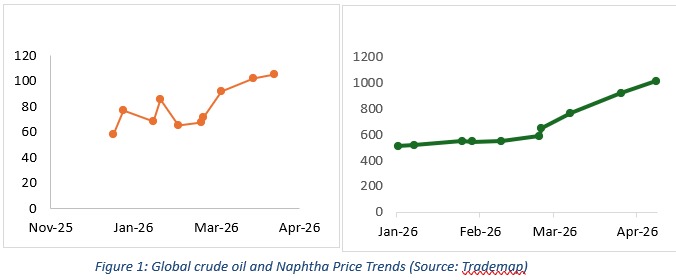
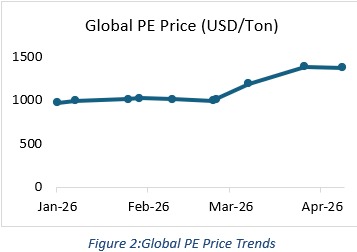
Recent geopolitical tensions have highlighted the industry’s vulnerability. Disruptions in major energy supply routes, especially in the Middle East, have caused oil and petrochemical prices to fluctuate, raising production costs throughout the battery industry. Higher freight rates, longer shipping times, and increased insurance costs have made global supply chains even more complex. For separator makers, these issues mean higher operating costs and greater planning uncertainty.
India’s Growing Demand for Battery Separators
For India, these developments present both a challenge and an opportunity. While the country has made significant progress in promoting domestic battery manufacturing through initiatives such as the ACC PLI scheme, battery separator manufacturing remains one of the least developed segments of the battery value chain. India currently relies almost entirely on imports to meet its battery-grade separator requirements, despite their critical role in determining battery safety, performance, and reliability.
This import dependence is becoming increasingly significant as India’s battery ecosystem expands. Battery separator demand is projected to increase from approximately 3 kt in 2025 to 110–170 kt by 2047, driven by the rapid deployment of electric vehicles and stationary energy storage systems. This growth represents a significant opportunity for domestic manufacturing. However, current domestic production capabilities remain limited, indicating continued reliance on imports unless large-scale investments are made over the coming decade.
Even with this opportunity, establishing a competitive separator manufacturing industry in India will be challenging. While India possesses a well-developed polymer and film manufacturing industry, existing capabilities are largely focused on packaging, industrial, and specialty films. In contrast, battery-grade separators for EV applications require ultra-thin films in the range of 8–16 microns, along with tightly controlled porosity, thermal stability, electrolyte wettability, and mechanical strength . Developing these capabilities will require substantial investments in advanced manufacturing technologies, process engineering, and quality control systems.
Technology access presents another significant hurdle. The separator industry is characterized by a relatively small number of global players that possess proprietary manufacturing know-how developed over decades of research and industrial experience. Establishing local production facilities often requires technology licensing agreements, strategic partnerships, or joint ventures with established international manufacturers. Such arrangements can be expensive and time-consuming, but are likely essential to accelerating India’s entry into the sector.
The capital-intensive nature of separator manufacturing further complicates the investment landscape. Facilities require advanced cleanroom environments, precision coating systems, solvent recovery infrastructure, and stringent quality control capabilities . In addition, long qualification cycles with battery manufacturers can delay commercialization and increase financial risk. Environmental approvals also pose challenges, particularly for wet-process manufacturing facilities that involve solvent handling and extraction.
Still, India’s larger industrial base offers a strong foundation for future growth. The country has a strong petrochemical sector, with companies like Reliance Industries, Indian Oil Corporation, and GAIL that could help build supply chains for battery-grade polymers. With the right policies and technology partnerships, these strengths could accelerate local separator manufacturing over the next decade.
Looking forward, new battery chemistries will shape the future of separator technology. Researchers are working on nanofiber separators, composite designs, and materials for lithium-metal and solid-state batteries. Sustainability is also a growing focus, with manufacturers aiming to use less solvent, make products easier to recycle, and reduce the environmental impact of production.
As battery technology advances, separators are increasingly evolving from passive safety components into strategic enablers of battery performance, safety, and energy density. Future developments are expected to focus on thinner separators, advanced ceramic-coated technologies, nanofiber structures, and materials compatible with next-generation battery chemistries, including lithium-metal and solid-state batteries.
As countries compete to secure battery supply chains and build domestic manufacturing ecosystems, separators are emerging as a strategic technology segment rather than a commodity component. For India, developing domestic separator manufacturing is important not only for reducing import dependence but also for strengthening battery supply chains, supporting Advanced Chemistry Cell manufacturing, and enhancing the country’s position in the global battery value chain. As countries compete to secure battery supply chains and build domestic manufacturing ecosystems, separators are emerging as a strategic technology segment rather than a commodity component. For India, developing domestic separator manufacturing is important not only for reducing import dependence but also for strengthening battery supply chains, supporting Advanced Chemistry Cell manufacturing, and enhancing the country’s position in the global battery value chain. In the broader context of the energy transition, battery separators demonstrate how seemingly small, often overlooked components can become strategic enablers of industrial competitiveness, supply-chain resilience, and technological leadership.
https://www.verifiedmarketreports.com/product/separators-for-lithium-ion-battery-market/
https://www.emergenresearch.com/industry-report/lithium-ion-batteries-separator-market
https://www.sciencedirect.com/science/article/abs/pii/S2352152X26024758
https://pubmed.ncbi.nlm.nih.gov/30687011/
https://www.ornl.gov/content/battery-manufacturing-facility
 Electrify your feed! Click here to join our Whatsapp group and to get the latest updates, expert insights, and innovations driving India’s energy storage revolution.