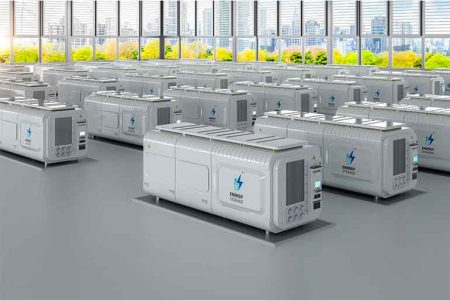

The Government of India has taken a series of comprehensive steps to accelerate the development of energy storage capacity in the country, recognising its critical role in supporting large-scale renewable energy integration and grid stability. According to the Central Electricity Authority’s (CEA) report “Optimal Generation Mix 2030”, India will require 60.63 GW of energy storage capacity by 2029–30, including 18.98 GW from Pumped Storage Projects (PSP) and 41.65 GW from Battery Energy Storage Systems (BESS).
To meet this requirement, the Ministry of New and Renewable Energy (MNRE), along with other government agencies, has rolled out multiple policy, financial, and regulatory interventions. These include the notification of guidelines for the procurement and utilisation of BESS as part of generation, transmission, and distribution assets, as well as for ancillary services. A National Framework for Energy Storage Systems has also been issued to provide long-term direction to the sector.
The government has introduced dedicated guidelines to promote pumped storage projects and granted a 100% waiver on Inter-State Transmission System (ISTS) charges for PSPs awarded construction work on or before June 30, 2028. A similar 100% ISTS waiver has been extended to co-located BESS projects commissioned by the same deadline, subject to conditions.
Policy Support for Pumped Storage and BESS
- Dedicated guidelines have been issued to promote pumped storage projects (PSP) across the country.
- A 100% waiver on Inter-State Transmission System (ISTS) charges has been granted for PSPs where construction work is awarded on or before June 30, 2028.
- A similar 100% ISTS waiver has been extended to co-located Battery Energy Storage System (BESS) projects, provided they are commissioned by the same deadline and meet specified conditions.
Financial Support Through Viability Gap Funding (VGF)
- In March 2024, the government approved a ₹3,760 crore VGF scheme to support 13,220 MWh of large-scale BESS, with funding at ₹27 lakh per MWh.
- In June 2025, an additional VGF scheme for 30 GWh of BESS was approved, supported by ₹5,400 crore from the Power System Development Fund (PSDF) at ₹18 lakh per MWh.
- 10 GWh of grid-scale stationary storage capacity has been earmarked under the National Programme on Advanced Chemistry Cell (ACC) Battery Storage.
Grid Stability and Co-Location Measures
- An official advisory has been issued on co-locating energy storage systems with solar power projects.
- The objective is to enhance grid stability, improve cost efficiency, and enable better utilisation of renewable power generation.
Support for Research and Indigenous Development
- The government is implementing a Renewable Energy Research and Technology Development Programme to support research institutions and industry.
- The Department of Science & Technology (DST) is funding energy storage research under the Clean Energy Material Initiative (CEMI), focusing on advanced storage materials and devices.
Procurement Progress and PPA Status
- As of December 31, 2025, Renewable Energy Implementing Agencies (REIAs) including SECI, NTPC, NHPC, and SJVN have issued Letters of Award for around 69 GW of renewable capacity.
- Power Purchase Agreements (PPAs) have been signed for approximately 24.3 GW of this capacity.
Shift Toward Storage-Linked and Dispatchable Renewables
- With declining costs of solar/wind plus storage and dispatchable renewable power, procurers are increasingly preferring these solutions.
- The government is encouraging REIAs to move away from plain solar or wind tenders toward:
- Renewable energy with energy storage
- Configurations supplying power during peak hours
- Firm and Dispatchable Renewable Energy (FDRE) tenders
This information was shared by Union Minister of State for New and Renewable Energy, Shri Shripad Yesso Naik, in a written reply to the Rajya Sabha, highlighting the government’s coordinated approach to building a future-ready energy storage ecosystem in India.
 Electrify your feed! Click here to join our Whatsapp group and to get the latest updates, expert insights, and innovations driving India’s energy storage revolution.