The spotlight of global media often gravitates toward high-speed electric cars or long-haul heavy-duty trucks when we discuss the Electric Vehicle (EV) revolution in India. While these segments are vital, they often represent the aspirations of a specific demographic. However, the most profound, high-impact transformation is actually unfolding far from the gleaming highways, it is happening in the narrow, congested lanes of our Tier-2 cities, the bustling, high-density marketplaces of our metros, and the rugged heart of our rural townships. This is where the true “Green Revolution” is taking root, not as a luxury, but as a survival and growth mechanism. As India marches toward its ambitious Net-Zero 2070 targets, we can clearly notice how the momentum is being sustained not by a few thousand premium cars, but by millions of small, agile 3 wheelers that form the skeletal structure of our local economies. This shift is redefining the very definition of sustainable infrastructure, proving that in a country as vast and diverse as ours, true progress is measured by how effectively we can electrify the most common denominator of transport.
The Grassroots Revolution: Democratizing Green Energy
It is a silent, ubiquitous revolution driven by the three-wheeler, e-rickshaws, e-autos, and e-cargo loaders. While high-end passenger vehicles capture the imagination of the elite, it is the three-wheeler that is actually democratizing green energy at the grassroots level. This sector represents the most authentic application of ‘mobility as a service,’ where every kilometer driven contributes to the economic upliftment of masses.
Micro-mobility is no longer just a ‘last-mile’ solution, it has become one of the primary engines of India’s green transition. With nearly 34% of the nation’s total EV battery demand originating from the three-wheeler segment, we are witnessing a fundamental shift. As traditional fossil-fuel-based logistics face the brunt of rising crude prices and stringent emission norms, the e-3 wheeler has emerged as the most resilient alternative for the Indian supply chain.
Bridging the Energy Gap between Mobility and BESS
This massive demand brings us to a critical challenge: “how do we store and manage the power needed to fuel this growth?” As we scale toward 300 GW of solar capacity, the industry is shifting its gaze toward Battery Energy Storage Systems (BESS). BESS has become the fundamental bridge that converts renewable energy into a stable, 24/7 power supply. Without the ability to store today’s sunlight for tonight’s charging cycles, the mobility revolution would remain incomplete.
For years, the e-rickshaw sector was dominated by lead-acid batteries, a legacy of low upfront costs. However, in a high-demand commercial environment, the limitations of lead-acid (heavy weight, slow charging, and frequent replacements) act as a ceiling on income.
The industry’s transition to Lithium-ion technology is the single most important development in this space. By moving to LFP chemistry, we aren’t just changing the battery, we are changing the lifecycle of the vehicle. A 30–40% reduction in weight translates directly into better vehicle balance, higher payload capacity for cargo loaders, and lower stress on the drivetrain.
The ‘Smart Heart’ of the Vehicle
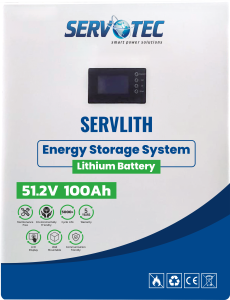
Our philosophy has always been to look at the person behind the wheel. Every E-3 wheeler driver is an entrepreneur, and their battery is their most critical asset. This insight led us to the development of our SULTAN electric 3-wheeler Li-ion batteries. We didn’t want to build just another power pack, we wanted to build a ‘smart heart’ for the vehicle.
SULTAN, specifically the 51.2V and 64V 105Ah variants, are engineered for the grueling start-stop duty cycles of Indian roads. By integrating a Bluetooth-enabled Smart Battery Management System (BMS), we’ve moved from passive power to active data. Today, a driver can monitor State-of-Health and State-of-Charge in real-time on their phone. This transparency eliminates range anxiety and allows for better financial planning. We have seen this technology increase a driver’s daily take-home pay by 15–20%, simply by giving them the confidence to take that “one last trip.”
Building a 360-Degree Renewable Ecosystem
It is not enough to manufacture a battery anymore, we must manufacture an ecosystem. This includes developing indigenous Power Conversion Systems (PCS) and localized charging infrastructure. The reliability these logistics giants seek is only possible through Green Charging hubs equipped with stationary BESS. These hubs act as energy buffers, storing power when solar generation is high and discharging it during peak demand.
As an industry leader, our goal is to move away from the ‘unorganized garage’ assembly of the past decade into a sophisticated, AI-driven manufacturing era. We are investing in automated assembly lines and cell-matching technology to ensure every battery is a masterpiece of safety.
The Road to 2026 and Beyond
The story of the E-3 wheeler in India is a story of grit and aspiration. We see the battery as one part of a 360-degree renewable loop. Imagine an e-rickshaw hub powered by rooftop solar, where batteries charge during the day and contribute back to the grid during peak hours via a V2G (Vehicle-to-Grid) framework.
This isn’t a distant dream, it is the roadmap we are actively building toward in 2026. At Servotech, we are proud to be the silent partner in the journey of every driver who puts their trust in our power.
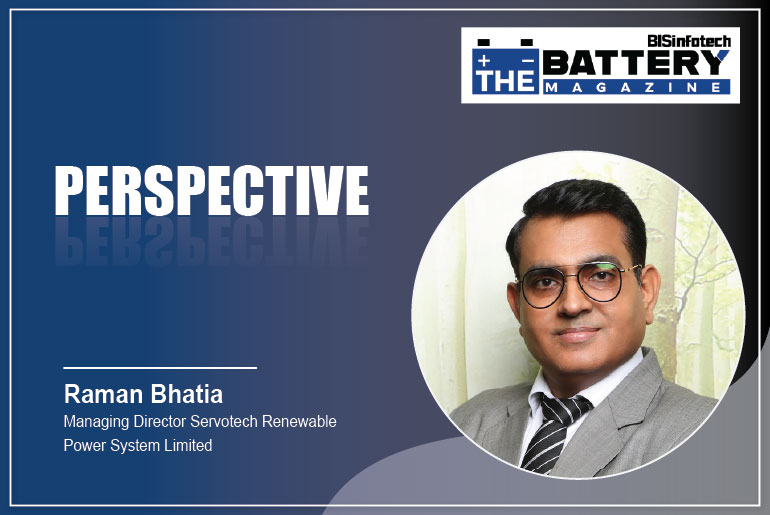
Authored by
Mr. Raman Bhatia
Managing Director
Servotech Renewable Power System Ltd.
 Electrify your feed! Click here to join our Whatsapp group and to get the latest updates, expert insights, and innovations driving India’s energy storage revolution.