The Government of India has outlined a broad framework to balance electricity affordability with the financial sustainability of the power sector, while preparing the grid for rising renewable-energy capacity and greater use of energy storage. The framework brings together measures covering tariffs, distribution-sector efficiency, resource adequacy, transmission planning, renewable integration and storage, with the government also projecting significant growth in Battery Energy Storage Systems (BESS) and pumped storage capacity over the coming years.
The details were provided by Minister of State for Power Shri Shripad Naik in a written reply in the Rajya Sabha. According to the government, India has established a policy and regulatory framework under the Electricity Act, 2003 to maintain the financial sustainability of the electricity sector while protecting consumer interests. The framework includes the National Electricity Policy, Tariff Policy and regulations issued by the appropriate authorities and electricity regulatory commissions.
At the consumer end, electricity tariffs are determined by the respective State Electricity Regulatory Commissions, taking into account the costs associated with power procurement, transmission, wheeling and supply. State governments may provide subsidies to specified consumer categories, including domestic consumers, within the tariff framework determined by the respective commissions.
The government is also pursuing measures aimed at reducing the cost of electricity procurement and improving the financial performance of distribution companies. These include competitive procurement mechanisms, access to power exchanges, flexibility in the use of domestic coal and prioritisation of lower-cost inter-state generating stations. Under the Revamped Distribution Sector Scheme (RDSS), distribution companies are being supported and incentivised to reduce technical and commercial losses and improve operational efficiency.
Draft Electricity Policy Targets Least-Cost Power Planning
The Draft National Electricity Policy, 2026 proposes a stronger focus on resource adequacy and least-system-cost power procurement. Under the proposed framework, distribution licensees would prepare Resource Adequacy Plans to support long-term power procurement decisions.
The draft also proposes progressively recovering fixed costs through demand or fixed charges, while allowing variations in power purchase costs, including fuel costs, to be reflected through automatic monthly Fuel and Power Purchase Cost Adjustment (FPPCA) mechanisms.
To reduce the impact of fluctuations in power purchase costs on consumers, the draft proposes a suitable stabilisation fund. State Electricity Regulatory Commissions would also be expected to ensure that tariffs progressively reflect the prudent cost of supply without creating regulatory assets, along with timely annual tariff revisions.
For consumers, the existing Electricity (Rights of Consumers) Rules, 2020 continue to provide safeguards covering new connections, metering, billing, supply quality and reliability, grievance redressal and compensation for specified deficiencies. The draft policy further proposes reliable, affordable and quality 24×7 electricity supply, supported by improved online mechanisms for registering and tracking consumer complaints.
Renewable Expansion Brings Storage Into Focus
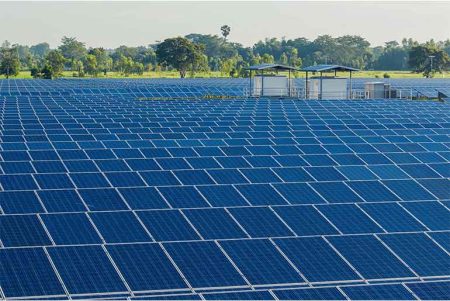
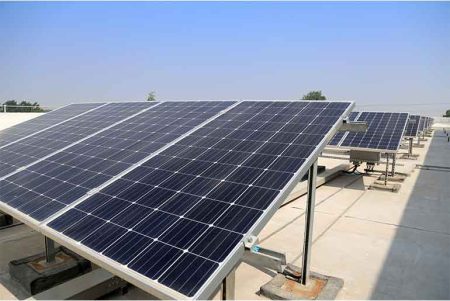
The framework comes against the backdrop of a rapidly expanding renewable-energy pipeline. According to the government, 147,720 MW of renewable-energy capacity, including 119,580 MW of solar and 27,720 MW of wind, was under construction at the time of assessment. Another 47,830 MW was at various stages of planning and targeted for completion by 2029-30.
As variable renewable generation increases, the government is simultaneously planning for additional flexibility in the electricity system through energy storage and transmission infrastructure.
As of June 30, 2026
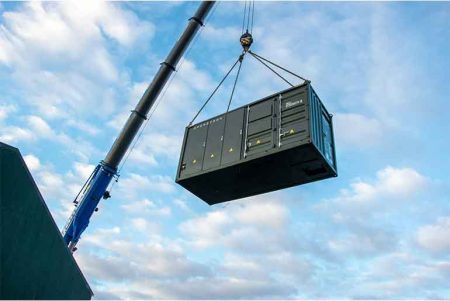
- 15,754 MW/42,530 MWh of BESS capacity was under construction,
- 11,747 MW/38,425 MWh had been awarded and
- 19,192 MW/67,574 MWh was under tendering.
Alongside battery storage,
- 15,870 MW/95,220 MWh of pumped storage projects was under construction,
- 6,580 MW/39,480 MWh having received concurrence but not yet entering construction.
The government said coordinated transmission planning is being undertaken to reduce congestion, minimise renewable-energy curtailment and optimise network augmentation. To address the intermittency of renewable generation, it is promoting storage and hybrid solutions, with around 47 GW of BESS being considered for integration by 2031-32. A separate roadmap has been prepared for integrating 100 GW of pumped storage plants between 2025-26 and 2035-36.
This places storage within the broader architecture of India’s electricity transition rather than treating it solely as a standalone technology. As renewable generation rises, BESS and pumped storage are increasingly being considered alongside generation and transmission planning to provide flexibility and improve the ability of the grid to absorb variable power.
Government Expands Storage Procurement Mechanisms
The Ministry of Power has already established several mechanisms to support energy storage deployment.
Guidelines issued in March 2022 cover the procurement and utilisation of BESS as part of generation, transmission and distribution assets, as well as their use for ancillary services.
Tariff-Based Competitive Bidding guidelines have also been notified for procurement of energy storage systems, including BESS and pumped storage plants, by distribution licensees. The National Framework for Promotion of Energy Storage Systems, issued in September 2023, provides a broader policy framework for facilitating storage deployment and market integration.
Financial support is another component of the government’s storage push. A ₹3,760-crore Viability Gap Funding (VGF) scheme launched in September 2023 is supporting 13.22 GWh of BESS capacity. In June 2025, the Ministry of Power approved another VGF scheme for 30 GWh of BESS, backed by ₹5,400 crore from the Power System Development Fund (PSDF).
The government has also extended transmission-cost support for storage. For co-located BESS projects, the 100% waiver of Inter-State Transmission System (ISTS) charges has been extended to projects commissioned up to June 2028. For pumped storage projects, the waiver has been extended for projects where construction work is awarded by June 2028.
Battery Manufacturing Also Forms Part of the Framework
The storage push is being supported by measures aimed at developing domestic battery manufacturing capacity.
Under the National Programme on Advanced Chemistry Cell (ACC) Battery Storage, approved in May 2021, the government has provided an outlay of ₹18,100 crore to establish 50 GWh of domestic ACC manufacturing capacity. Of this capacity, 10 GWh has been earmarked for grid-scale stationary storage applications.
The government has also highlighted the role of domestic manufacturing and supply-chain development as renewable-energy deployment expands. The combination of battery manufacturing support, storage procurement mechanisms and project-level financial assistance is intended to build the ecosystem required for larger-scale storage deployment.
Future Grid Planning Includes Storage and V2G
The Draft National Electricity Policy, 2026 also looks at how the electricity network itself will need to evolve. It proposes establishing Distribution System Operators (DSOs) to facilitate the integration of distributed renewable energy, energy storage systems and Vehicle-to-Grid (V2G) technologies.
The draft further proposes modernising transmission infrastructure through technologies including Flexible AC Transmission Systems (FACTS), Dynamic Line Rating and underground cabling where appropriate, alongside measures to improve grid resilience and flexibility.
The scale of the planned power system is also increasing. The National Electricity Plan projects India’s installed generation capacity could reach 874 GW by 2031-32, while states have prepared 10-year rolling Resource Adequacy Plans covering generation and power procurement.
The government’s latest framework therefore brings together several pieces of India’s electricity transition: keeping power affordable, improving the financial health and efficiency of distribution companies, expanding renewable generation, strengthening transmission infrastructure and creating mechanisms for storage deployment.
For the battery and energy-storage industry, the significance lies in how BESS is increasingly being incorporated into resource adequacy, renewable integration, procurement, transmission planning and grid modernisation. With more than 15 GW of BESS already under construction and a much larger pipeline at awarded and tendering stages, storage is moving from an emerging technology category towards a more established component of India’s future power-system architecture.
As India’s power system expands, the real challenge will be balancing affordability with reliability while integrating larger volumes of renewable energy. The emerging India Power Framework points towards a more flexible electricity system, where storage, stronger transmission networks, domestic battery manufacturing and smarter distribution infrastructure work together. The success of this transition will ultimately depend on how effectively policy translates into bankable projects, resilient grids and dependable power for consumers.
 Electrify your feed! Click here to join our Whatsapp group and to get the latest updates, expert insights, and innovations driving India’s energy storage revolution.