

India’s energy transition is reaching an awkward but important stage. The country has become very good at adding renewable capacity. The harder job is making that capacity behave like a dependable power system. Solar produces when the sun is available. Wind follows weather, not demand. Batteries can shift electricity across hours, but only if the equipment around them can respond precisely. This is where power electronics stops being a supporting technology and becomes central to the energy story. Inverters, converters, battery interfaces, controllers and energy management systems determine how efficiently electricity moves from generation to the load. India already has 283.46 GW of installed non fossil electricity capacity, including renewables and nuclear power. Solar accounts for 150.26 GW. Those numbers are impressive. They also expose the next problem. Adding capacity is becoming easier than integrating it well. The next gains will come from controlling electricity better and reducing losses. The real question is whether India can make every new unit of clean power more useful, not simply make the number on the capacity chart bigger.
The Invisible Layer
Power electronics has always been important. It simply did not receive much attention outside engineering circles. That is changing. Almost every important shift in the power sector now passes through a converter or controller somewhere. Solar needs an inverter. A battery needs bidirectional conversion. An electric vehicle needs controlled power between the charger, battery and motor. A modern building may have several systems constantly adjusting how electricity is used. What matters is that their performance is beginning to influence the economics of the entire system. A poorly designed converter wastes energy. A weak thermal design reduces reliability. Bad controls can limit what an otherwise good renewable asset can deliver. The industry should therefore stop viewing power electronics as a component business sitting below the headline technologies. It is increasingly the intelligence layer between them. That distinction will matter as renewable penetration rises. When the system becomes more variable, the quality of the control layer starts determining the quality of the electricity system itself.
Solar’s Next Test
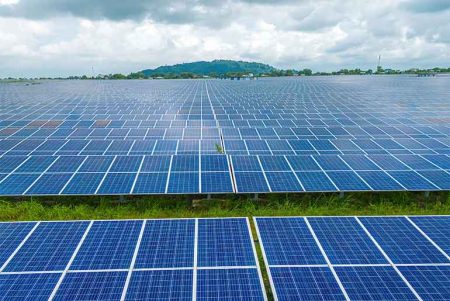
India’s solar market has already moved beyond the stage where simply adding panels is the main achievement. The equipment around those panels now deserves much more scrutiny. An inverter once had a relatively straightforward job. It converted the output of a solar array into usable electricity. That description is now inadequate. Inverters have to deal with voltage, frequency, protection, monitoring and changing grid conditions. They also have to perform consistently through heat, dust and voltage fluctuations that are part of everyday Indian operating conditions. A Bureau of Energy Efficiency market assessment estimated that India’s solar inverter market could reach ₹9,352 crore by 2026, growing at a projected CAGR of 14.4% from 2020 to 2026. The bigger issue is what the market should reward. It should not reward the lowest price alone. A slightly cheaper inverter that fails earlier, loses more energy or requires repeated service is an expensive product in disguise. India needs to judge solar equipment over its operating life. Reliability, efficiency, thermal performance and serviceability should carry as much weight as the initial purchase price.
Storage Changes The Equation
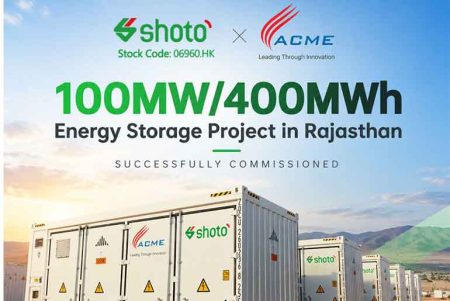
Storage will make this even more obvious. India’s National Electricity Plan projects a requirement of 208 GWh of battery energy storage systems by 2030. That figure is often presented as a battery requirement. It is also a control requirement. A battery has limited value if the system cannot decide intelligently when to charge, when to discharge and how hard to operate it. The right answer will differ by application. A household may want backup. A factory may want peak management. A grid operator may need renewable balancing. A commercial building may want to reduce its dependence on expensive peak power. The battery chemistry matters, but so does the power conversion architecture around it. This is an area where India should resist the temptation to standardise everything around a single product logic. Storage is not one market. It is a set of different jobs requiring different controls. The companies that understand that distinction will have an advantage. The real value of storage will not come from the number of batteries installed. It will come from how intelligently those batteries are used.
The Grid Is Changing
The old electricity system was built around a fairly predictable relationship. Large generators produced power and consumers took it from the network. Renewable generation has made that relationship much less tidy. A rooftop can become a generator. A battery can become a load in one hour and a source in another. An electric vehicle can add demand at a time when the grid is already under pressure. Commercial buildings can change their consumption through automated controls. The result is a power system with more two way movement and much faster changes. Power electronics is well suited to this world because it can react quickly. But there is a danger in assuming that smarter equipment automatically creates a smarter grid. It does not. Devices need to follow common standards. Utilities need visibility. Grid operators need better control. Testing has to keep pace with new equipment. There is also a wider technical issue around inverter based generation and grid stability. India will have to deal with these questions seriously as renewable penetration rises. The answer is not to slow the transition. It is to build the engineering capability needed to manage it.
Efficiency Is Capacity
Energy efficiency is usually discussed as a consumer benefit. That is too narrow for the next stage of India’s power story. Every conversion loses some energy. Those losses may look insignificant in one appliance. They look different when millions of devices operate every day across the country. A small improvement in conversion efficiency can reduce the amount of generation needed to deliver the same useful electricity. It can also reduce heat, cooling requirements and stress on equipment. This makes power electronics part of the capacity conversation. There is another point that deserves more attention. Rated efficiency is not the same as real world efficiency. Equipment operates through partial loads, temperature swings, voltage variation and years of use. A product that delivers impressive numbers under ideal conditions may perform differently on a rooftop in peak summer or in a facility with unstable supply. Indian manufacturers have an opportunity here because local conditions can be treated as a design input rather than a problem to be addressed after launch. The better question is not whether a product is efficient in theory. It is whether it remains efficient when the conditions get difficult.
India Must Build Depth
There is a manufacturing argument underneath this entire discussion. India is attracting serious capital into clean energy. The International Energy Agency reported that 83% of power sector investment in India went to clean energy in 2024. That is encouraging. It also creates a responsibility. If the country wants a durable energy manufacturing base, it cannot stop at assembling finished equipment. Power electronics requires depth. That means capabilities in semiconductors, magnetics, embedded software, thermal management, control systems, testing and reliability engineering. Localisation should therefore be judged by what is actually designed and developed in India, not simply by how much final assembly happens here. This is particularly important because imported products are not always designed around Indian operating realities. Heat, dust, voltage variation and service conditions can be brutal on equipment. Products built with those conditions in mind can have a genuine competitive advantage. That is a better form of localisation than simply replacing an imported label with a domestic one. It creates intellectual property, engineering expertise and products that can eventually travel beyond India. The opportunity is not merely to manufacture for a growing domestic market. It is to build technology around problems that other emerging markets also face.
The Real Backbone
India’s renewable story has reached the point where the next bottleneck will not always be generation. Increasingly, it will be coordination. Can solar power be converted efficiently? Can batteries respond when they are needed? Can distributed assets support the network rather than complicate it? Can consumers use electricity more intelligently without making systems difficult to operate? These are power electronics questions. They are also business questions because every technical weakness eventually becomes a cost. More losses mean more generation. Poor reliability means more replacement and maintenance. Weak controls mean less value from expensive assets. The industry should therefore stop measuring the energy transition only through installed gigawatts. Capacity is an important number, but it does not tell us whether the system is using that capacity well. India has already shown that it can build renewable infrastructure at remarkable scale. The next test is more demanding. It has to make that infrastructure responsive, efficient and dependable. That requires better hardware, certainly, but hardware alone will not be enough. It requires better controls, better standards, better engineering and a willingness to judge products over their entire operating life. Power electronics may still be the least visible part of the energy transition. It could also become the part that determines whether the transition works as promised. India has built the generation. Now it needs to master the electricity in between.
 Electrify your feed! Click here to join our Whatsapp group and to get the latest updates, expert insights, and innovations driving India’s energy storage revolution.