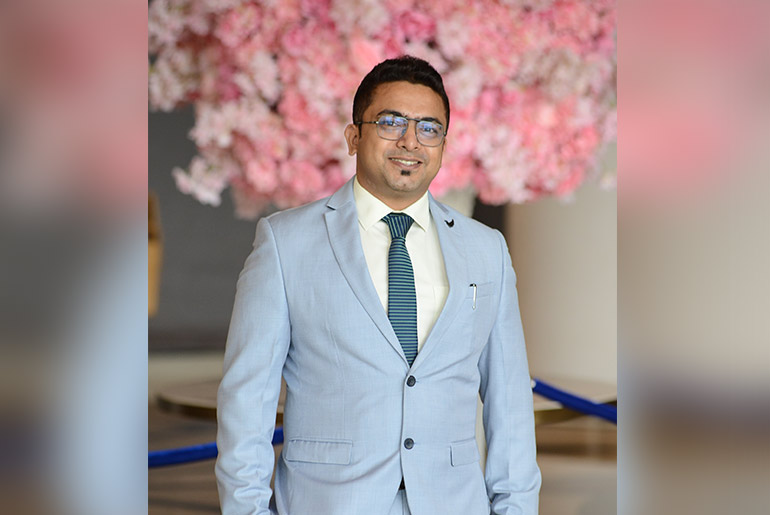
In the grand story of India’s clean energy transformation, few figures stand as pivotally placed as Debmalya Sen, the newly appointed President of the India Energy Storage Alliance (IESA). As the nation accelerates toward a decarbonized, electrified future, Sen sits at the helm of a movement shaping not just battery technology, but policy, manufacturing, and innovation ecosystems at scale.
Shweta, Sub Editor at The Battery Magazine, sat down for an insight-rich exchange with Mr. Sen—one that peeled back the layers of India’s energy storage ambitions. From busting myths around battery use cases to decoding the real hurdles in recycling and second-life viability, Mr. Sen offered a candid, sharp, and deeply strategic perspective. He laid out why India’s 2 TWh demand projection might still be conservative, what makes recycling financially unviable today, and why “don’t copy” is the only advice he has for young energy entrepreneurs.
With clarity and humility, Debmalya Sen doesn’t just represent the sector—he speaks for its future. This exclusive interview explores how trust, technology, and timing will define India’s energy storage journey over the next decade.
Q1. India’s battery and energy storage story is evolving rapidly. But what is one narrative or misconception you believe the sector still needs to rewrite?
The biggest misconception around batteries is that they serve just one use case. That’s far from true. Batteries are not inherently designed for a single function—yes, you can apply them to one use case, but in doing so, you underutilize their full potential.
A single asset can—and ideally should—be used for multiple use cases. The real beauty of battery technology unfolds when this multifunctionality is leveraged. In India, however, we’ve predominantly deployed battery projects focused on just one application per project. That’s where we’re limiting ourselves.
Q2. With IESA playing a catalytic role in shaping India’s energy storage roadmap, how do you balance your policy advocacy between emerging technologies like sodium-ion batteries and more established chemistries like lithium-ion?
IESA has always been a technology-agnostic platform. We talk about energy storage, not just battery storage, because the ecosystem is far broader. While lithium-ion has gained prominence due to its performance and maturity, other technologies such as sodium-ion, vanadium flow batteries, and pumped hydro also hold significant promise.
The issue is, whenever a new technology emerges, the first question becomes—how does it compete with lithium-ion? But that’s the wrong approach. These technologies don’t necessarily compete; they complement each other. Each has distinct characteristics and fits specific use cases. That’s the narrative we are trying to shift.
Q3. If India were to become a global leader in energy storage exports by 2035, what are the three most non-negotiable pillars we must build?
As of now, India has zero operational battery cell manufacturing capacity. What’s being planned could deliver up to 140 GWh by 2030, but remember—no manufacturing plant runs at 100% yield. Realistically, we’re looking at an operational capacity of about 80 GWh by then.
Meanwhile, our demand will touch 2 TWh by 2030. That’s a huge gap. In many ways, this resembles our early solar journey—initially, we were only assembling imported components. Similarly, even by 2030, a lot of batteries will still be assembled from imported cells.
So, the three non-negotiables are:
- Aggressive domestic manufacturing of battery cells and packs.
- Clearly defined demand obligations to ensure market pull.
- A substantial boost in R&D funding, both from the public and private sector.
I was recently reading a quote by the CATL Chairman at the World Economic Forum—it really underscored how critical long-term R&D investment is to building global competitiveness.
Q4. You interact with innovators across the ecosystem—startups, legacy players, policymakers. What’s one trend or insight from these conversations that the industry may be underestimating?
I’d say we’re still underestimating the true scale of demand. Even this 2 TWh figure could be conservative. If we are serious about hitting our target of 500 GW of non-fossil fuel capacity by 2030—and factoring in the growth of EVs and electrification—the demand will be far greater than we’re currently planning for.
Q5. Circular economy is no longer a buzzword. In your view, how close are Indian recyclers and second-life battery companies to achieving commercial viability?
Let me be honest—recycling is still finding it difficult to find its place in the Indian market is a loss-making business today. Not because it lacks relevance, but because battery prices have fallen so drastically. If a new battery costs $35/kWh, and a recycled one comes to $30, most customers would still prefer the new one.
Another challenge is the regulatory environment—it’s quite rigid, which makes profitability difficult. For recycling to scale up sustainably, we need a more flexible policy framework that enables innovation and commercial viability.
Q6. With green hydrogen and battery energy storage increasingly converging in national energy plans, how do you envision IESA shaping this hybrid energy architecture over the next five years?
IESA is actively working on the policy and regulatory landscape for hybrid systems. The government is increasingly involving us in its consultations—which we take as a sign of trust. They value that we provide unbiased, industry-informed feedback.
At the same time, the industry sees IESA as their voice in front of the government. Maintaining that dual trust—from both policy and business perspectives—is essential. We are collaborating on multiple fronts to shape a more integrated, hybrid-ready national energy framework.
Q7. Finally, if you were to write an open letter to India’s next-gen energy entrepreneurs, what would be your one piece of unconventional but critical advice?
Don’t copy.
Innovation demands risk-taking, and fortunately, we’re seeing the government starting to support that with increasing R&D budgets. The lack of R&D often leads entrepreneurs to imitate what others are doing. That’s not how industry leadership is built.
If we want to compete globally, we have to back original thinking—that’s the only way forward.
Mr. Debmalya Sen’s grounded yet forward-thinking perspectives offer a masterclass in navigating India’s dynamic battery and energy storage transition. With policy, innovation, and manufacturing aligning, his call for originality, scale, and trust-building marks the roadmap for a resilient energy future.
 Electrify your feed!